Keep a Brewed Hibiscus Concentrate in a Sealed Jar and Label It With the Date
A brewed hibiscus concentrate stored without a label becomes an unreliable ingredient. Its deep red color makes it visually similar to other bases in the refrigerator, and without a brew date there is no way to judge freshness at a glance. Labeling takes ten seconds and removes all guesswork. This guide covers how to brew a small, manageable batch, choose the right jar, write a label that is actually useful, and decide when the concentrate should be discarded rather than used.
Read the note ↓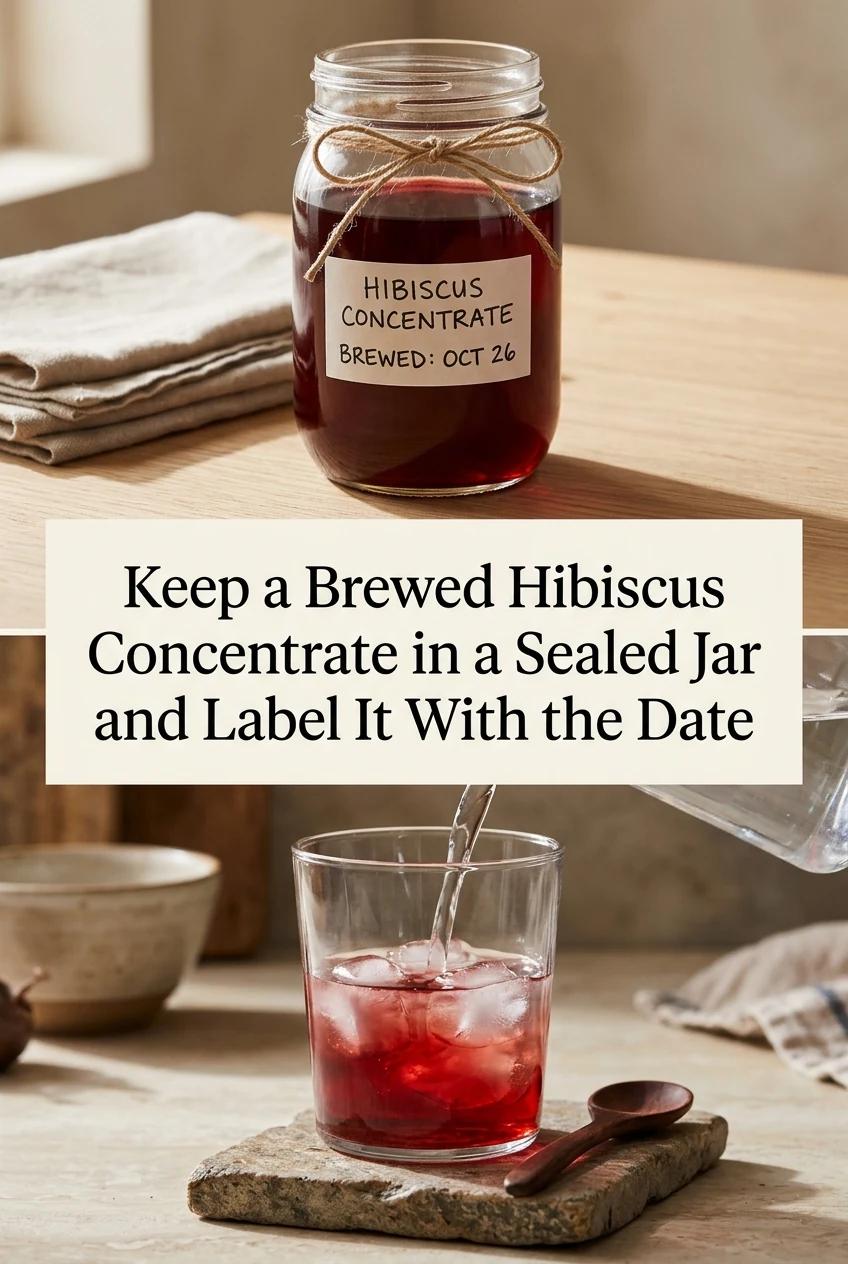
AI-generated editorial concept created for this article. The image is not a technical diagram or a tested result.
Brewing a Small Concentrate Batch
Bring 500 milliliters of water to a full boil, remove from heat, and add 15 to 20 grams of dried hibiscus petals. Steep for 10 to 15 minutes depending on how intense you want the flavor, then strain through a fine mesh sieve into a clean heatproof jug. Add sugar to taste while the liquid is still warm if you want a sweetened base. Allow the concentrate to cool to room temperature before transferring to a jar. These are illustrative quantities; your preferred recipe may vary.
Choosing the Right Jar and Lid
Use a glass jar with a tight-fitting lid rather than a loosely covered container. Hibiscus concentrate absorbs surrounding odors in the refrigerator if the seal is poor, and it can stain plastic lids permanently. A 500-milliliter mason-style jar with a two-part metal lid works well for this batch size. Wash the jar and lid in hot soapy water and rinse thoroughly before use. Do not attempt home pressure canning or any heat-sealing process; this concentrate is intended for refrigerator storage only.
Writing a Label That Is Actually Useful
A useful label includes three things: the contents, the brew date, and a discard date. Write the brew date as the actual calendar date rather than a day name, which becomes ambiguous after a week. For the discard date, plan to use or discard the concentrate within three to four days of brewing and refrigerating. This is a practical working window for a home kitchen, not a verified shelf-life claim. If the concentrate smells fermented or shows any cloudiness, discard it regardless of the date.
Refrigerating Promptly and Correctly
Transfer the concentrate to the refrigerator within two hours of brewing, or within one hour if your kitchen is above 32 degrees Celsius. Place the jar toward the back of the refrigerator where the temperature is most stable, not in the door where it fluctuates each time the refrigerator is opened. Keep the jar away from raw proteins. The concentrate should be stored at 4 degrees Celsius or below. Check that your refrigerator is holding that temperature if you are unsure.
Using the Concentrate in Drinks
Hibiscus concentrate is tart and deeply colored, so a small amount goes a long way. A starting point for a single drink is 30 to 50 milliliters of concentrate diluted with 150 to 200 milliliters of cold water, sparkling water, or a light fruit juice. Taste and adjust before serving. Because the concentrate is already chilled, it combines well with ice without excessive dilution. Pour the concentrate into the glass first, then add ice and liquid, following the same assembly logic that applies to any dense base.
A little more
to know.
Can I freeze hibiscus concentrate to extend how long I can keep it?
Freezing is an option for extending storage beyond the refrigerator window. Pour the cooled concentrate into a freezer-safe container leaving headspace for expansion, label with the freeze date, and thaw in the refrigerator before use. Taste after thawing as flavor intensity can shift slightly.
Does adding sugar to the concentrate change how long it keeps in the refrigerator?
Sugar does not meaningfully extend the safe refrigerator window for a home-brewed concentrate. Treat a sweetened and unsweetened version the same way: label with the brew date, refrigerate promptly, and plan to use or discard within three to four days.
Original editorial guidance and recipe formulations, not independently kitchen-tested. Times are estimates and depend on equipment and product directions. Cooked bases need additional cooling and refrigeration before cold serving. Images are AI-generated illustrations; appearance and yield may vary. Check actual ingredient labels, allergens, and any certification you require. We do not certify products. Read our approach.
Save to Pinterest ↗ANOTHER IDEA FOR THE COUNTER