Incorporate Dried Fruit Pastes into Chilled Milk Evenly
Pureed dried fruits like dates and figs provide rich, caramel-like sweetness, but their thick texture and fibrous consistency make them difficult to stir smoothly into cold liquids. Dropping dense fruit paste directly into cold dairy or plant milk often leads to stubborn, sticky clumps that sink to the bottom of the glass. By loosening the paste with a small splash of hot water or warm milk first, you can turn it into a pourable syrup that mixes easily and evenly throughout chilled drinks.
Read the note ↓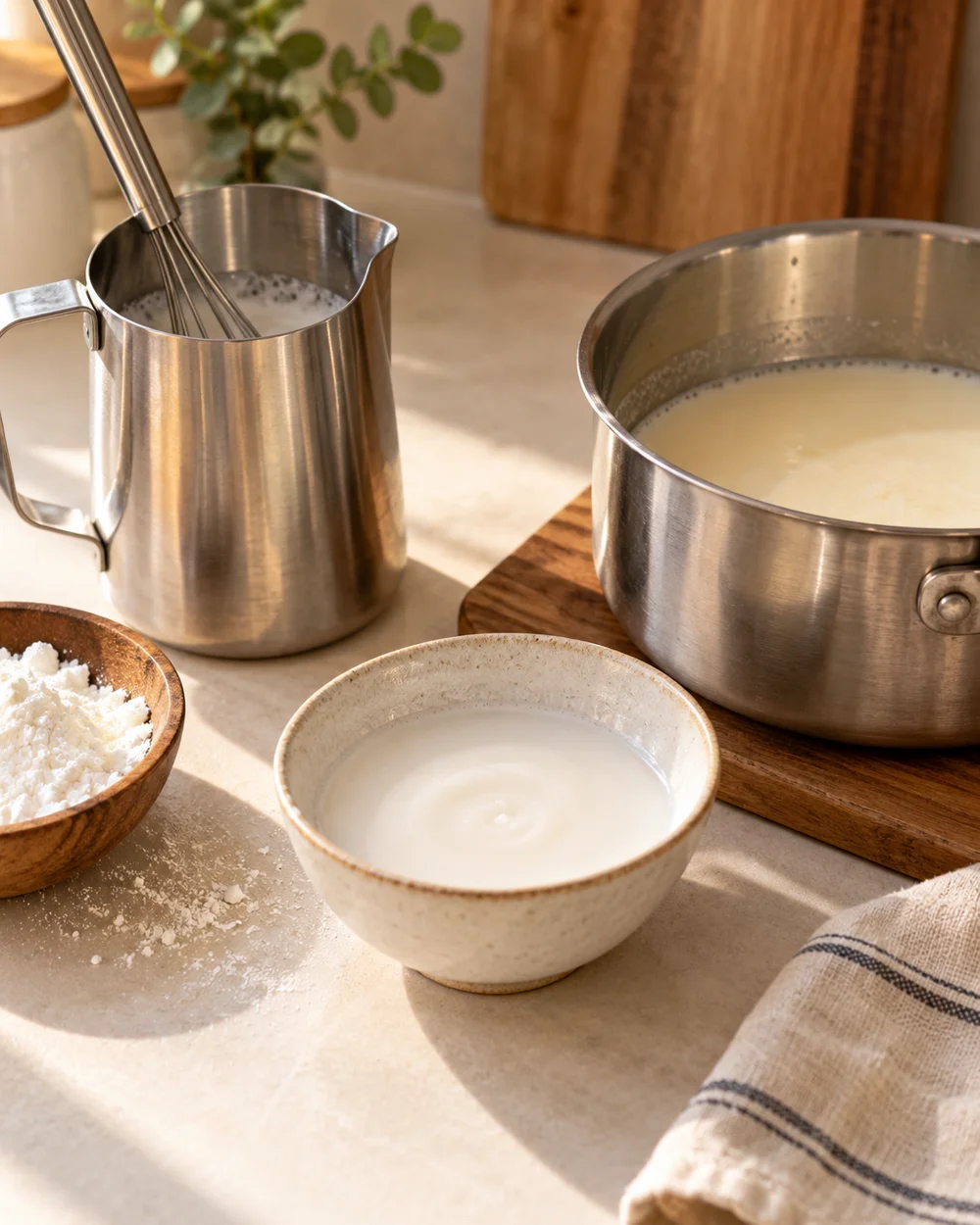
Representative category illustration reused from our editorial library; it does not depict this specific project or a tested result.
Why Cold Pastes Resist Mixing
Dried date and fig pastes are naturally thick, sticky, and rich in fruit sugars and plant fibers. When chilled in the refrigerator or exposed to ice-cold liquid, these pastes firm up quickly and resist breaking apart. Stirring dense, cold paste straight into cold milk usually leaves firm, sticky nuggets intact at the bottom of the cup, while manual whisks or blenders struggle to break them down evenly without splashing.
The Warm Dispersion Ratio
To soften the thick paste effectively, weigh twenty-five grams of smooth date or fig paste into a heatproof prep bowl. Add thirty milliliters of hot water or warmed milk at roughly seventy degrees Celsius, letting the paste sit in the hot liquid for about a minute to soften. Use a small whisk or fork to press and stir the softened paste against the sides of the bowl until it dissolves into a smooth, lump-free liquid base.
Tempering into the Cold Base
Once the softened paste forms a smooth, pourable syrup with no remaining solid bits, begin incorporating the cold milk gradually. Stir in fifty milliliters of cold milk first, mixing steadily so the warm syrup cools down smoothly without clumping. Gradually introducing the cold liquid ensures the fruit syrup remains fluid and blends easily before you pour in the remaining milk and add ice.
Illustrative Blending Measurement Example
In an illustrative recipe, mix thirty grams of smooth date paste with twenty-five milliliters of hot water in a small ramekin until thoroughly blended into a warm syrup. Stir this mixture into one hundred and fifty milliliters of cold oat milk, then pour the drink over seventy grams of fresh ice cubes. This straightforward sequence produces a uniformly sweetened, smooth drink without sticky fruit clumps settling on the bottom of the glass.
Handling Perishable Prepared Bases
Because reconstituted fruit mixtures introduce moisture to high-sugar pastes, prepared fruit syrups become vulnerable to ambient spoilage. Store any extra fruit-and-milk concentrate in an airtight container held at four degrees Celsius or below. Discard or safely chill any remaining portions within two hours under standard conditions, or within one hour if your kitchen workspace exceeds thirty-two degrees Celsius.
A little more
to know.
Can an immersion blender disperse cold paste directly without heating?
High-shear immersion blenders can break cold paste, but they incorporate excessive air, generating foamy bubbles that separate quickly. Warm pre-thinning allows rapid, bubble-free dispersion using simple manual utensils without over-aerating the milk base.
Does pasteurized dairy react differently to date paste than oat milk?
Both dairy and oat milk blend well when the paste is thinned with warm liquid first, but mixtures made with dairy milk may thicken more noticeably if left standing in the refrigerator for long periods. For the best flavor and texture, mix the beverage shortly before serving, or keep prepared portions chilled and stir briefly before drinking.
Original editorial guidance and recipe formulations, not independently kitchen-tested. Times are estimates and depend on equipment and product directions. Cooked bases need additional cooling and refrigeration before cold serving. Images are AI-generated illustrations; appearance and yield may vary. Check actual ingredient labels, allergens, and any certification you require. We do not certify products. Read our approach.
Save to Pinterest ↗ANOTHER IDEA FOR THE COUNTER