Iced Hojicha and Condensed Milk
Hojicha's roasted, slightly bitter character can clash with sweeteners when the ratio is left to guesswork. A measured concentrate brewed at a higher leaf-to-water ratio, cooled carefully to avoid cloudiness, and paired with a specific pour of condensed milk gives you a repeatable starting point. This article walks through one illustrative approach — not a tested guarantee — so you can adjust from a clear baseline rather than starting from scratch each time.
Read the note ↓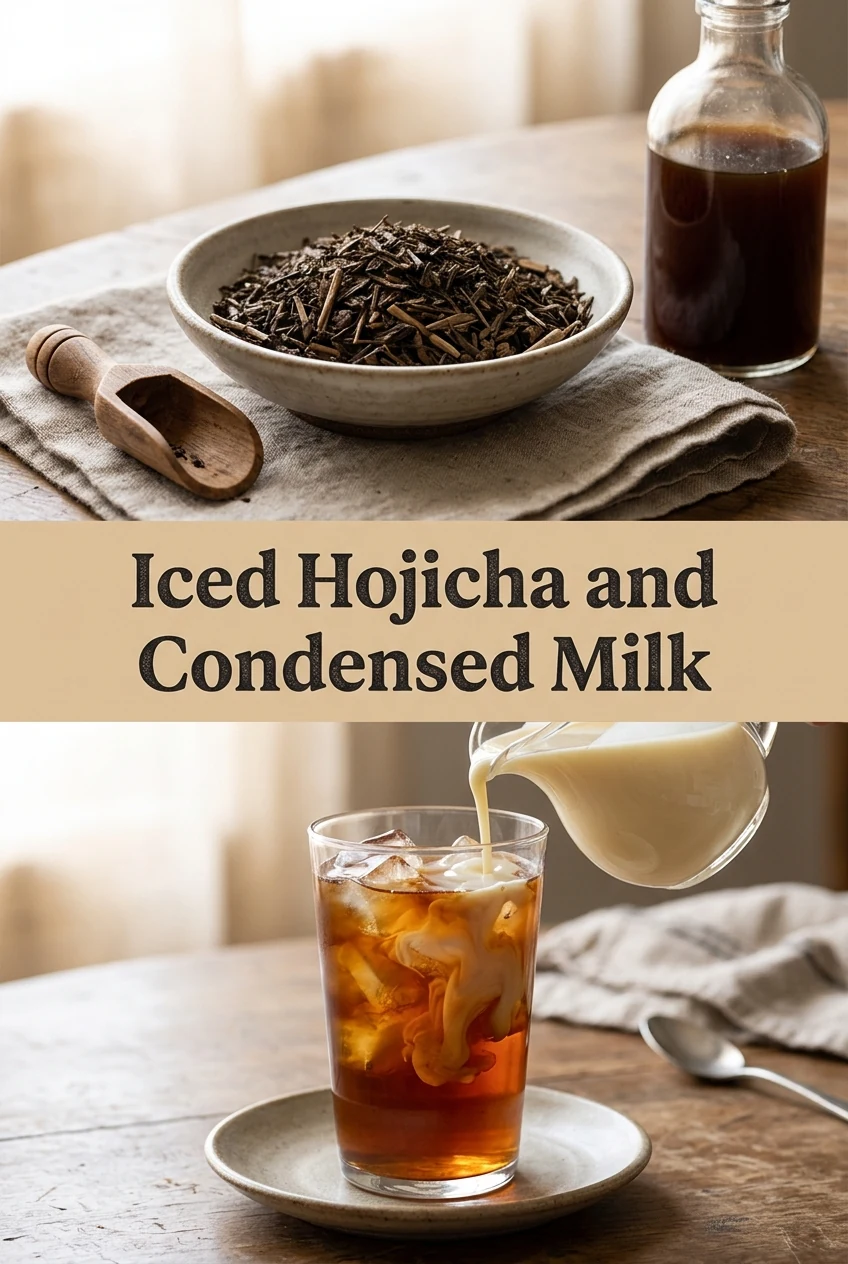
AI-generated editorial concept created for this article. The image is not a technical diagram or a tested result.
Choosing Your Hojicha
Hojicha is a roasted Japanese green tea available as loose leaf or in teabag form. Loose-leaf hojicha brewed at a higher ratio produces a deeper color and more pronounced roasted flavor, which holds up better once ice dilutes it. Teabags work too, though the flavor is often lighter. For this illustrative plan, loose-leaf hojicha is used. Look for leaves that smell toasty and caramel-like rather than grassy. The roast level varies by brand, so your first batch is really a calibration step — note how much bitterness comes through and adjust the steep time or leaf quantity on the next attempt.
Brewing a Strong Concentrate
A concentrate uses roughly double the leaf quantity you would use for a regular cup. As an illustrative example: use approximately 2 tablespoons of loose-leaf hojicha per 180 ml of water heated to around 90 degrees Celsius, which is a common manufacturer recommendation for hojicha. Steep for 2 to 3 minutes, then strain immediately. Steeping longer can push bitterness higher than condensed milk can balance comfortably. Follow the guidance on your specific tea's packaging as a starting reference, since roast levels and grind coarseness vary between products. The goal is a concentrate dark enough that it still reads as amber-brown after ice and milk are added.
Cooling Without Cloudiness
Pouring hot tea directly over ice works but can cause cloudiness from rapid temperature shock, particularly with some tea varieties. One approach that tends to reduce this: let the strained concentrate rest at room temperature for 10 to 15 minutes, then refrigerate it uncovered in a clean heatproof container until it reaches close to refrigerator temperature. Once cooled, pour it over ice. Hojicha is generally less prone to cloudiness than black tea, but cooling gradually is a straightforward habit that keeps the liquid visually clean. Do not leave brewed tea at room temperature for extended periods; use it the same day it is brewed.
Adding Condensed Milk for a Layered Result
Sweetened condensed milk is denser than the cooled tea concentrate, which allows it to settle toward the bottom of the glass when added first. For one serving using a 350 ml glass, an illustrative starting point is 1 tablespoon (approximately 20 g) of sweetened condensed milk spooned into the empty glass before adding ice. Fill the glass with ice, then pour the cooled hojicha concentrate slowly over the back of a spoon held just above the ice surface. The spoon slows the pour and helps the tea layer sit above the condensed milk for a moment before you stir. Stir fully before drinking to distribute the sweetness evenly. If the drink tastes too bitter, increase condensed milk by half a tablespoon on the next attempt; if too sweet, reduce by the same increment. This arithmetic is illustrative — your preferred balance may differ.
Scaling the Recipe for a Pitcher
To make four servings, multiply the concentrate quantities by four: approximately 8 tablespoons of loose-leaf hojicha steeped in 720 ml of water at the same temperature and time. Strain and cool as described. Store the cooled concentrate in a sealed container in the refrigerator and use it within the same day for best flavor. When serving from a pitcher, keep the condensed milk separate and let each person add their own measured amount directly to their glass. This avoids over-sweetening the whole batch and lets individual preferences guide the final cup.
A little more
to know.
Can I use a hojicha teabag instead of loose leaf?
Yes. Use two teabags per 180 ml of water to approximate the concentrate strength described here. Steep according to the time on the teabag packaging, then remove the bags promptly. The flavor will likely be lighter than loose-leaf concentrate, so you may find you need slightly less condensed milk to keep the balance comfortable.
Is sweetened condensed milk the only option, or can I use another sweetener?
Condensed milk works well here because its fat content softens hojicha's roasted edge while adding sweetness in one ingredient. You could substitute a simple syrup made from sugar and water, though the result will taste thinner and less creamy. If you use a different sweetener, start with a small amount and taste before adding more, since sweetness levels vary considerably between products.
Original editorial guidance and recipe formulations, not independently kitchen-tested. Times are estimates and depend on equipment and product directions. Cooked bases need additional cooling and refrigeration before cold serving. Images are AI-generated illustrations; appearance and yield may vary. Check actual ingredient labels, allergens, and any certification you require. We do not certify products. Read our approach.
Save to Pinterest ↗ANOTHER IDEA FOR THE COUNTER