Iced Espresso and Coconut Water
Coconut water carries a mild, grassy sweetness that can easily overwhelm a short espresso if the two are combined without attention to proportion. Getting the ratio right before you pour is the practical starting point for this drink. The approach here covers pulling a measured shot, letting it cool briefly, and layering it over coconut water in a way that keeps the flavors distinct rather than muddled.
Read the note ↓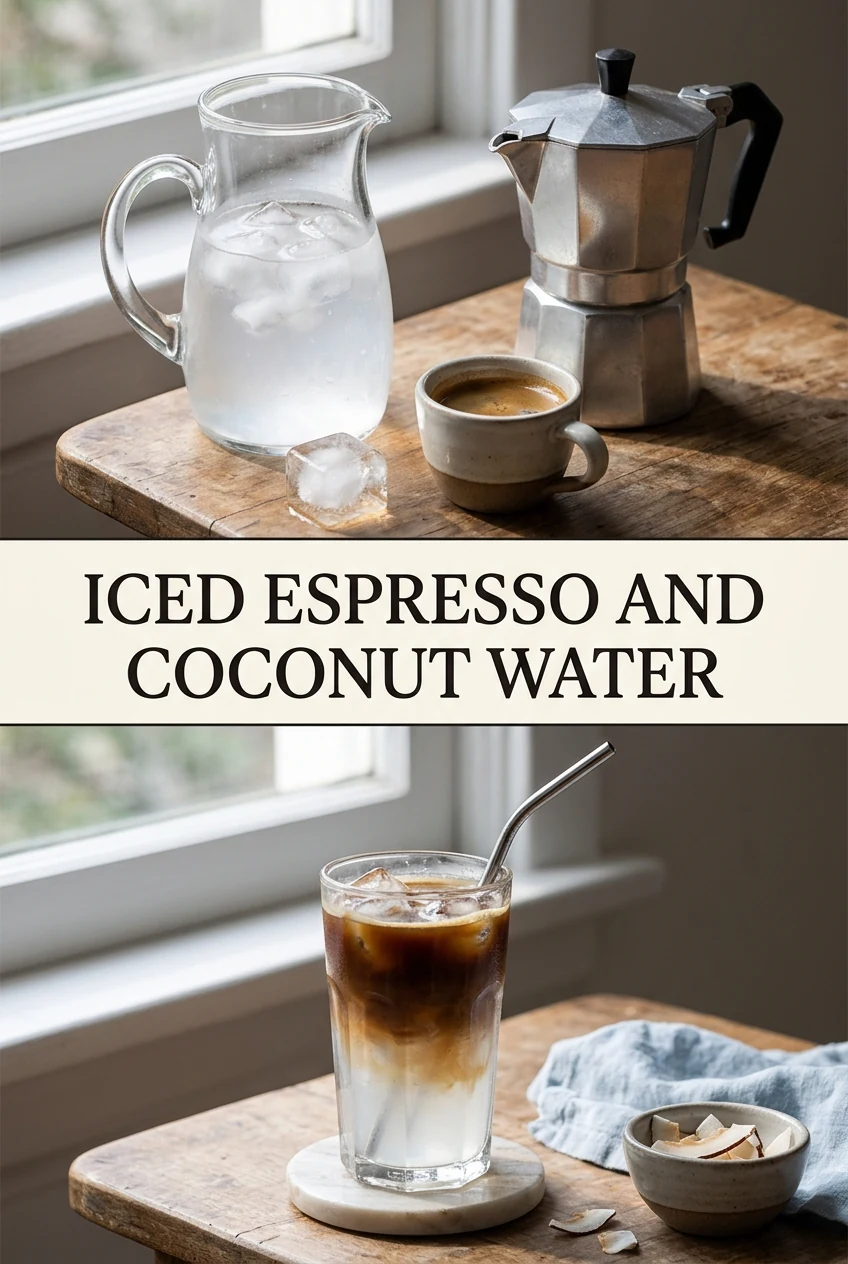
AI-generated editorial concept created for this article. The image is not a technical diagram or a tested result.
Understanding the Ratio Before You Start
Coconut water is not neutral. A standard 250 ml serving contains naturally occurring sugars that register clearly on the palate, and those sugars can flatten the bitter, roasted character of espresso if coconut water is used too generously. A workable starting point for a single-serve drink is 120 ml of plain coconut water to one 30 ml shot of espresso. That 4-to-1 ratio keeps the espresso present without being harsh and allows the coconut water's sweetness to act as a background note rather than the dominant flavor. If you prefer a stronger coffee character, reducing coconut water to 90 ml shifts the balance noticeably. These are illustrative starting points, not guaranteed outcomes, because espresso flavor varies with grind, roast, and machine.
Pulling a Short Espresso Shot
For this drink, a ristretto-style pull of roughly 20 to 30 ml suits the format better than a lungo, because a longer extraction introduces more dilute, bitter compounds that compete poorly with coconut water's sweetness. Follow your espresso machine's manufacturer guidance for dose, grind setting, and extraction time rather than applying a universal figure. Once the shot is pulled into a small ceramic or glass vessel, set it aside on the counter for two to three minutes. This brief rest allows the freshly brewed espresso to cool down to warm, which helps reduce rapid ice melt and thermal stress on glassware during the pour.
Building the Glass
Select a tall glass with a capacity of at least 350 ml to accommodate ice, coconut water, and espresso without overflow. Fill the glass with ice cubes to roughly three-quarters of its height. Measure 120 ml of plain, unsweetened coconut water using a small measuring jug and pour it directly over the ice. The coconut water chills quickly against the ice and settles at the base of the glass. At this stage the drink is already sweetened by the coconut water, so taste it before deciding whether any additional sweetener is needed. A small addition of a simple syrup made from sugar and water is one option if you want more sweetness, but the coconut water alone is often sufficient.
The Spoon Pour and Why It Matters
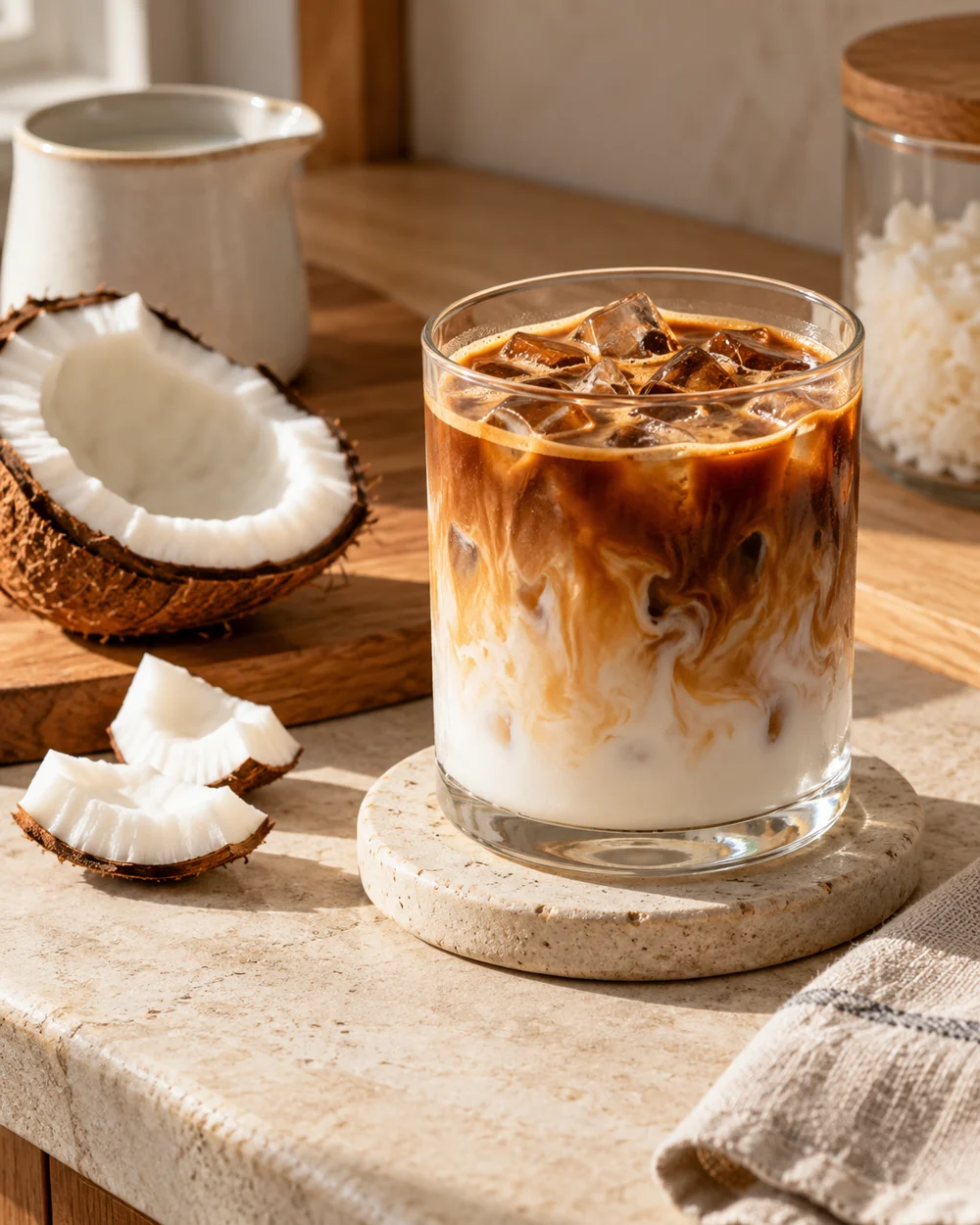
Pouring the cooled espresso directly into the glass creates turbulence that mixes it immediately with the coconut water, producing a uniform brown liquid. Holding a long-handled spoon or a regular dessert spoon curved-side up just above the surface of the coconut water and pouring the espresso slowly over the back of the spoon disperses the liquid gently. Because chilled coconut water with dissolved sugars is denser than warm espresso, the gently poured coffee spreads across the top rather than plunging through, creating a visible two-tone layer. This layered presentation is illustrative of the technique rather than a guarantee of a perfectly defined line, since ice movement and glass shape both affect the result. The drink can be stirred before drinking to blend the flavors, or left layered and sipped through a straw.
A Worked Example at a Glance
To make the drink described in this article: pull one 30 ml espresso shot and rest it for two to three minutes. Fill a 350 ml glass three-quarters full with ice. Measure and pour 120 ml of plain unsweetened coconut water over the ice. Hold a spoon just above the liquid surface and pour the cooled espresso over the back of the spoon. Total liquid volume in the glass is approximately 150 ml against a bed of ice, leaving comfortable headroom in a 350 ml glass. The coconut water contributes the primary sweetness; the espresso contributes roast and bitterness. Adjusting the coconut water volume between 90 ml and 150 ml is the most direct way to shift the flavor balance in either direction. This example is a planning guide, not a record of a tested outcome.
A little more
to know.
Can I use flavored coconut water instead of plain?
Flavored coconut water products often contain added sugars or fruit concentrates that increase sweetness beyond what plain coconut water provides. Using a flavored variety will likely make the drink sweeter than the ratio described here anticipates, so you may want to reduce the volume of coconut water or choose a product with no added sugar if you prefer a less sweet result.
Does the temperature of the espresso affect the layering?
A shot poured immediately from the machine is hot and will melt ice quickly, which increases dilution and makes the spoon layer harder to maintain. Allowing the espresso to rest for two to three minutes on the counter brings its temperature down enough to reduce rapid ice melt during the pour. The espresso does not need to be fully cold before pouring; warm rather than freshly pulled and hot is the practical target.
Original editorial guidance and recipe formulations, not independently kitchen-tested. Times are estimates and depend on equipment and product directions. Cooked bases need additional cooling and refrigeration before cold serving. Images are AI-generated illustrations; appearance and yield may vary. Check actual ingredient labels, allergens, and any certification you require. We do not certify products. Read our approach.
Save to Pinterest ↗ANOTHER IDEA FOR THE COUNTER