Iced Chamomile and Honey Milk
Chamomile brewed too hot or steeped too long turns noticeably bitter, and that bitterness becomes more pronounced once the tea is chilled and combined with milk. The approach here keeps things gentle: steep at a lower temperature for the time your chamomile tin recommends, dissolve honey directly into the warm brew before it cools, then combine the finished concentrate with cold milk over ice. The result is a floral, lightly sweet iced drink that stays smooth rather than sharp.
Read the note ↓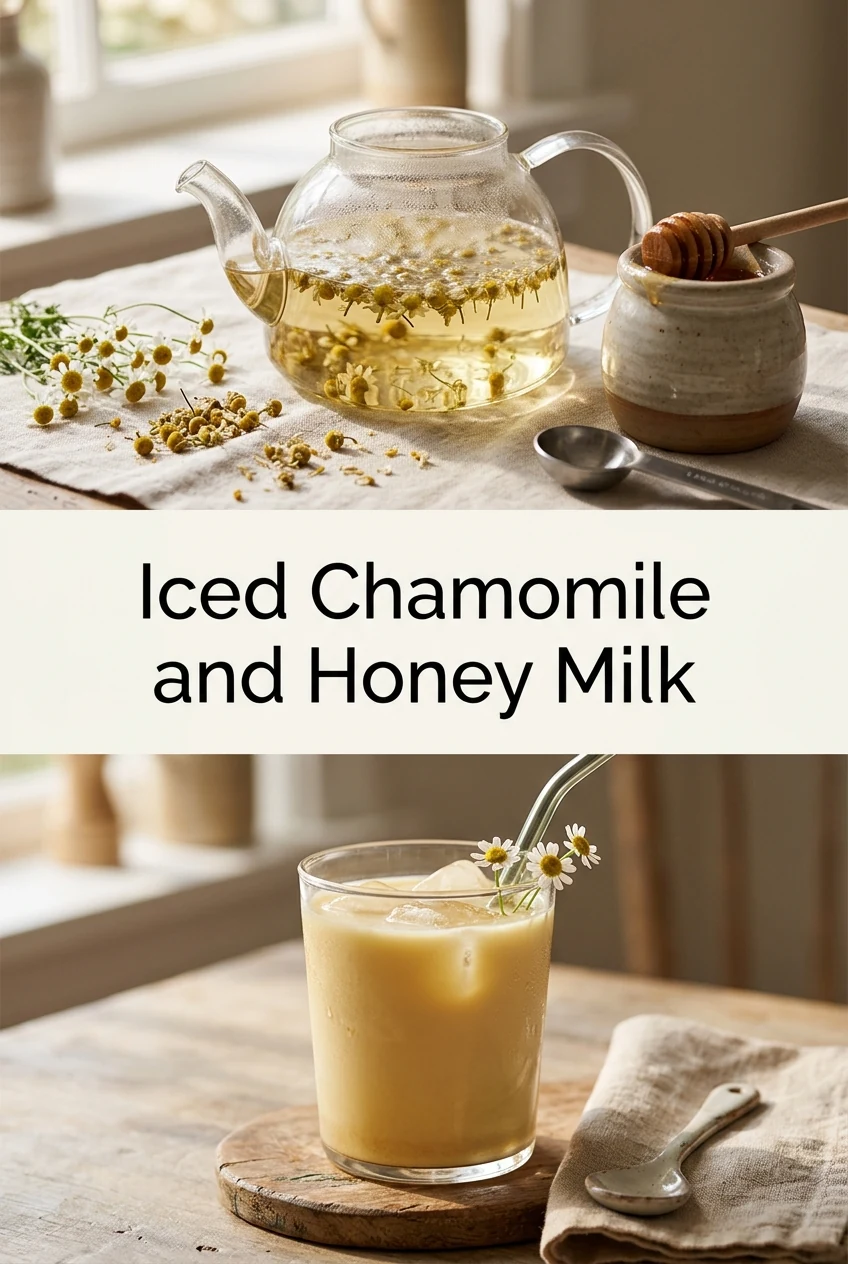
AI-generated editorial concept created for this article. The image is not a technical diagram or a tested result.
Choosing Your Chamomile
Dried chamomile flowers, whether loose or in bags, vary in intensity between brands and harvests. Check the packaging on your specific tin or box for the maker's recommended water temperature and steep time, and use those figures as your starting point. Many chamomile products suggest water somewhere in the range of 90 to 95 degrees Celsius, but some specialty blends specify lower. Following the tin's guidance rather than a generic boiling-water rule is the single most reliable way to avoid extracting the bitter compounds that emerge from overheating the flowers. If your packaging gives no temperature guidance, water that has rested off the boil for two to three minutes is a reasonable illustrative starting point, though your own tin remains the authority.
Brewing a Concentrate
Because the tea will be diluted by cold milk and melting ice, brewing a concentrate rather than a standard-strength cup gives the chamomile flavor somewhere to go. As an illustrative plan, consider roughly doubling the chamomile concentration compared to a standard cup. For example, if the tin suggests one bag per 240 millilitres, use two bags in 240 millilitres of water at the recommended temperature, or one bag in 120 millilitres. Steep for exactly the time shown on the packaging, then remove the bags or strain the loose flowers promptly. Leaving chamomile in contact with hot water beyond the suggested window is a common source of bitterness in the finished drink.
Dissolving Honey While the Brew Is Still Warm
Honey blends far more easily into warm liquid than cold. While the concentrate is still warm from steeping, stir in honey to taste. A starting point of one to two teaspoons per 240 millilitres of concentrate is an illustrative range; adjust to your preference. Stir until the honey is fully dissolved and no threads remain at the bottom of the vessel. Once dissolved, allow the concentrate to cool to room temperature, then transfer it to the refrigerator. Chilling the concentrate completely before assembly prevents it from melting the ice too quickly when you build the drink.
Assembling Over Ice
Fill a tall glass generously with ice cubes. Pour the chilled chamomile and honey concentrate over the ice, then top with cold whole milk or your preferred dairy alternative. A ratio of roughly one part concentrate to one part milk is a workable illustrative starting point, giving a pale golden drink with a noticeable floral note. Adjust the ratio in either direction depending on how strong you prefer the chamomile flavor and how creamy you want the texture. Stir gently once to combine, then taste and add a small additional drizzle of honey if you would like more sweetness. Serve immediately while the ice is still intact.
A Worked Example
To illustrate the full sequence: bring 300 millilitres of water to the temperature specified on your chamomile tin. Add three chamomile bags, or the equivalent in loose flowers, and steep for the duration the tin recommends. Remove the bags promptly, then stir in two teaspoons of honey until dissolved. Allow the concentrate to cool at room temperature for around 20 minutes, then refrigerate until fully cold. When ready to serve, fill a 500-millilitre glass with ice, pour in 150 millilitres of the chilled concentrate, and add 150 millilitres of cold milk. Stir once, taste, and adjust honey if needed. This plan is offered as a practical illustration, not a claim of tested or guaranteed results, since chamomile strength, honey variety, and personal taste all vary.
A little more
to know.
Can I use a dairy-free milk alternative instead of whole milk?
Yes. Oat milk, almond milk, and other dairy-free alternatives all combine with chamomile concentrate in the same way. Keep in mind that sweetened varieties will make the finished drink noticeably sweeter, so you may want to reduce the honey accordingly. Taste after assembling and adjust before serving.
How do I know if my chamomile has steeped too long?
A concentrate that has over-steeped will taste distinctly bitter or grassy even before milk is added. If you notice that bitterness in the warm concentrate, it will carry through into the finished iced drink. The most reliable way to avoid this is to set a timer as soon as you add the chamomile and remove it the moment the time on your tin's packaging is reached.
Original editorial guidance and recipe formulations, not independently kitchen-tested. Times are estimates and depend on equipment and product directions. Cooked bases need additional cooling and refrigeration before cold serving. Images are AI-generated illustrations; appearance and yield may vary. Check actual ingredient labels, allergens, and any certification you require. We do not certify products. Read our approach.
Save to Pinterest ↗ANOTHER IDEA FOR THE COUNTER