Iced Chamomile and Condensed Milk Over Ice
Chamomile brewed at a full rolling boil tends to release bitter, grassy compounds that become more pronounced once the liquid cools. Keeping the water just below boiling and pulling the infuser out cleanly — without squeezing — preserves the floral, honey-like character that makes chamomile worth drinking cold. Stirring in a measured spoon of sweetened condensed milk at the end rounds the flavour without masking it. This article walks through one illustrative approach to building that drink, from kettle temperature to the final pour over ice.
Read the note ↓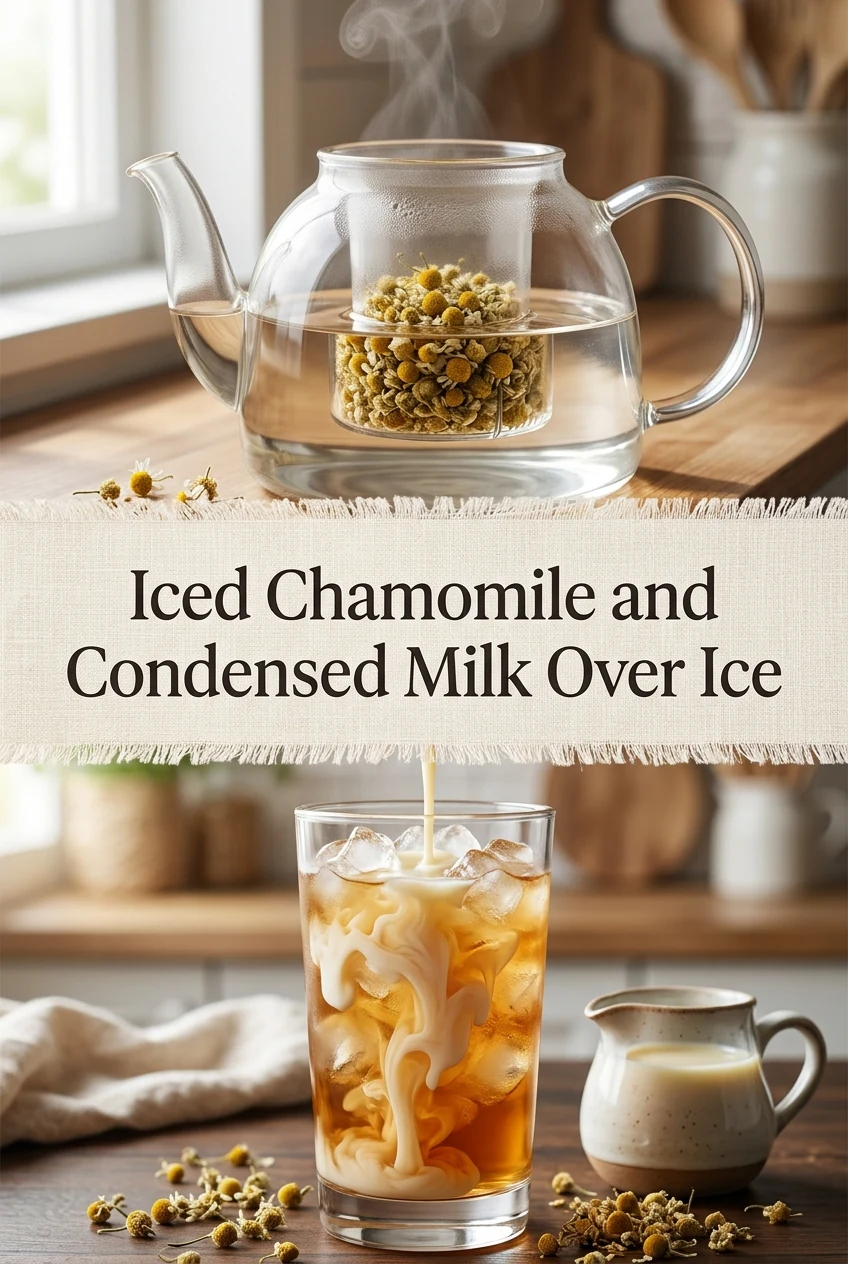
AI-generated editorial concept created for this article. The image is not a technical diagram or a tested result.
Why Temperature Matters Before the Ice Goes In
Chamomile flowers contain delicate volatile compounds that contribute their recognisable floral note. Water at a full boil — around 100 °C at sea level — can draw out additional bitter plant material alongside those desirable aromatics. Steeping in water that has been allowed to rest off the boil for roughly one to two minutes, landing somewhere in the 85–90 °C range, is a commonly recommended approach for chamomile. The result is a brew that reads as softer and more floral rather than sharp or grassy. This matters especially for an iced drink, because cold temperatures dull perceived sweetness, which can leave any bitter notes extracted during brewing more exposed and noticeable in the finished glass.
Steeping and Removing the Infuser Cleanly
For one serving, place one standard chamomile tea bag or a rounded teaspoon of loose dried chamomile flowers in an infuser basket inside a heat-safe mug or jug. Pour approximately 200 ml of water that has rested just off the boil over the chamomile. Steep for four minutes, then lift the infuser or tea bag out and set it aside without pressing or squeezing it against the side of the vessel. Squeezing forces additional liquid through the spent flowers and tends to push out more of the bitter plant material that remained behind during the steep. Removing it cleanly keeps the brew at the character it reached during the intended steep time.
Chilling the Brew Before Building the Drink
Allow the steeped chamomile to cool to room temperature, then transfer it to the refrigerator. Pouring hot or warm chamomile directly over ice will melt a significant portion of the ice immediately, diluting the drink before the condensed milk is even added. For a single 200 ml brew, chilling in the refrigerator until the liquid is cold throughout — rather than just cool at the surface — gives a more predictable starting point. Once the brew is fully cold, the drink can be assembled without the dilution that comes from rapid ice melt.
A Worked Example: One Glass
This is an illustrative plan rather than a tested result. Fill a 350 ml glass with ice cubes to roughly two-thirds full, which leaves space for the liquid and stirring. Pour the 200 ml of chilled chamomile brew over the ice. Add one level tablespoon — approximately 20 g — of sweetened condensed milk. Because condensed milk is dense and viscous, stir briskly from the bottom of the glass until it is completely blended into the cold tea rather than settling at the base. The condensed milk contributes both sweetness and a light creaminess without the separation that sometimes occurs with fresh milk poured into cold tea. Taste and, if a second tablespoon is preferred, add it at this point. The total volume of liquid in the glass will be around 215–220 ml, fitting comfortably alongside the ice in a 350 ml glass with room to stir.
Adjusting Strength and Sweetness
If the chamomile flavour reads as too light after chilling, steeping a second tea bag or an additional half-teaspoon of loose flowers in the same 200 ml of water during the same four-minute window is one way to increase intensity without extending the steep time. Extending the steep time beyond five to six minutes is more likely to introduce bitterness than to add useful floral depth. For sweetness, condensed milk varies in sugar content between brands, so starting with one tablespoon and tasting before adding more keeps the drink from becoming cloying. Those who prefer a less sweet result can use a smaller measured amount and rely on the natural mild sweetness of the chamomile itself.
A little more
to know.
Can I use a chamomile blend tea bag instead of pure chamomile?
Yes, though the flavour balance will depend on what else is in the blend. Some chamomile blends include mint, lemon myrtle or other herbs that change how the drink tastes once condensed milk is added. Reading the ingredient list first helps set expectations. The steeping temperature and time guidance in this article still applies, since the chamomile component in a blend benefits from the same below-boiling approach.
Does the condensed milk need to be a specific type?
Standard sweetened condensed milk sold in tins works well here. Although its viscosity means it requires thorough stirring to blend evenly into chilled liquid, it provides sweetness and body without separating. Unsweetened evaporated milk is a different product and will not contribute the same sweetness, so the two are not interchangeable in this recipe without adjusting for the missing sugar separately.
Original editorial guidance and recipe formulations, not independently kitchen-tested. Times are estimates and depend on equipment and product directions. Cooked bases need additional cooling and refrigeration before cold serving. Images are AI-generated illustrations; appearance and yield may vary. Check actual ingredient labels, allergens, and any certification you require. We do not certify products. Read our approach.
Save to Pinterest ↗ANOTHER IDEA FOR THE COUNTER