Flour by Cup or by Scale: Measuring for Small Baking
A cookie recipe that produces perfect results one week and dry, dense cookies the next is often a flour measurement problem rather than a recipe problem. The way flour is moved into a cup changes how much actually goes in. Scooping directly from the bag compacts the flour; spooning and leveling gives a lighter cup; weighing on a scale removes the variable entirely. This guide compares all three methods using the same flour and the same cup, and explains why following whatever method your recipe specifies is the most reliable starting point.
Read the note ↓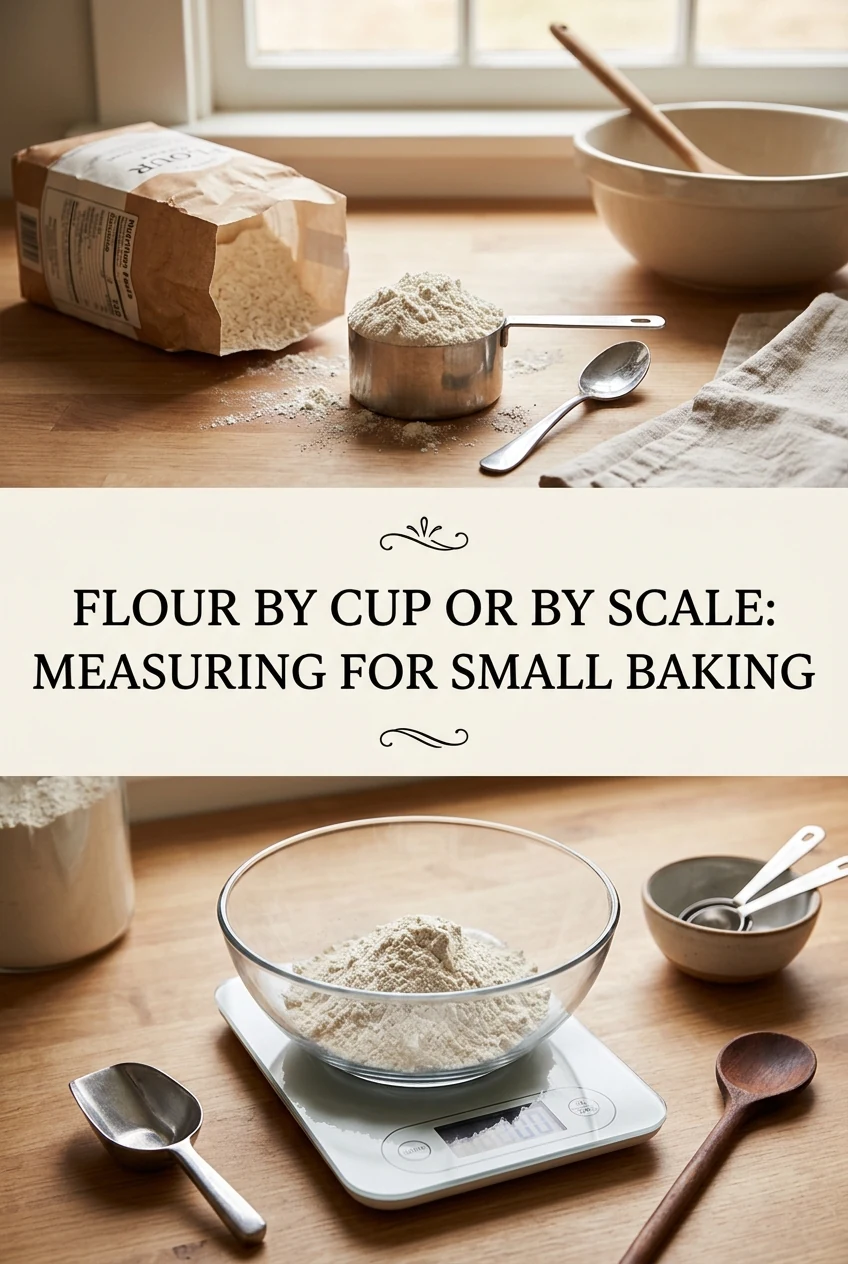
AI-generated editorial concept created for this article. The image is not a technical diagram or a tested result.
What Happens When You Scoop Directly
Pushing a measuring cup straight into a flour bag compacts the flour as the cup forces its way in. The result is a densely packed cup that can hold noticeably more flour than the recipe developer intended if they used a different method. In a small batch of cookies or a single-layer cake, even a modest excess of flour makes the finished product drier and tighter in texture. This is the most common cause of inconsistent results when bakers follow the same recipe on different days with different techniques.
Spooning and Leveling: What It Changes
Spooning flour from the bag or canister into the measuring cup with a separate spoon, then sweeping a straight edge across the top, produces a lighter, less compacted cup. The flour settles loosely rather than being forced in. This method is what many baking recipes mean when they say one cup of flour, particularly recipes developed in North American test kitchens. It gives a more consistent result than scooping but still varies depending on how aerated the flour is and how firmly you level the top.
Weighing on a Kitchen Scale
A kitchen scale removes technique variation entirely. Tare the bowl, add flour until the display shows your target weight, and stop. The result is the same every time regardless of how the flour was stored or how settled it is. To understand your own cup measure, try this illustrative exercise: fill a cup by scooping, then by spooning and leveling, and weigh each on a scale. In informal tests, the difference between methods for the same cup and flour can range from roughly 20 to 40 grams, though your results will depend on your flour and technique.
Follow the Method Your Recipe States
A recipe developed by weight should be followed by weight. A recipe that says one cup should be followed with the method the author used, which is often stated in a headnote or technique section. If the recipe does not specify, spooning and leveling is a reasonable default for most baking recipes. Switching methods mid-recipe or between baking sessions is the most common source of inconsistency. Record which method you used and the scale weight of your cup the first time a recipe works well, and repeat that approach.
Recording Your Own Cup Weight for Consistency
Once you find a method that works with a particular recipe, weigh the flour you used and note it in the recipe margin or a baking notebook. For example, if spooning and leveling your cup of all-purpose flour into a bowl and weighing it gives you 128 grams, that is your reference for that flour and that cup. Next time, you can weigh directly and skip the cup entirely. This is not a universal figure; it is specific to your flour brand, your cup, and your technique, which is exactly why recording it matters.
A little more
to know.
Does the type of flour affect how much variation there is between measuring methods?
Yes. Cake flour is finer and compacts more easily than bread flour, so the gap between scooping and spooning tends to be larger. Whole wheat flour behaves differently again. Always treat your recorded cup weight as specific to the flour type you used.
Should I sift flour before measuring or after?
Follow your recipe exactly. Sifting before measuring produces a lighter, more aerated cup than sifting after. If the recipe says sifted flour, sift first then measure. If it says flour, sifted, measure first then sift. The order changes the amount significantly.
Original editorial guidance and recipe formulations, not independently kitchen-tested. Times are estimates and depend on equipment and product directions. Cooked bases need additional cooling and refrigeration before cold serving. Images are AI-generated illustrations; appearance and yield may vary. Check actual ingredient labels, allergens, and any certification you require. We do not certify products. Read our approach.
Save to Pinterest ↗ANOTHER IDEA FOR THE COUNTER