Emulsify Cocoa Butter Smoothly in Hot Oat Beverages
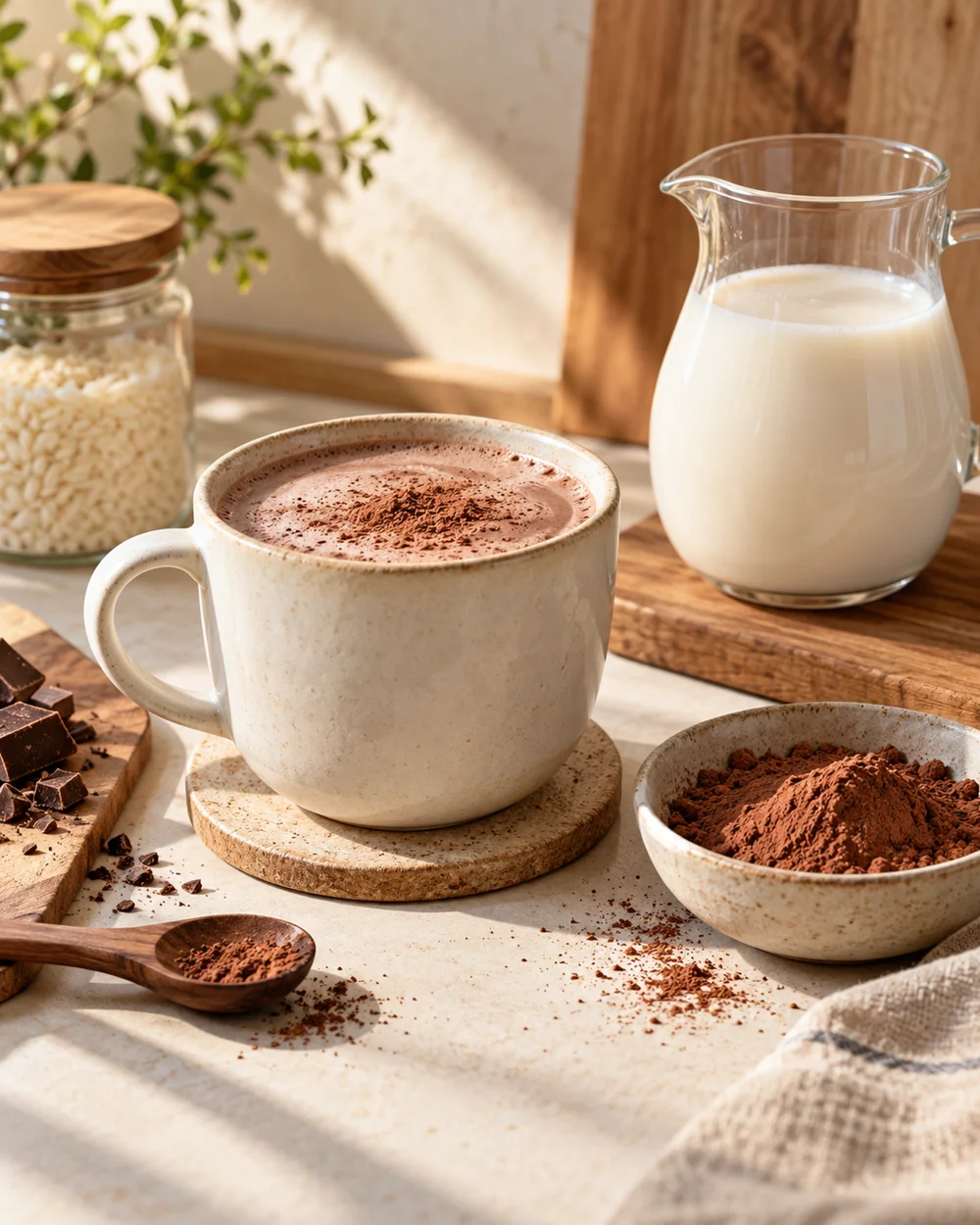
Melted cocoa butter adds rich confectionary body to hot plant-based drinks, but pure fat naturally separates from water-based liquids. Without mechanical shear, warm drinks prepared with cocoa butter develop an oily surface layer across the top of the mug. While oat milk contains natural starches and proteins, it lacks sufficient emulsifying properties to hold melted cocoa butter in suspension on its own. Creating a smooth, velvety texture requires warming the liquid above the melting point of cocoa butter and using an immersion blender to disperse the fat thoroughly.
Read the note ↓
Representative category illustration reused from our editorial library; it does not depict this specific project or a tested result.
Melting Dynamics and Temperatures
Food-grade cocoa butter melts fully between 34C and 37C, but simply melting the fat into oat milk produces poor results. Heat commercial plain oat milk to 65C in a small saucepan. Keeping the milk well above the fat melting point prevents cocoa butter from forming waxy droplets on equipment. Finely chop or grate 12 grams of solid cocoa butter so it liquefies instantly upon hitting the hot milk, avoiding concentrated pockets of unblended lipids.
Base Composition and Sweetener Integration
Combine 200 milliliters of warmed oat milk with 12 grams of chopped cocoa butter and 15 grams of powdered sugar or syrup in a tall, heat-resistant blending pitcher. Barista-style oat milk often contains dipotassium phosphate to buffer acidity, but plain oat milk works well when blended mechanically. Incorporating sweetener at this stage slightly thickens the liquid base, which helps keep the dispersed fat droplets evenly suspended after blending.
High-Shear Immersion Mechanics
A handheld frothing wand lacks the power needed to break melted fat into fine, stable droplets. Instead, submerge the head of an immersion blender beneath the liquid surface against the base of the pitcher. Angle the wand slightly to prevent a deep vortex from pulling air down into the drink. Blend on high speed for 30 to 35 seconds, allowing the rotating blades to shear the melted cocoa butter into a pale, smooth, and evenly blended mixture.
Air Control and Surface Foam
Excess air ruins the dense mouthfeel of a hot cocoa-butter drink, creating coarse bubble rafts rather than a unified liquid. Keep the immersion blender head anchored firmly to the bottom of the container while the motor runs. If foam develops on the surface, let the pitcher rest for fifteen seconds, then tap the container firmly against your kitchen counter to break surface air bubbles before pouring into a prewarmed ceramic cup.
Illustrative Batch Preparation
As a practical preparation example, combining 12 grams of grated cocoa butter with 200 milliliters of oat milk heated to 65C and blending for roughly 35 seconds produces a creamy, unified beverage. Without mechanical blending, melted fat separates quickly into a visible surface layer. This ratio provides a reliable baseline for rich body, though differences in commercial oat milk formulations may produce slight variations in emulsion stability.
A little more
to know.
Why does cocoa butter separate again if the drink cools down?
Cocoa butter begins to solidify as it cools toward room temperature. If the drink becomes cold, the dispersed fat can congeal and form a film on the surface. Serve the beverage promptly in prewarmed ceramic mugs to keep it pleasantly warm throughout service.
Can melted cocoa butter be whisked by hand instead?
Hand whisking produces fat droplets that are too large to remain suspended in thin plant milk. The fat quickly floats to the top. A motorized immersion blender or countertop blender is necessary for lasting emulsification.
Original editorial guidance and recipe formulations, not independently kitchen-tested. Times are estimates and depend on equipment and product directions. Cooked bases need additional cooling and refrigeration before cold serving. Images are AI-generated illustrations; appearance and yield may vary. Check actual ingredient labels, allergens, and any certification you require. We do not certify products. Read our approach.
Save to Pinterest ↗ANOTHER IDEA FOR THE COUNTER