Decide Whether to Use Whole Spices or Ground Spices in a Warm Milk Drink
A spiced warm milk drink can be made two different ways: steeping whole spices in hot milk and then straining them out, or stirring pre-ground powder directly into the milk. Each approach produces a different intensity, texture and serving experience. The choice depends on how much time you have, whether you want a smooth drink or can tolerate fine sediment and how strong you want the spice flavor to be.
Read the note ↓
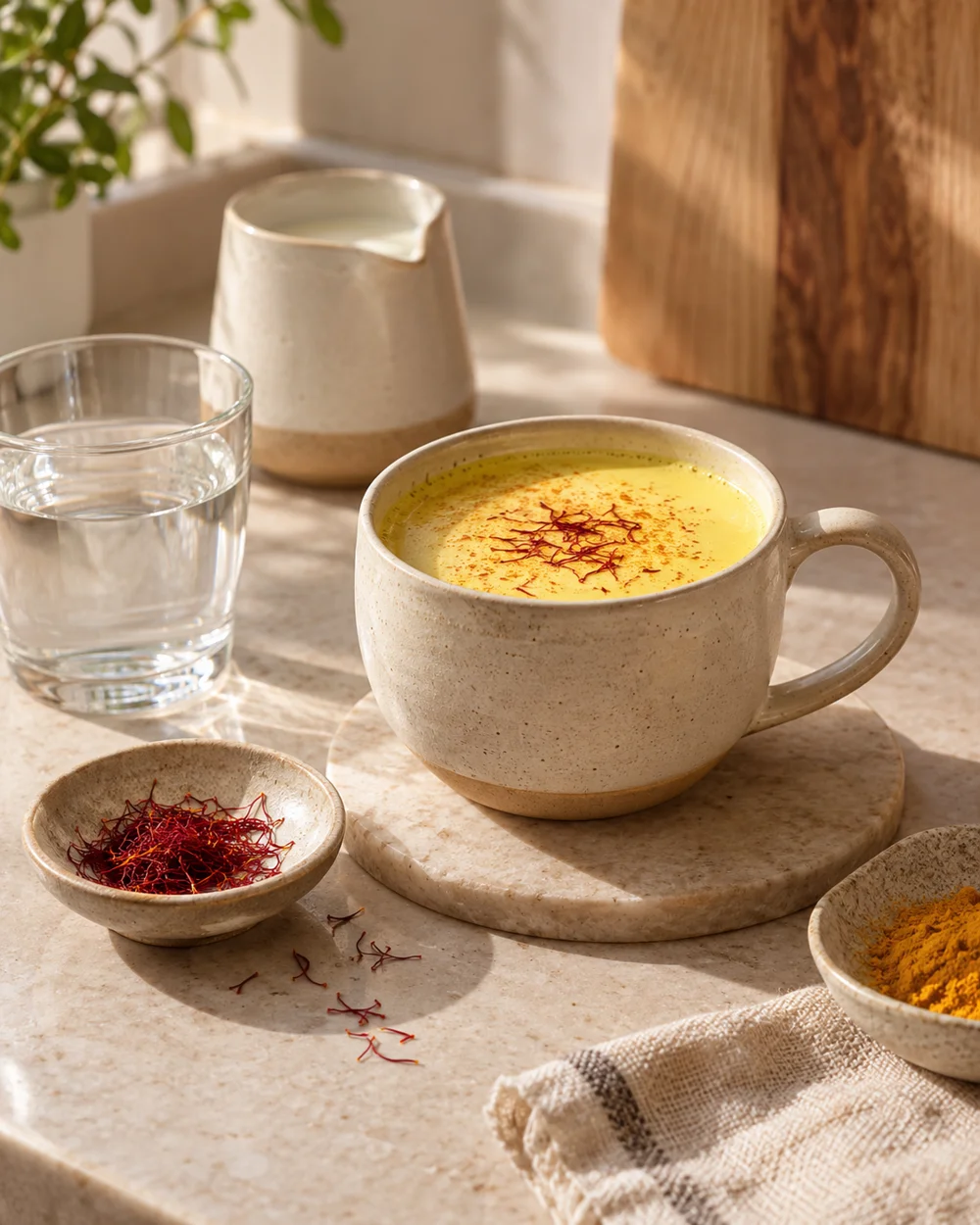
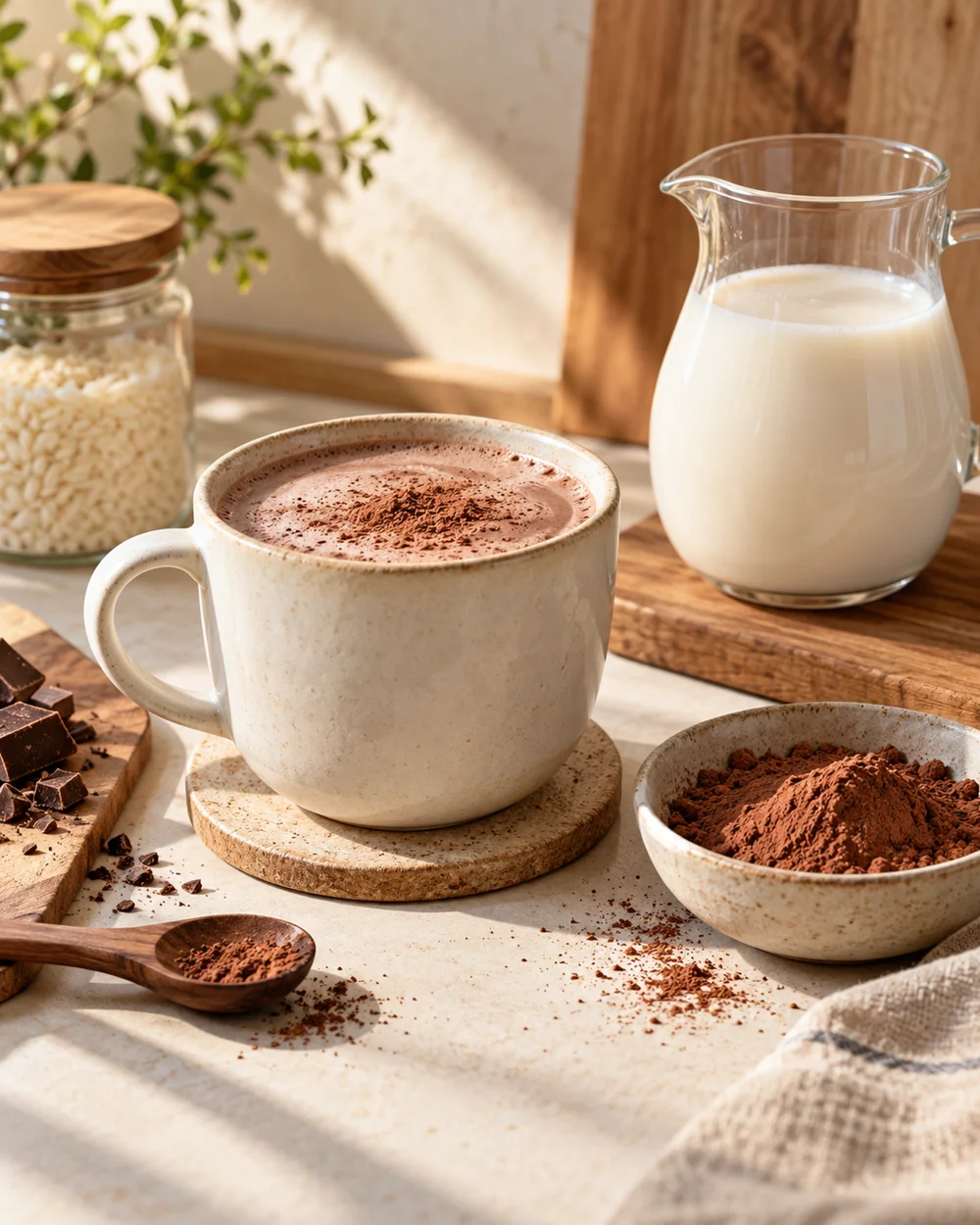
AI-generated editorial concept created for this article. The image is not a technical diagram or a tested result.
How Whole Spices Release Flavor During Steeping
Whole spices such as a cinnamon stick, three or four cardamom pods lightly cracked, and two cloves release their volatile compounds slowly into hot milk over time. A practical steep is eight to twelve minutes in milk held just below a simmer, around 80 degrees Celsius. The flavor builds gradually and tends to be rounded rather than sharp. The longer you steep, the more intense the result, but the flavor profile stays relatively clean because the spice solids never fully dissolve into the liquid.
Straining After Steeping and What It Leaves Behind
After steeping, pour the milk through a fine-mesh strainer into your cup. Whole spices come out cleanly and the finished drink is smooth with no grit. The strainer also catches any small fragments that broke off during steeping. This step adds thirty seconds to the process but is necessary; skipping it means biting into a cardamom pod or clove, which is unpleasant. Rinse the strainer immediately so spice residue does not dry onto the mesh.
How Ground Spices Behave When Stirred Into Hot Milk
Ground spices disperse quickly and deliver immediate, stronger flavor compared to the same quantity of whole spices steeped for the same time. A quarter teaspoon of ground cinnamon stirred into 200 ml of warm milk produces a noticeably more intense result than one cinnamon stick steeped for ten minutes. However, ground spices do not fully dissolve. Fine particles remain suspended and eventually settle, creating a thin layer of sediment at the bottom of the cup. Stirring before each sip manages this.
Texture Differences and When Sediment Matters
If you are making a drink for someone who dislikes any grit or texture variation, whole spices with straining produce the cleanest result. Ground spices suit situations where you want speed and do not mind the slight texture, or where you are whisking the drink vigorously anyway, as with a warm cocoa base. For a layered drink served in a clear glass where appearance matters, the suspended particles from ground spices can make the milk look slightly cloudy or uneven, which may not suit the presentation.
Matching the Method to Your Actual Situation
If you have ten to fifteen minutes and want a mild, smooth drink, steep whole spices and strain. If you have five minutes and want stronger flavor without straining, use a small measured amount of pre-ground spice and stir thoroughly. As an illustrative example, a 200 ml warm milk drink made with one cinnamon stick steeped for ten minutes will taste noticeably milder than the same milk with one-quarter teaspoon of ground cinnamon stirred in. Neither is wrong; they are different outcomes from the same ingredients in different forms.
A little more
to know.
Can I combine whole and ground spices in the same drink?
Yes, and some recipes use this deliberately. You might steep a cinnamon stick for background warmth and add a small pinch of ground cardamom at the end for a sharper top note. Expect the ground portion to create some sediment even with the whole spice present.
Does the age of ground spices affect how much to use?
Ground spices lose potency over time as volatile compounds dissipate. Older ground spices may require a slightly larger amount to achieve the same intensity as fresher stock. Smell the spice before using it; a weak or flat aroma suggests it has aged past its most effective point.
Original editorial guidance and recipe formulations, not independently kitchen-tested. Times are estimates and depend on equipment and product directions. Cooked bases need additional cooling and refrigeration before cold serving. Images are AI-generated illustrations; appearance and yield may vary. Check actual ingredient labels, allergens, and any certification you require. We do not certify products. Read our approach.
Save to Pinterest ↗ANOTHER IDEA FOR THE COUNTER