Decide Whether to Use a Scale or a Measuring Cup When Portioning Coconut Cream for a Warm Drink
A can of coconut cream often contains a firm white solid layer sitting above a thinner liquid layer, and the ratio between those zones changes with room temperature and how long the can has rested. Scooping by volume from an unmixed can gives an inconsistent dose, which changes the richness of a warm drink noticeably from cup to cup. Choosing between a scale and a measuring cup depends on how the cream is prepared before portioning.
Read the note ↓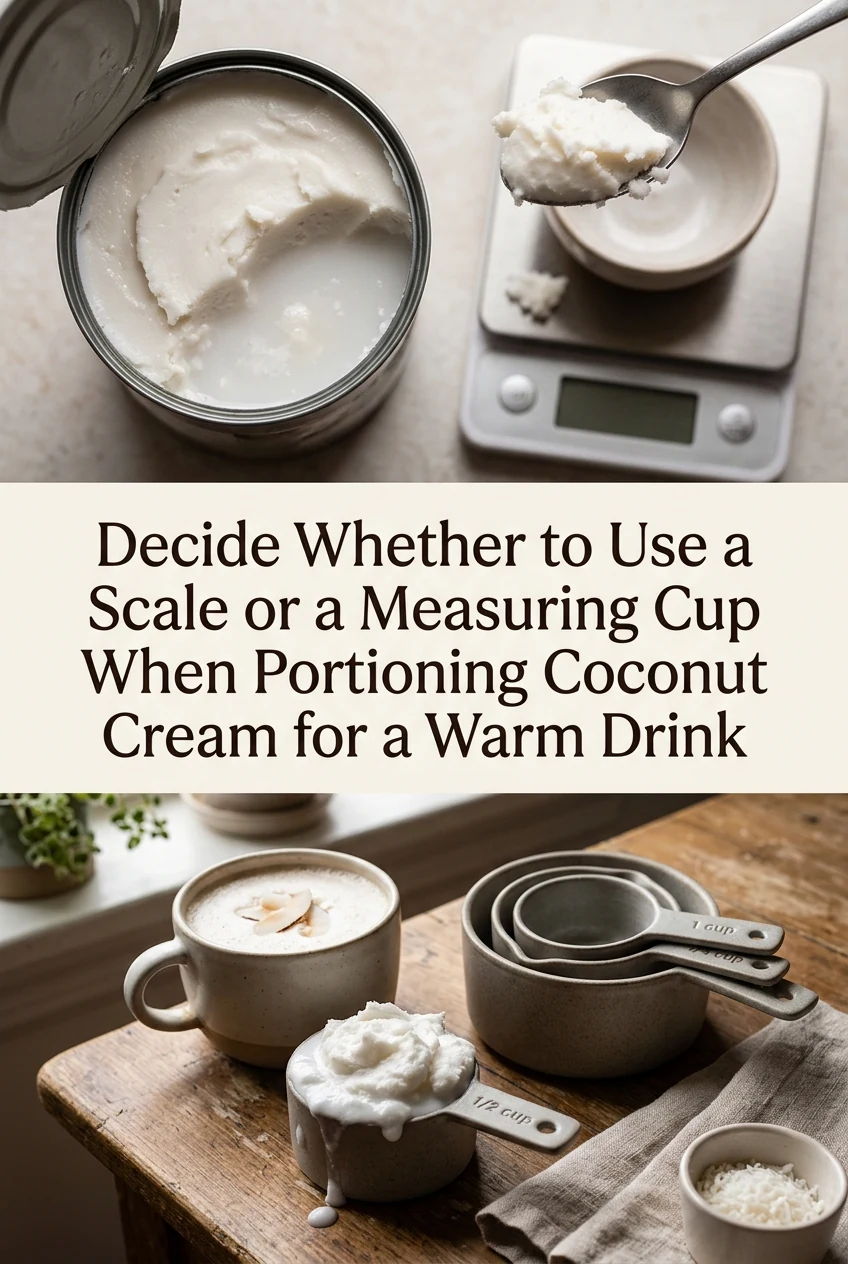
AI-generated editorial concept created for this article. The image is not a technical diagram or a tested result.
Understand Why Coconut Cream Separates
Coconut cream separates because the fat content solidifies below roughly 24 degrees Celsius. A can stored in a cool pantry may be almost entirely solid at the top and watery at the bottom. A can stored in a warm kitchen may be partially liquid throughout. Neither state is spoilage. The problem for portioning is that a cup measure scooped from the solid zone delivers far more fat than one scooped from the liquid zone, making each drink taste different.
The Case for Weighing by Mass
A kitchen scale provides superior precision once the can is mixed, and it avoids the clinging residue that makes measuring cups inaccurate. When coconut cream is stirred into a uniform consistency, weighing 60 g directly into your blending cup ensures you receive the exact portion required. Spooning thick cream into a volume cup inevitably leaves several grams stuck to the sides and bottom, skewing the recipe. Weighing removes cup-scraping and keeps the portion repeatable across multiple drinks.
The Case for Measuring by Volume After Stirring
Volume measurement becomes reasonably reliable if you stir the entire can thoroughly before portioning. Open the can, use a spoon to fold the solid and liquid together until the texture is uniform, then scoop your measure. A 60 ml measure from a well-stirred can will be far closer to a consistent fat dose than a scoop from an unstirred one. This works well when a scale is unavailable, but requires the full can to be mixed first, which affects storage.
Worked Example Comparing Both Methods
Consider a warm spiced cocoa recipe calling for 60 g of coconut cream. If you use a measuring cup, you must stir the can, pour or spoon the cream into the cup, level it, and scrape it out, routinely leaving five to ten grams behind on the utensil and cup walls. Using a scale streamlines the process: stir the can to recombine the separated layers, place your serving mug or pitcher directly on the scale, tare it to zero, and spoon in 60 g. This eliminates transfer loss and guarantees the intended fat and liquid balance.
Storage After Opening and Portioning
Once a can of coconut cream is opened, transfer any unused portion to a clean, sealed container and refrigerate promptly at 4 degrees Celsius or below within two hours of opening. The cream will solidify again in the refrigerator. For the next use, allow it to soften at room temperature briefly or stir it while still cold before portioning. Do not store opened coconut cream in the original can. Use refrigerated opened coconut cream within three to four days.
A little more
to know.
Does the brand of coconut cream affect how much it separates?
Yes. Higher fat content products separate more dramatically and produce a firmer solid layer. Lower fat coconut cream, sometimes labeled lite, separates less but delivers a thinner result in the drink. Check the fat content on the label when choosing.
Can I warm the can to make the cream easier to measure by volume?
Standing the closed can in warm water for a few minutes softens the solid layer and makes stirring easier. Do not use boiling water or apply direct heat to the can. Warm gently and stir thoroughly before measuring.
Original editorial guidance and recipe formulations, not independently kitchen-tested. Times are estimates and depend on equipment and product directions. Cooked bases need additional cooling and refrigeration before cold serving. Images are AI-generated illustrations; appearance and yield may vary. Check actual ingredient labels, allergens, and any certification you require. We do not certify products. Read our approach.
Save to Pinterest ↗ANOTHER IDEA FOR THE COUNTER