Decide Whether to Sweeten a Warm Spiced Milk Drink in the Pot or in Each Cup
When you make a spiced warm milk drink for more than one person, the moment you add sweetener changes both the flavour and the practicality of serving. Sweetening in the pot is faster and ensures the sugar dissolves fully in hot liquid, but it commits every cup to the same level. Sweetening in each cup gives guests control but introduces the risk of undissolved syrup sitting at the bottom of a drink that has already cooled slightly by the time it is served.
Read the note ↓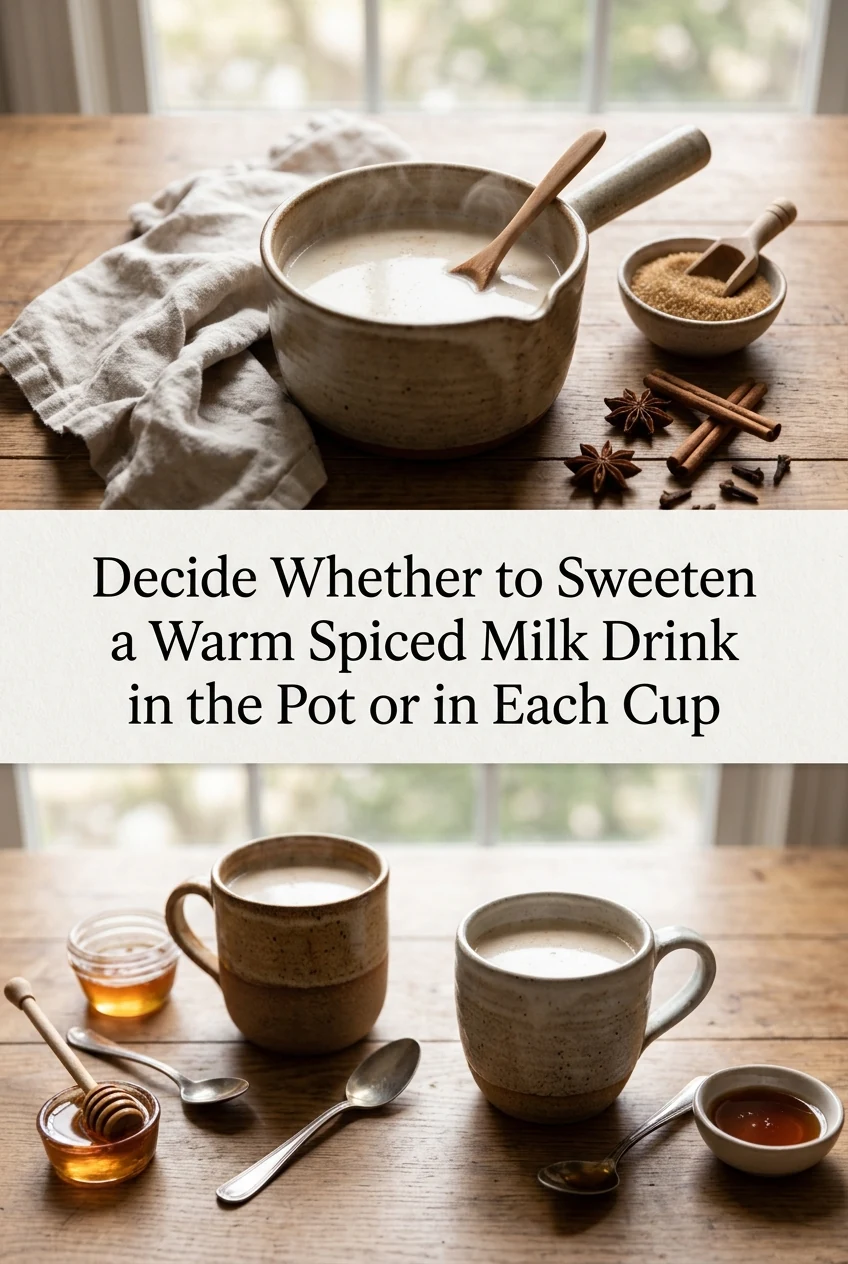
AI-generated editorial concept created for this article. The image is not a technical diagram or a tested result.
Understand How Spice Flavour Changes With Sweetness Level
Spices such as cinnamon, cardamom, and ginger read differently depending on when sweetness is present. In an unsweetened base, these spices can taste sharp or medicinal. Once sugar is added, the same spice level often tastes more rounded and aromatic. If you sweeten in the pot, taste the spiced milk before adding sugar and adjust the spice quantity first, because sweetness will amplify the spice perception and a level that tasted mild unsweetened may become dominant once sugar is incorporated.
When Sweetening in the Pot Makes Practical Sense
If you are serving a group where preferences are known and consistent, adding sweetener to the pot while the milk is still at serving temperature, roughly 65 to 70 C, ensures granulated sugar or honey dissolves completely. Stir for at least 30 seconds after adding. This approach works well for a fixed recipe where you want uniform flavour across all cups. It also reduces the number of steps at the point of service, which matters when pouring multiple cups quickly from a single pot.
When Sweetening Per Cup Is the Better Choice
If guests have varying preferences or you are serving a mix of adults and children who may want different sweetness levels, pour the unsweetened spiced milk first and offer syrup on the side. Use a simple syrup rather than granulated sugar, because syrup dissolves in a warm drink without stirring as vigorously. A small pouring jug with 10 ml and 20 ml markings lets guests add a measured amount rather than guessing. This method adds one step but prevents waste from cups that are too sweet to finish.
The Risk of Undissolved Sweetener in a Cooling Cup
A warm milk drink cools quickly once poured, particularly in a ceramic cup that has not been pre-warmed. Granulated sugar added to a cup that has dropped below 55 C may not dissolve fully and will settle at the bottom, meaning the last sip tastes sweeter than the first. If you are sweetening per cup, pour the syrup into the empty cup before adding the hot milk, not after, so the heat of the liquid dissolves it on contact rather than relying on stirring a cooling drink.
A Simple Decision Framework for Your Setup
Ask two questions before you begin: do all guests want the same sweetness level, and will the milk stay hot enough during service for sugar to dissolve in individual cups? If both answers are yes, either method works. If preferences differ, use per-cup syrup poured into the empty cup first. If the milk will cool quickly during a slow service, sweeten in the pot while it is still on the heat. Neither method is universally superior; the choice depends on your specific serving conditions.
A little more
to know.
Does adding honey to the pot while the milk is still heating affect the honey's flavour?
Prolonged high heat can reduce the more delicate aromatic notes in honey. Add honey after removing the pot from the heat and while the milk is still hot enough to dissolve it, rather than simmering honey in the milk for several minutes.
If I sweeten in the pot and the drink is too sweet, can I correct it?
You can dilute by adding a small amount of unsweetened warm milk and stirring, though this also reduces the spice concentration slightly. It is easier to under-sweeten in the pot and let guests add more per cup than to correct an over-sweetened batch.
Original editorial guidance and recipe formulations, not independently kitchen-tested. Times are estimates and depend on equipment and product directions. Cooked bases need additional cooling and refrigeration before cold serving. Images are AI-generated illustrations; appearance and yield may vary. Check actual ingredient labels, allergens, and any certification you require. We do not certify products. Read our approach.
Save to Pinterest ↗ANOTHER IDEA FOR THE COUNTER