Decide Whether to Strain a Warm Spiced Milk Drink Before Serving or at the Pot
Whole spices left in a warm milk drink do not stop releasing flavour once the heat is off. They continue steeping in the cup, and by the time someone reaches the last third of the drink, the result can be noticeably more bitter or sharp than the first sip. Understanding when to strain at the pot versus pouring through a sieve directly at the cup helps you control the final flavour without guessing.
Read the note ↓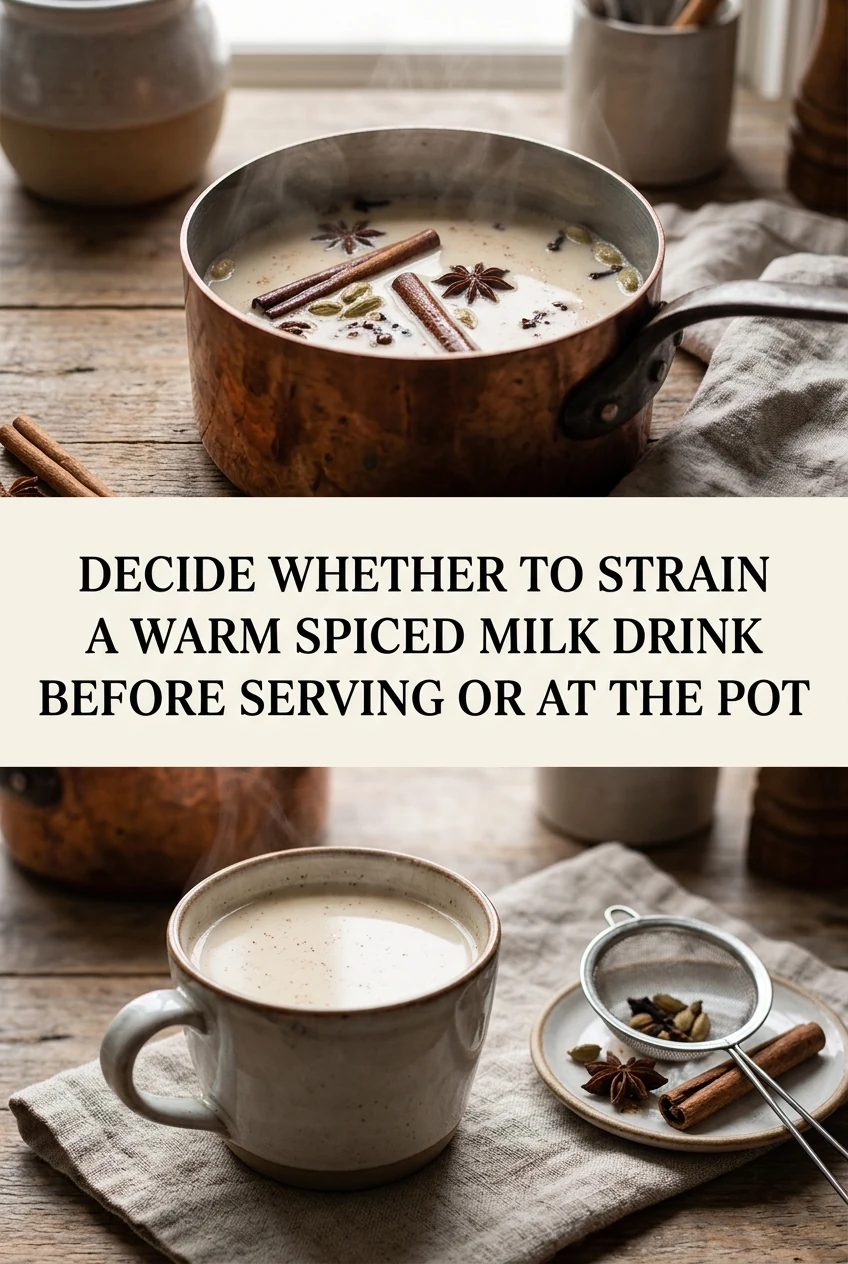
AI-generated editorial concept created for this article. The image is not a technical diagram or a tested result.
Understand why spices keep steeping after the heat is off
Whole spices such as cinnamon sticks, cardamom pods, and cloves continue to release compounds into warm liquid as long as they remain in contact with it. The rate slows as temperature drops, but it does not stop. A drink served at 65 C with spices left in will taste noticeably stronger at 45 C. This matters most with cloves and cardamom, which can turn sharp quickly, and less with cinnamon, which fades more gradually.
Strain at the pot when serving multiple cups at once
If you are making two or more cups from the same pot, straining the full batch into a warmed pouring jug before serving is the most practical approach. Pour the milk drink through a fine mesh strainer into the jug, then distribute into cups. This removes all spice contact at once and ensures every cup starts from the same flavour point. It also speeds up serving because you are not handling a strainer cup by cup.
Strain at the cup when serving one person or adjusting strength
When making a single cup, holding a small strainer over the cup while pouring from the pot gives you one more moment to decide on strength. If the drink has steeped longer than intended, you can pour a slightly smaller amount and top with plain warm milk to dilute. This approach is also useful when one person prefers a lighter spice level than another, as you can adjust the pour volume individually.
Practical example using a basic spiced milk recipe
Consider a pot containing 500 ml whole milk, one cinnamon stick, four cardamom pods lightly crushed, two cloves, and 20 g sugar, simmered for eight minutes. Straining the full pot into a jug immediately after simmering and before pouring gives a balanced result. Leaving the spices in the pot while pouring two cups over five minutes means the second cup will taste measurably stronger. This is an illustrative example, not a calibrated measurement.
Handle the strainer and hot liquid safely at the cup
When straining at the cup, use a strainer with a handle or a clip that rests on the rim, not one you hold freehand over a full cup of hot liquid. Pour slowly to avoid splashing. If the strainer becomes clogged with spice debris mid-pour, pause and clear it with a spoon before continuing. A small strainer with a 6 to 8 cm diameter basket fits most standard mugs without tipping.
A little more
to know.
Does straining earlier in the steep produce a noticeably different drink than straining at the end?
Yes. Straining two minutes before the intended steep time ends gives a lighter, more delicate result. If you prefer a subtler spice presence, removing the spices slightly early is a reliable way to achieve it without changing the recipe quantities.
Can I reuse whole spices from the pot for a second batch?
Whole spices used in a simmered milk drink have already released most of their volatile compounds. A second batch will produce a noticeably weaker flavour. Using fresh spices for each batch gives more consistent and predictable results.
Original editorial guidance and recipe formulations, not independently kitchen-tested. Times are estimates and depend on equipment and product directions. Cooked bases need additional cooling and refrigeration before cold serving. Images are AI-generated illustrations; appearance and yield may vary. Check actual ingredient labels, allergens, and any certification you require. We do not certify products. Read our approach.
Save to Pinterest ↗ANOTHER IDEA FOR THE COUNTER