Decide How to Sweeten a Warm Oat Milk Drink When No Tin Guidance Is Given
When a warm oat milk drink recipe gives no sweetener quantity, adding a small measured amount and tasting before adding more is the only reliable method. Oat milk already carries natural sweetness from its starch content, and cocoa or spice powders vary in bitterness between brands. This guide explains how to set a starting quantity, taste systematically, and avoid over-sweetening a batch that cannot easily be corrected once the sweetener is fully dissolved.
Read the note ↓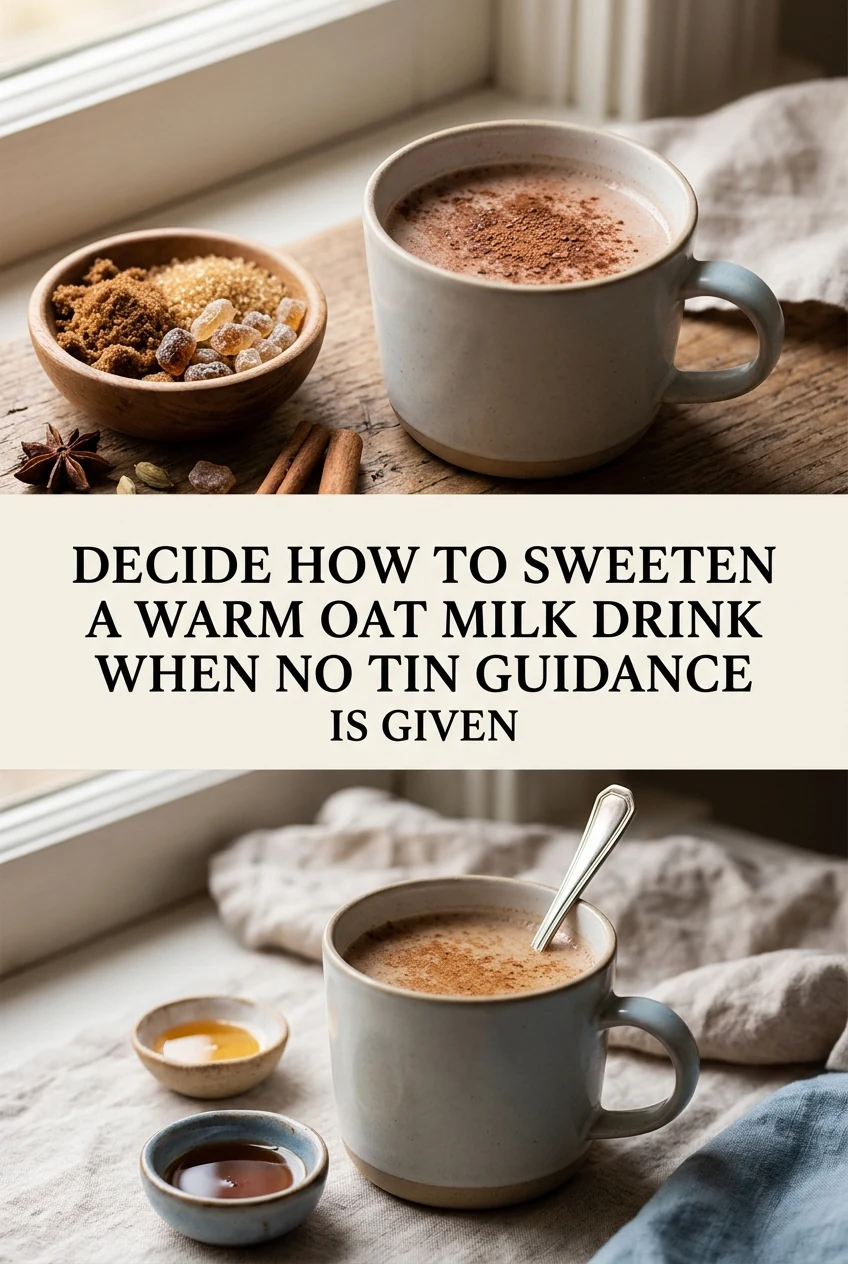
AI-generated editorial concept created for this article. The image is not a technical diagram or a tested result.
Understand Why Oat Milk Needs Less Sweetener Than Dairy
Oat milk contains residual sugars from its oat base, which means it tastes noticeably sweeter than unsweetened dairy milk at the same temperature. A warm oat milk drink will therefore need less added sweetener than an equivalent dairy version. If you are following a recipe written for dairy and substituting oat milk, reduce the stated sweetener quantity by roughly a quarter as your starting point, then taste before adding more.
Set a Measurable Starting Quantity
For a single 250 ml warm oat milk drink, begin with half a teaspoon of caster sugar or one level teaspoon of maple syrup as your baseline. These are illustrative starting amounts, not universal recommendations, since cocoa powder bitterness and oat milk brand sweetness both vary. The point is to begin with a quantity small enough that the drink is likely under-sweetened, which leaves room to adjust upward without overshooting.
Heat the Oat Milk Before Adding Sweetener
Warm the oat milk in a small saucepan over medium-low heat, stirring occasionally, until it reaches your preferred drinking temperature. Do not boil oat milk; it can separate and develop a starchy texture. Add your starting sweetener quantity once the milk is warm and stir for 30 seconds to dissolve it fully. Sweetener that is not fully dissolved will give you an inaccurate taste reading at the next step.
Taste Systematically and Add in Small Increments
Use a clean teaspoon to take a small sip from the saucepan or a poured sample in a cup. Wait a moment after tasting; sweetness perception can lag slightly when a drink is very hot. If the drink needs more sweetness, add a quarter teaspoon of your chosen sweetener, stir again for 20 seconds, and taste once more. Repeat this process rather than adding a large amount at once. Once over-sweetened, the only correction is adding more unsweetened oat milk, which changes your serving volume.
Account for Any Added Powders or Spices
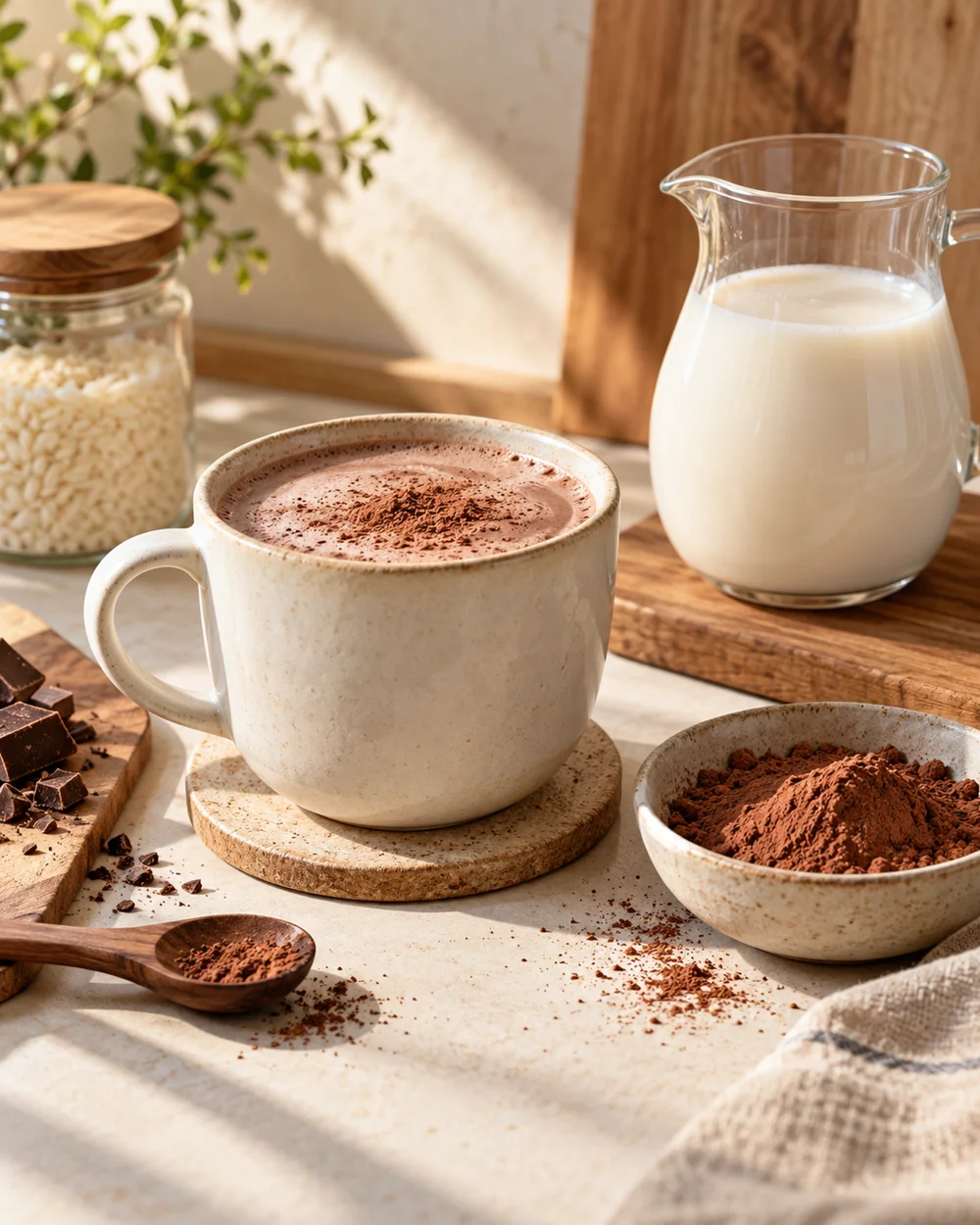
If your drink includes cocoa powder, carob powder, or ground spices such as cinnamon or cardamom, add those to the warm milk before your first sweetener taste. These ingredients affect the perceived sweetness of the drink significantly. Cocoa powder in particular adds bitterness that may require more sweetener than a plain oat milk drink. Tasting after all powders are incorporated gives you an accurate baseline rather than sweetening in stages around them.
A little more
to know.
Does the type of sweetener change how much I should use as a starting amount?
Yes. Different sweeteners vary in sweetness intensity and moisture content. Dense sweeteners like honey provide concentrated sweetness, whereas maple syrup contains water and provides less sweetness by volume than granulated sugar. Both liquid sweeteners also contribute distinct flavors, so begin with a conservative measured amount and taste before adjusting.
Can I sweeten the oat milk drink and then reheat it later without losing the balance?
Reheating a sweetened oat milk drink is possible over low heat with stirring, but prolonged heat can intensify sweetness perception slightly as water evaporates. Taste again after reheating and adjust with a small splash of unsweetened oat milk if needed before serving.
Original editorial guidance and recipe formulations, not independently kitchen-tested. Times are estimates and depend on equipment and product directions. Cooked bases need additional cooling and refrigeration before cold serving. Images are AI-generated illustrations; appearance and yield may vary. Check actual ingredient labels, allergens, and any certification you require. We do not certify products. Read our approach.
Save to Pinterest ↗ANOTHER IDEA FOR THE COUNTER