Decide How to Divide One Moka Pot Brew Between a Warm Cup and an Iced Glass
A three-cup moka pot produces a fixed volume of concentrated coffee, typically around 130 to 150 milliliters depending on the specific pot and fill level. When two people want coffee but one prefers it hot and the other over ice, dividing that single brew fairly requires a decision made before the pot goes on the stove, not after. Planning the split in advance determines how much ice to prepare, which vessels to use, and whether either serving will be too diluted or too strong.
Read the note ↓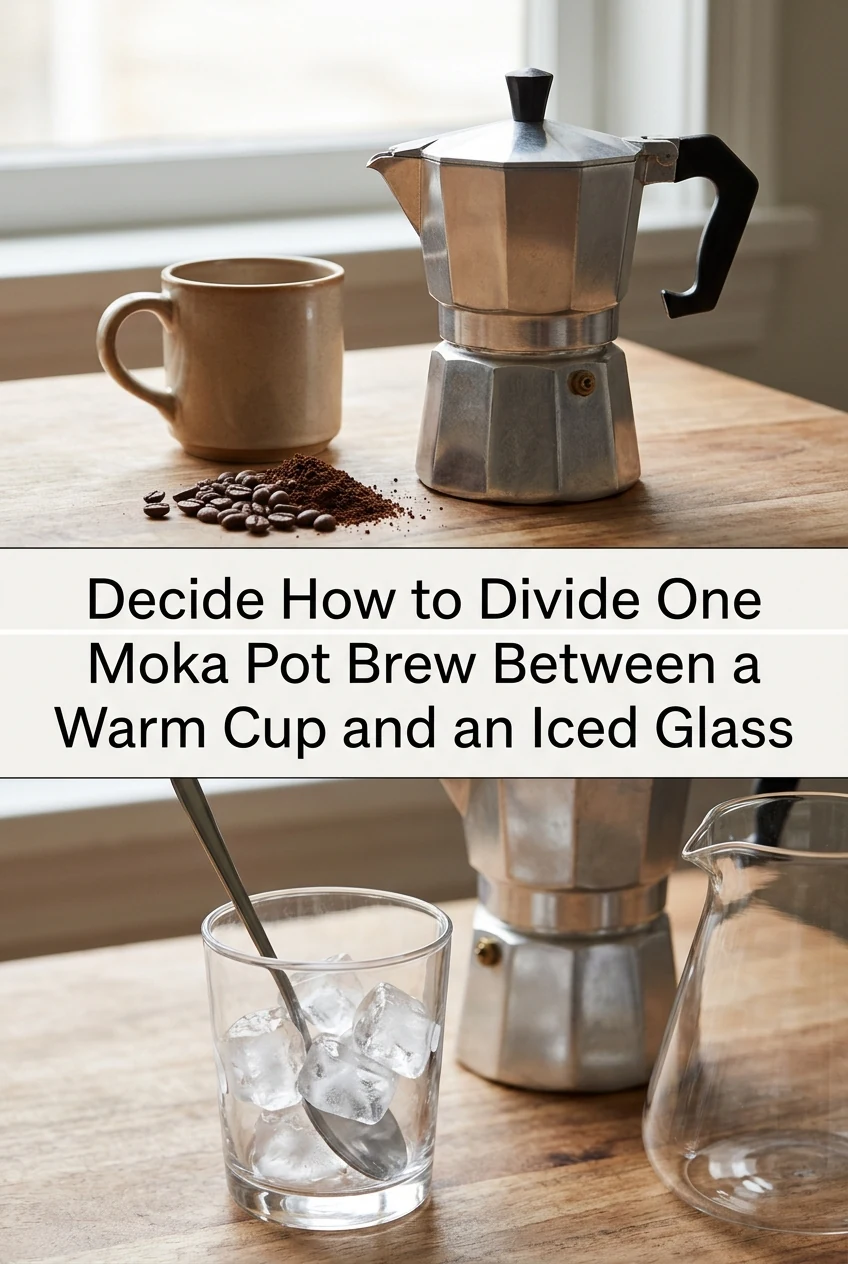
AI-generated editorial concept created for this article. The image is not a technical diagram or a tested result.
Measure Your Pot's Actual Output Before Planning the Split
Moka pot output varies between manufacturers and even between uses of the same pot depending on coffee dose, grind size, and heat level. Coffee grounds should never be tamped in a moka pot, as this can cause dangerous pressure buildup. Before planning a split for guests, brew a test batch into a measuring jug to find your pot's real yield. A common three-cup pot might produce 130 milliliters in one session and 145 in another. Knowing your actual range lets you plan a realistic division rather than assuming a number from a product description.
Deciding the Split Ratio Before Brewing
If your pot reliably yields around 140 milliliters, a 70-70 split gives each person equal volume. However, melting ice inevitably dilutes concentration, meaning the iced drink can taste weak if poured too leanly. A practical adjustment is a 60-80 split, allocating 80 milliliters to the iced glass and 60 milliliters to the warm cup. Providing more brewed coffee to the iced serving preserves prominent coffee flavor across the expanded volume as ice melts, while leaving a rich, concentrated serving for the hot cup.
Preparing the Ice Before the Brew Finishes
Have the iced glass ready and filled with ice before the moka pot finishes brewing. If you pour hot coffee over ice that is not yet in the glass, the coffee cools unevenly and may sit warm long enough to affect flavor. Use enough ice to fill the glass roughly two-thirds full before pouring. The exact amount depends on your glass size, but for a standard 300-milliliter tumbler, approximately 150 grams of ice cubes is a reasonable starting point for a 70 to 80-milliliter coffee pour.
Pouring the Warm Cup First or the Iced Glass First
Before pouring, stir the coffee in the upper chamber so the denser, earlier extraction blends uniformly with the lighter finish. Pour the warm cup first if you want to minimize heat loss for that serving, as small volumes of hot coffee cool rapidly in ambient air. Alternatively, pour over the ice first if rapid chilling is your priority to limit excessive ice melt. Neither order is objectively superior, but stirring first ensures both glasses receive an identical, well-balanced profile.
Using a Small Measuring Jug as an Intermediate Step
Rather than pouring directly from the moka pot into two vessels, pour the entire brew into a small measuring jug first. This lets you see the total volume clearly and divide it precisely using the jug's markings before committing to either cup. It also gives you a two to three-second window to adjust if the yield was lower than expected. The jug itself retains some heat, so move quickly and pre-warm the hot cup with a brief rinse of hot tap water beforehand.
A little more
to know.
Can I brew a second moka pot batch immediately after the first to get more volume for both servings?
Yes, but you must cool the pot before opening it to avoid steam burns and damaged gaskets. Run the base under cool tap water until it is comfortable to handle, unscrew the chamber, rinse and dry the funnel, and add fresh water and grounds without tamping before returning it to the stove.
Does adding milk to the iced portion change how I should plan the split?
Yes. If the iced glass will receive milk, the coffee portion can be slightly smaller since milk adds volume and moderates strength. Adjust the split to give the iced glass perhaps 10 milliliters less coffee than you would for a black iced serving, then add cold milk to taste after pouring.
Original editorial guidance and recipe formulations, not independently kitchen-tested. Times are estimates and depend on equipment and product directions. Cooked bases need additional cooling and refrigeration before cold serving. Images are AI-generated illustrations; appearance and yield may vary. Check actual ingredient labels, allergens, and any certification you require. We do not certify products. Read our approach.
Save to Pinterest ↗ANOTHER IDEA FOR THE COUNTER