Decide How to Divide One Aeropress Brew Between a Warm Mug and a Cold Glass
An AeroPress produces a fixed volume determined by how much water fits in the chamber beneath the plunger, so dividing one brew between a hot serving and a cold serving requires a decision before you start. Choosing the split in advance lets you prepare both vessels correctly: one pre-warmed, one pre-chilled with ice. This guide covers how to think through the division, what vessel preparation looks like in practice, and why the order of steps matters for the final result.
Read the note ↓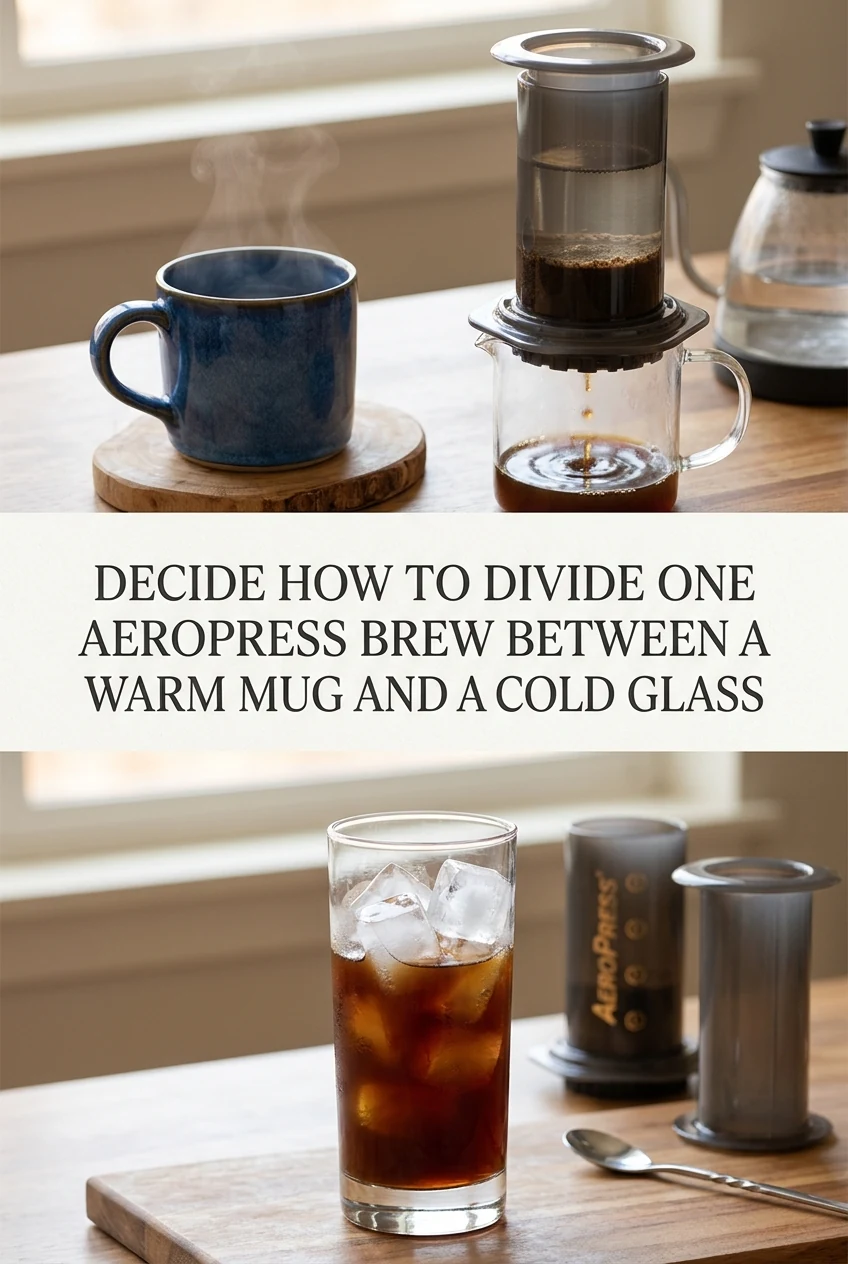
AI-generated editorial concept created for this article. The image is not a technical diagram or a tested result.
Know Your Actual Brew Volume Before Splitting
The usable water volume in a standard AeroPress varies depending on how much coffee you add and how far the plunger sits. A common working range is 200 to 250 ml of finished brew, but your specific setup will differ based on coffee dose and technique. Brew into a measuring jug once to establish your actual yield before planning a split. This measured baseline prevents you from planning a 50-50 split that leaves one serving too small to be satisfying.
Decide the Split Ratio Based on What Each Person Wants
A 60-40 split, for example 140 ml hot and 90 ml over ice, is a practical starting point when one person wants a full warm mug and another wants a shorter cold drink. The cold portion will gain volume from ice melt, so a smaller initial pour still produces a reasonable glass. Write down your intended split before brewing so you are not estimating while pouring from a hot carafe. These are illustrative proportions, not universal recommendations.
Pre-Warm the Mug and Pre-Chill the Glass
Fill the warm mug with hot water from the kettle and let it sit for one minute, then discard the water just before you brew. Fill the cold glass with ice cubes before you begin brewing. Both steps take less than two minutes and make a noticeable difference: a cold mug quickly cools a hot brew, and chilling the glass beforehand minimizes ice melt when coffee is added. Prepare both vessels in parallel.
Pour in the Right Order Immediately After Pressing
Pour the hot portion into the pre-warmed mug first, then immediately pour the remaining brew over the ice in the cold glass. Pouring the hot portion first preserves the drinking temperature of the warm coffee, while the remaining portion cools rapidly as soon as it hits the ice. Dividing the coffee promptly from your receiving carafe ensures both drinks land at their target temperatures and limits unintended cooling on the counter.
Adjust the Recipe on the Next Brew Based on Results
After tasting both servings, note which felt too weak or too strong. The cold serving will taste slightly different from the hot one even from the same brew, as temperature affects perceived bitterness and sweetness. If the cold glass tastes diluted, reduce the ice volume next time rather than changing the coffee dose, since ice melt is the main variable. Keep notes on your split ratio and ice quantity so each subsequent attempt builds on a specific observation.
A little more
to know.
Does the grind setting need to change when splitting a brew between hot and cold servings?
The grind affects the entire brew, not individual portions. Use the grind your technique and coffee require for the full brew. Adjust ice quantity or dilution in the cold glass rather than changing grind to compensate for one portion's taste.
Can I brew two separate AeroPress batches instead of splitting one?
Yes, and it gives you full control over each serving. The trade-off is time and the need to clean the brewer between presses. If both people are ready at the same time, splitting one brew is faster. Sequential brewing suits different timing preferences.
Original editorial guidance and recipe formulations, not independently kitchen-tested. Times are estimates and depend on equipment and product directions. Cooked bases need additional cooling and refrigeration before cold serving. Images are AI-generated illustrations; appearance and yield may vary. Check actual ingredient labels, allergens, and any certification you require. We do not certify products. Read our approach.
Save to Pinterest ↗ANOTHER IDEA FOR THE COUNTER