Decide How to Divide a Single French Press Brew Between a Hot Mug and a Cold Glass
A standard 600 ml French press brew is enough for two people if you plan the pour deliberately. The challenge is that the hot portion needs to go into a mug immediately after pressing, while the cold portion needs ice ready in a glass before you pour. Getting the sequence wrong means the remaining coffee sits on the grounds and over-extracts, or the ice melts too far before the coffee arrives. This guide walks through the timing and volume decisions for a clean two-way serve.
Read the note ↓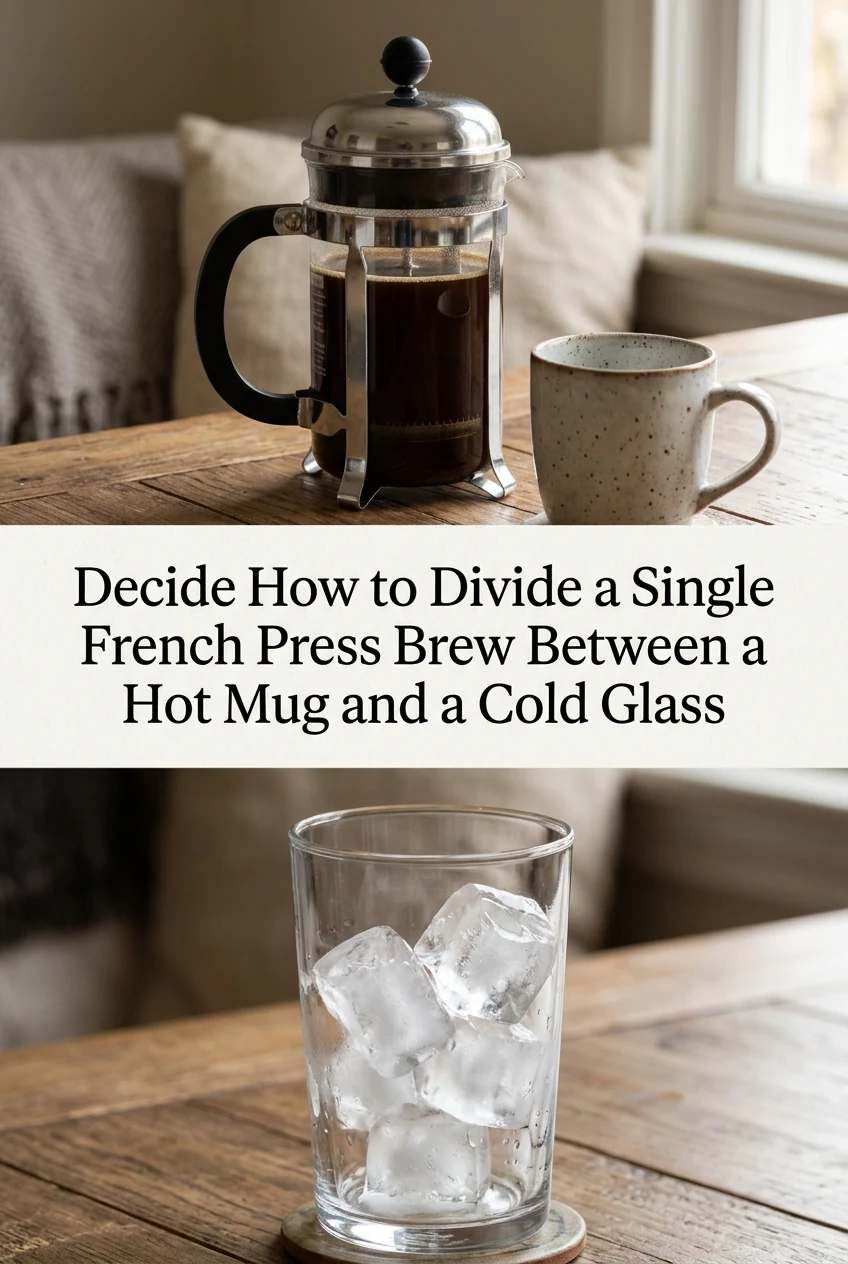
AI-generated editorial concept created for this article. The image is not a technical diagram or a tested result.
Understand the Volume You Are Working With
A 600 ml French press yields roughly 500 to 520 ml of drinkable coffee after accounting for absorption by the grounds and the small amount left at the bottom. You can split this roughly evenly—around 250 to 260 ml per serving—or adjust the pour sizes to match your vessels. Keep in mind that as the ice in the cold glass melts, it adds total liquid volume to that serving. These are working estimates, not precise targets; your grind size, coffee dose, and brew time will shift the final yield slightly.
Set Up Both Vessels Before You Press
Before pressing the plunger, place your hot mug on the counter and fill your cold glass with ice, using roughly 150 to 180 ml worth of ice cubes. Having the glass ready means you can pour the cold portion immediately after the hot portion without delay. If you fill the glass with ice after pouring the hot mug, the remaining coffee sits in the press on the grounds and continues extracting, which makes the iced drink taste more bitter than intended. Setup order matters here.
Press and Pour the Hot Portion First
Press the plunger slowly and steadily according to your French press maker's instructions. Immediately pour the hot portion into the mug, stopping when you estimate you have poured about 240 ml. A simple way to judge without a scale is to pour until the mug is roughly two-thirds full for a standard 350 ml mug. Do not tilt or shake the press between pours, as this disturbs the grounds bed and can push sediment into the next pour. Move directly to the cold glass without pausing.
Pour the Remaining Coffee Over Ice
Pour the remaining coffee from the press directly over the ice in the prepared glass. Pour steadily rather than in a rush, allowing the coffee to flow over the cubes and cool as it fills the glass. The ice will shift and crack from thermal stress when the hot liquid hits it, which is completely normal. The result is an iced coffee chilled rapidly over ice rather than a slow cold brew, preserving bright aromatic notes along with natural dilution from the melting ice.
Decide What to Do With Leftover Coffee
If the press yields more coffee than both vessels need, do not leave the extra coffee sitting in the press on the spent grounds. Pour any remainder into a clean heat-safe container, cover it, and place it in the refrigerator if you wish to save it for a later iced drink. Leftover brewed coffee gradually oxidizes and loses its aromatic freshness, but decanting it immediately off the grounds prevents the harsh bitterness of continuous extraction.
A little more
to know.
Does pouring hot coffee directly over ice damage a standard glass?
Standard glassware can crack when exposed to sudden, uneven temperature changes. To avoid breakage, use thermal-shock-resistant glassware, such as heat-resistant borosilicate glass or tempered glass designed for hot beverages. Avoid delicate barware, standard non-tempered soda-lime tumblers, or glasses straight from the freezer, as rapid temperature shifts can cause them to fracture.
Should I brew stronger coffee if I know half of it will be diluted by ice?
Many people do brew with a higher coffee-to-water ratio for the iced portion specifically. Since grind ratios vary by preference and equipment, experiment with your own setup rather than following a single prescribed ratio as a universal rule.
Original editorial guidance and recipe formulations, not independently kitchen-tested. Times are estimates and depend on equipment and product directions. Cooked bases need additional cooling and refrigeration before cold serving. Images are AI-generated illustrations; appearance and yield may vary. Check actual ingredient labels, allergens, and any certification you require. We do not certify products. Read our approach.
Save to Pinterest ↗ANOTHER IDEA FOR THE COUNTER