Decide How to Divide a Single Cold Brew Jar Between a Straight Glass and a Milk Drink
A jar of cold brew concentrate is not a fixed-serve product. Two drinks made from the same jar can require meaningfully different volumes of concentrate depending on whether one is served straight over ice and the other is built with milk. Deciding the portion for each glass before you pour prevents the common outcome where one drink ends up noticeably stronger or weaker than intended. This guide focuses on the division decision rather than the brewing method itself.
Read the note ↓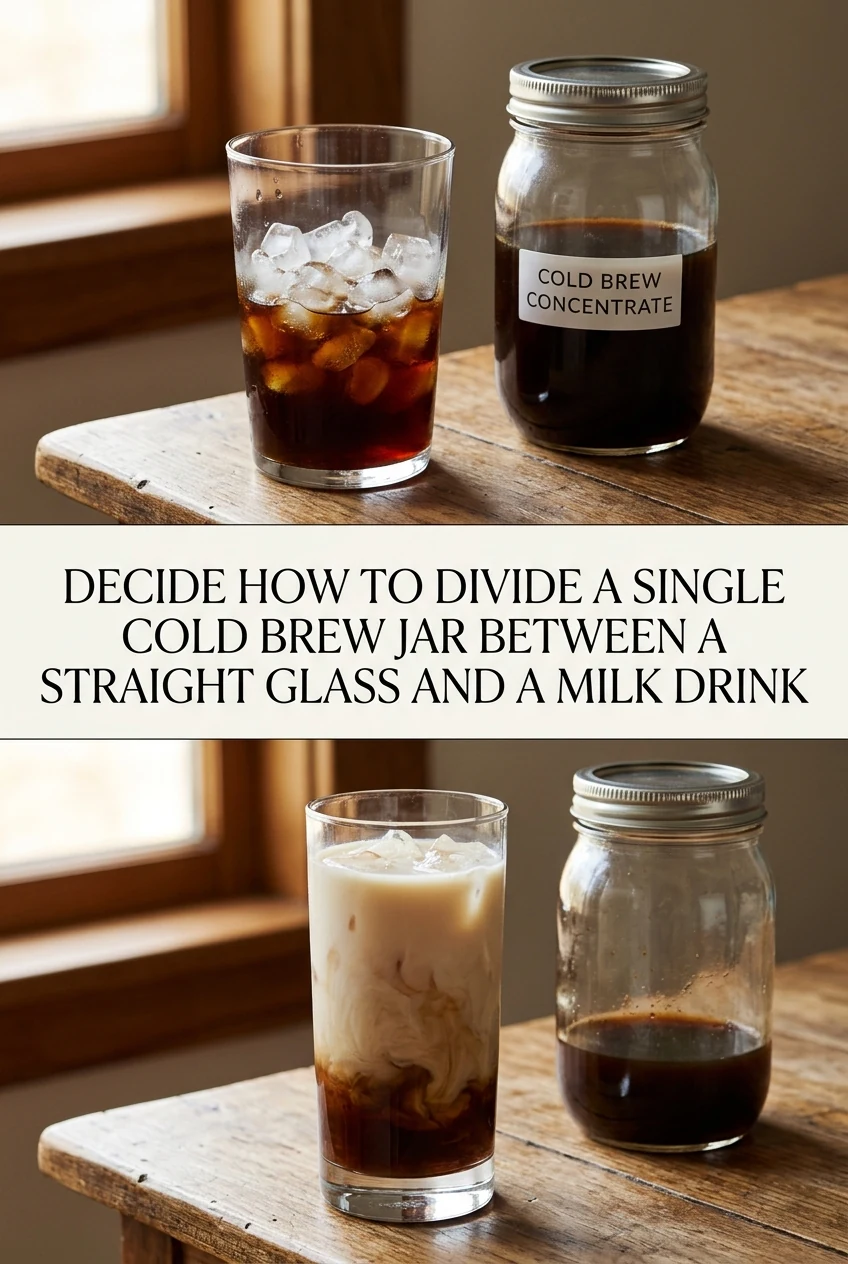
AI-generated editorial concept created for this article. The image is not a technical diagram or a tested result.
Understand That Dilution Ratios Differ Between Drink Styles
A straight cold brew served over ice is typically diluted with water, where coffee intensity and roast notes come through without competition from dairy sugars or fats. A milk drink uses milk as the diluent, where the added body and natural sweetness alter how the coffee flavour is carried. Because the two liquids dilute the concentrate differently, pouring equal ratios of concentrate into both drinks can leave one tasting out of balance. Planning each glass's ratio before you pour ensures you allocate the right amount of concentrate to each drink from the single jar.
Measure the Total Concentrate Before Dividing
Pour the jar contents into a measuring jug before splitting between glasses. Knowing the total volume, for example 400 ml, lets you plan both portions deliberately. As an illustrative example only: if you intend a straight glass using 60 ml of concentrate topped with 120 ml of cold water, and a milk drink using 45 ml of concentrate with 150 ml of cold milk, you know you need 105 ml total and can confirm the jar holds enough before committing to either glass.
Pour the Milk Drink Portion First
Measure and set aside the milk drink portion before pouring the straight glass. The milk drink is harder to adjust after assembly because adding more concentrate to a glass already containing milk changes the ratio and temperature simultaneously. The straight glass is easier to correct by adding a small amount of extra water if it tastes too strong. Pouring the more sensitive drink first gives you the better-controlled portion and leaves the more adjustable drink to be finalised after tasting.
Account for Ice Dilution in the Straight Glass
Ice in a straight cold brew glass melts during drinking and adds dilution over time. If you are serving the straight glass immediately and it will be consumed within a few minutes, ice melt is minimal and the concentrate-to-water ratio you chose holds. If the glass will sit for 10 or more minutes before being finished, the drink will become progressively weaker. In that case, start with a slightly higher concentrate proportion to compensate, or use a smaller number of ice cubes.
Taste Each Glass Before Serving and Adjust Incrementally
After assembling both drinks, taste each with a clean spoon before serving. Adjust the straight glass first by adding water in 10 ml increments if it is too strong. For the milk drink, a small additional pour of cold milk softens strength without significantly changing volume. Do not add concentrate back into a finished glass to increase strength; it is easier and more controlled to begin a new portion. Record the volumes that worked so the next session starts from a known point.
A little more
to know.
How long does cold brew concentrate stay usable in the refrigerator?
Keep cold brew concentrate sealed and refrigerated at 4 degrees Celsius or below. For food safety and best flavour, consume it within seven days of brewing. Discard it sooner if the flavour flattens noticeably, cloudiness increases unexpectedly, or any off smell develops.
Does the type of milk affect how much concentrate to use in the milk drink?
Yes. Full-fat dairy milk has a richer body that softens bitterness more than lower-fat or some plant-based alternatives. If you switch milk types between sessions, taste the milk drink portion before finalising the volume, as the perceived strength can shift noticeably with different milk fat levels.
Original editorial guidance and recipe formulations, not independently kitchen-tested. Times are estimates and depend on equipment and product directions. Cooked bases need additional cooling and refrigeration before cold serving. Images are AI-generated illustrations; appearance and yield may vary. Check actual ingredient labels, allergens, and any certification you require. We do not certify products. Read our approach.
Save to Pinterest ↗ANOTHER IDEA FOR THE COUNTER