Decide How Much Ice to Pre-Fill When Batching Iced Drinks for a Group
Pre-filling glasses with ice before guests arrive saves time during service, but ice occupies a significant portion of a glass's volume, leaving less room for liquid than the glass size suggests. Pouring without accounting for that displacement results in overflow or a noticeably short pour. Knowing roughly how much liquid fits in a pre-iced glass lets you batch your drink quantities accurately and serve consistent, full-looking cups without last-minute adjustments.
Read the note ↓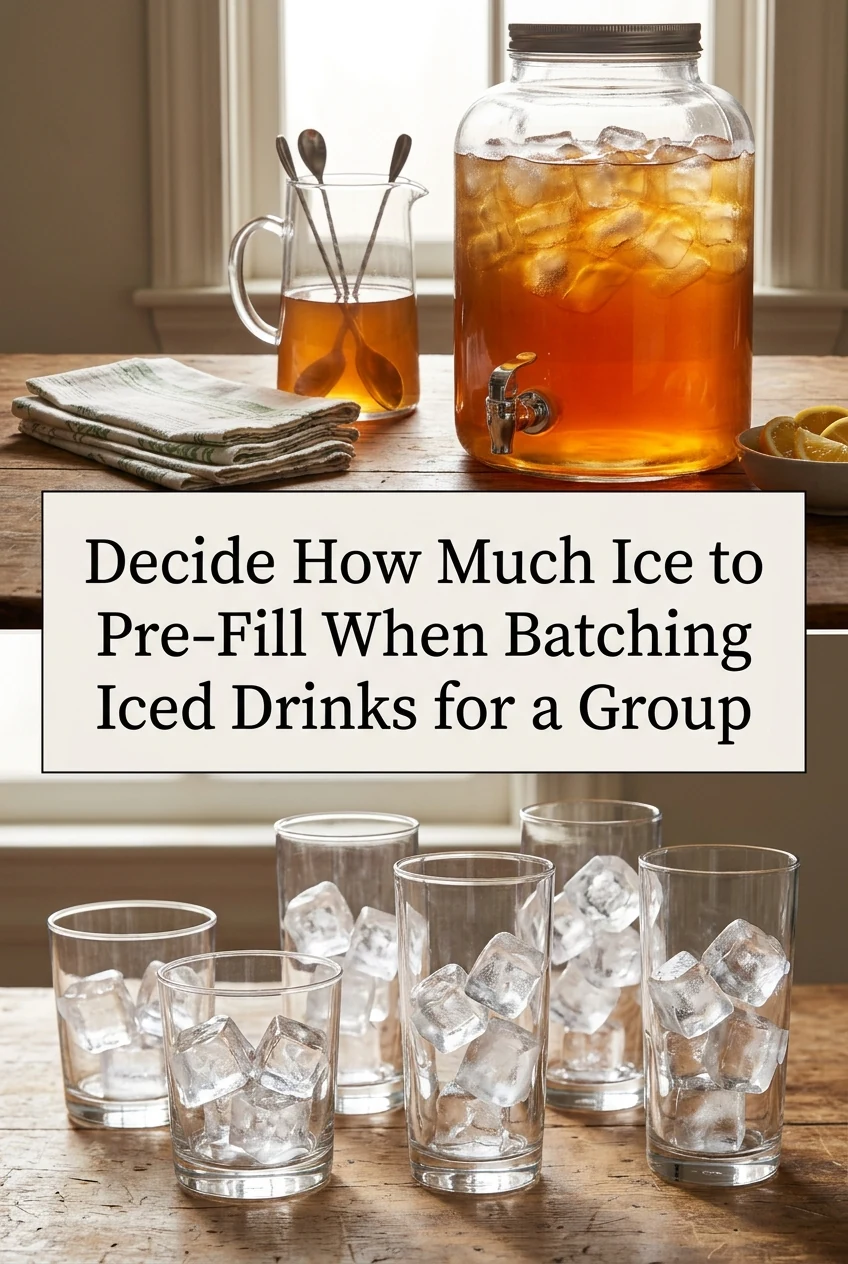
AI-generated editorial concept created for this article. The image is not a technical diagram or a tested result.
Measure Your Actual Glass Capacity With Ice Before Batching
Take one glass from your set, fill it with ice the same way you plan to fill all the others, then pour water into it until it reaches your intended fill line. Measure that water volume. This is your usable liquid volume per glass with ice in place. As an illustrative example, a 400 ml glass filled with standard ice cubes to three quarters height might hold only 180 to 220 ml of liquid, depending on cube size and packing. Use your actual measured figure, not the glass's total capacity.
Calculate Total Liquid Needed for the Group
Multiply your measured per-glass liquid volume by the number of guests. If your test showed 200 ml of liquid fits per pre-iced glass and you are serving eight people, prepare at least 1,600 ml of your drink. Add a small buffer, roughly ten percent, to account for slight variation in how each glass is filled with ice. In this example that means preparing approximately 1,750 ml total. Batch your drink to that volume before guests arrive.
Decide How Far in Advance to Pre-Fill Ice
Ice begins melting as soon as it is in the glass, so pre-filling too early dilutes the drink before it is even poured. In a room at normal indoor temperature, ice in an empty glass starts melting noticeably within ten to fifteen minutes. Pre-fill glasses no more than five to ten minutes before you plan to pour. If your space is warmer than 32 degrees Celsius, work in smaller batches and fill glasses closer to the moment of service.
Use a Consistent Ice-Filling Method Across All Glasses
Inconsistent ice levels from glass to glass mean each glass holds a different liquid volume, producing uneven pours. Use a scoop of fixed size and fill each glass with the same number of scoops rather than eyeballing it. For example, two level scoops of the same ice scoop in each glass gives you a repeatable starting point. This does not need to be precise to the milliliter; it just needs to be consistent enough that your pre-measured liquid volume fits each glass.
Pour Drinks in a Single Pass Rather Than Returning to Top Up
When serving a group, pour each glass to the intended fill line in one pass rather than partially filling all glasses and returning for a second round. Returning to top up is slower and risks over-pouring into glasses where ice has already melted and freed up extra space. If your batch volume is correctly calculated, a single confident pour per glass completes service cleanly. Keep the remaining batch liquid in a chilled jug to maintain temperature between pours.
A little more
to know.
What if guests want different amounts of ice in their glasses?
Ask preference before filling rather than after. For guests who want less ice, increase their liquid pour by the difference your displacement test revealed. For no-ice requests, use the full glass capacity. Knowing preferences in advance lets you adjust batch volume or keep a small reserve of liquid for these variations.
Should I account for the drink getting diluted while guests are still arriving?
Yes, if service will be staggered over more than ten minutes. Consider keeping drinks in a chilled pitcher and pouring to order for later arrivals rather than pre-pouring all glasses at once. Pre-poured glasses left waiting will have noticeably more meltwater by the time the last guests are served.
Original editorial guidance and recipe formulations, not independently kitchen-tested. Times are estimates and depend on equipment and product directions. Cooked bases need additional cooling and refrigeration before cold serving. Images are AI-generated illustrations; appearance and yield may vary. Check actual ingredient labels, allergens, and any certification you require. We do not certify products. Read our approach.
Save to Pinterest ↗ANOTHER IDEA FOR THE COUNTER