Decide How Long to Steep Cold Brew Before Straining It
Cold brew steep time is not a single number that works for every coffee. Roast level, grind size, water temperature, and your own taste preference all shift the point at which the brew is ready to strain. Treating a published duration as a fixed rule often produces results that are either under-extracted and thin or over-extracted and harsh. This guide explains how to taste-check at a set interval and use that information to decide when to strain your specific batch.
Read the note ↓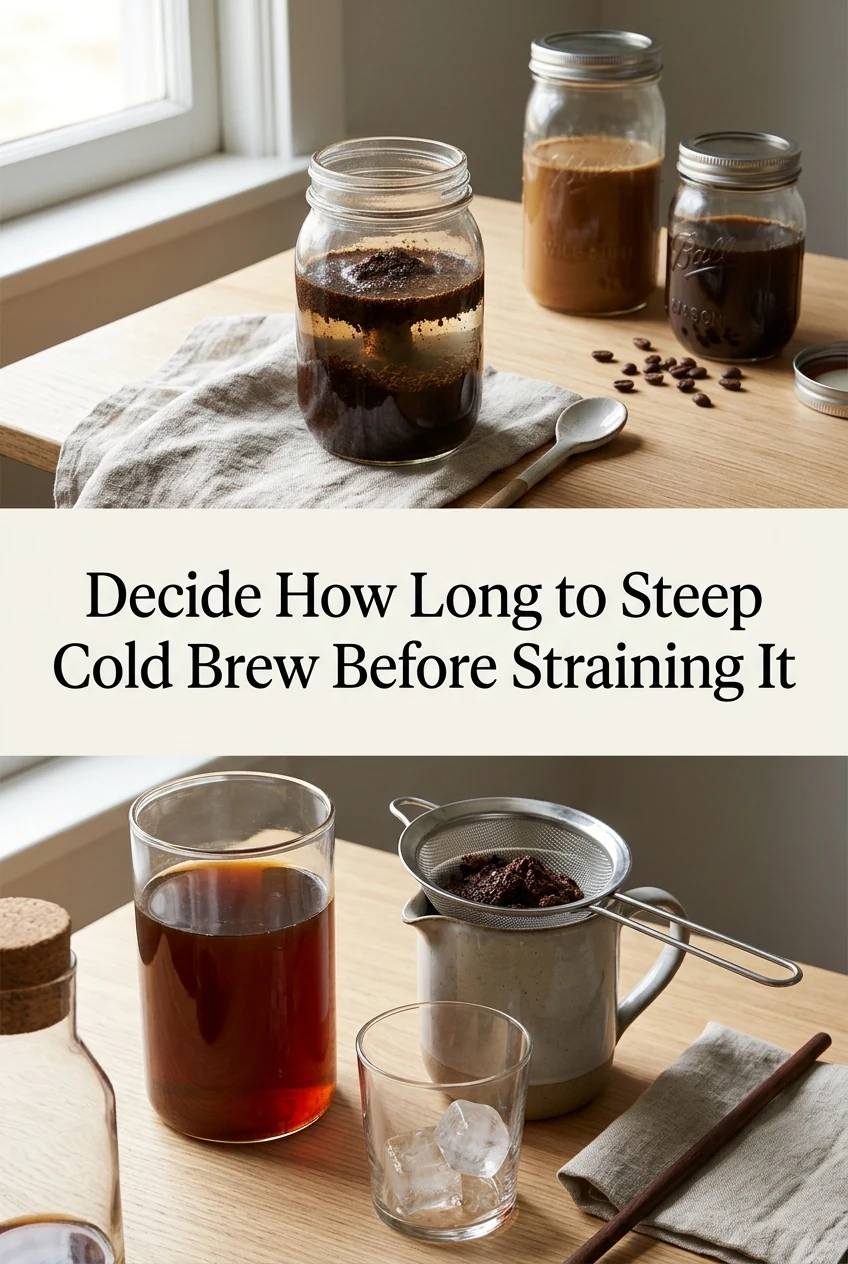
AI-generated editorial concept created for this article. The image is not a technical diagram or a tested result.
Why One Duration Does Not Fit Every Coffee
A lighter roast is denser and releases soluble compounds more slowly in cold water than a darker roast, which is more porous. A coarser grind exposes less surface area than a finer one, slowing extraction further. Room temperature steeping extracts faster than refrigerator steeping. These variables compound, meaning a 12-hour room-temperature steep of a medium-dark coarse grind will taste very different from the same duration applied to a light roast at refrigerator temperature.
Setting a Practical Tasting Schedule
Rather than waiting for a single endpoint, taste a small sample at a fixed interval. A workable approach is to taste at the 10-hour mark if steeping at room temperature, or the 14-hour mark if steeping in the refrigerator. Draw out roughly 30 milliliters using a clean spoon or ladle, dilute it with an equal volume of cold water to approximate the finished drink, and taste it. Note whether it reads as thin, balanced, or bitter, then decide whether to continue steeping or strain.
Reading the Taste at Each Check
A thin or watery sample with little body suggests under-extraction; continue steeping and check again in two hours. A sample that tastes balanced, with clear coffee flavor and no sharp edge, is ready to strain. A sample that tastes harsh, dry, or leaves a rough sensation at the back of the throat has likely over-extracted; strain it immediately even if it is earlier than expected. These are descriptive markers, not chemical measurements, but they are reliable guides for the home setting.
How Refrigerator Versus Room Temperature Steeping Changes the Timeline
Steeping at refrigerator temperature, around 4 degrees Celsius, slows extraction considerably and generally requires a longer window, often 16 to 24 hours depending on the coffee. Room temperature steeping, roughly 18 to 22 degrees Celsius, moves faster and typically reaches a drinkable point between 10 and 16 hours. Steeping at room temperature also carries a food safety consideration: keep the vessel covered and strain promptly. Refrigerate the finished concentrate at 4 degrees Celsius or below within 2 hours of straining.
Straining and Storing the Finished Batch
Once you decide the brew is ready, strain it through a fine-mesh sieve lined with a paper coffee filter or a dedicated cold brew filter. Pour slowly to avoid disturbing the grounds and clouding the liquid. Transfer the strained concentrate into a clean, sealed container and refrigerate immediately. Use within 7 to 10 days as a general working window, though actual shelf life depends on your specific coffee and storage conditions. Taste before each use.
A little more
to know.
Does the ratio of coffee to water affect how long to steep?
Yes. A higher proportion of coffee to water increases beverage strength more quickly because there is more coffee mass releasing solubles. However, the higher concentration of dissolved compounds in the water actually slows down the extraction rate of the grounds over time. If you change your ratio between batches, your previous tasting schedule may not apply. Taste earlier than usual when brewing with a higher coffee proportion.
Can I steep cold brew for longer than 24 hours if it still tastes thin?
If a batch still tastes thin after 24 hours in the refrigerator, the grind is likely too coarse or the roast too light for cold extraction at that temperature. Extending beyond 24 hours risks over-extracting bitter compounds without improving body. Adjusting grind size on the next batch is more effective.
Original editorial guidance and recipe formulations, not independently kitchen-tested. Times are estimates and depend on equipment and product directions. Cooked bases need additional cooling and refrigeration before cold serving. Images are AI-generated illustrations; appearance and yield may vary. Check actual ingredient labels, allergens, and any certification you require. We do not certify products. Read our approach.
Save to Pinterest ↗ANOTHER IDEA FOR THE COUNTER