Decide How Long to Rest a Moka Pot After Brewing Before Serving
A moka pot finishes brewing with a gurgling sound and a burst of steam, leaving coffee sitting in a very hot upper chamber. Whether to pour immediately or wait a minute or two is a practical question with real consequences for temperature and taste. The answer depends on how you plan to serve the coffee and whether the last few drops produced during the gurgling phase are worth mixing into the cup or leaving behind.
Read the note ↓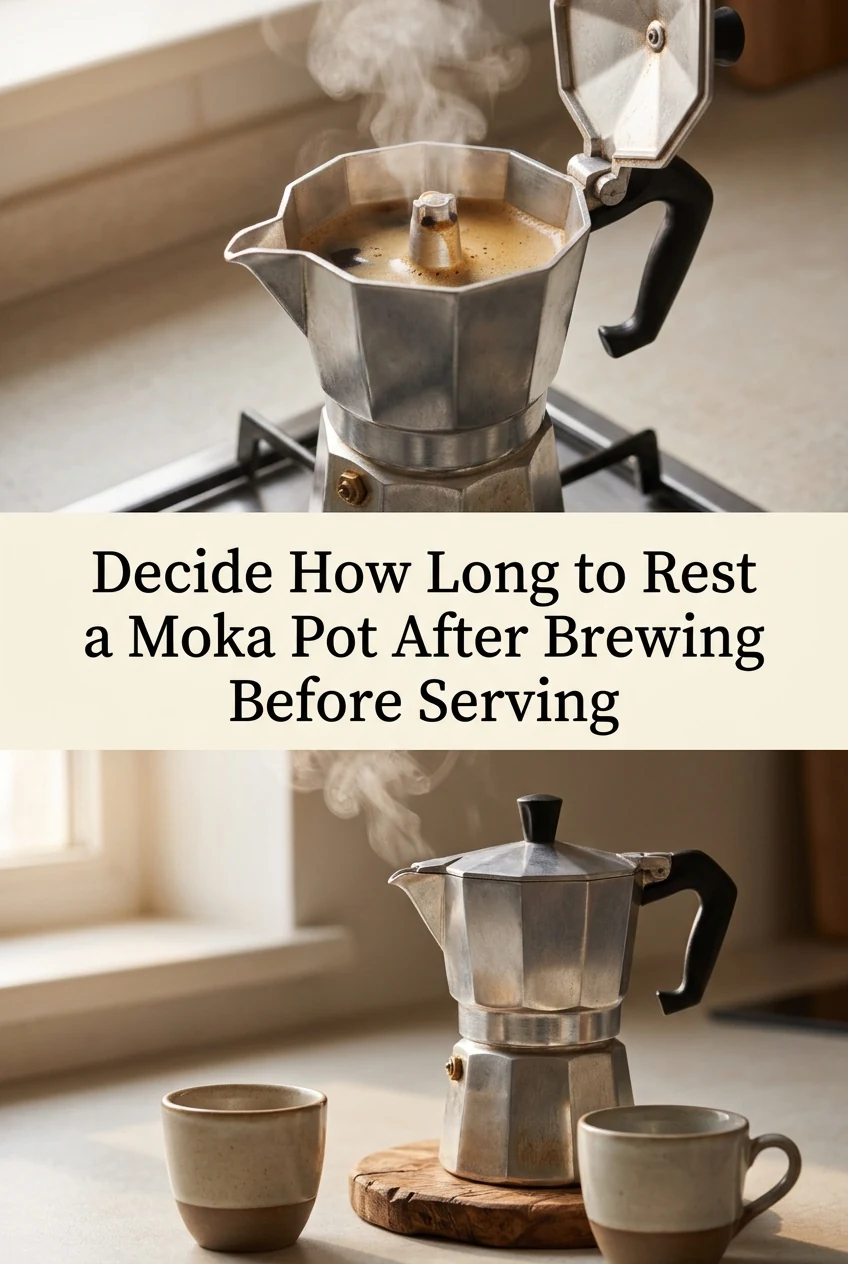
AI-generated editorial concept created for this article. The image is not a technical diagram or a tested result.
What Happens in the Final Seconds of Brewing
The gurgling phase occurs when most of the water has passed through the coffee grounds and steam begins pushing the last liquid up. This final fraction is hotter, more aerated and often more bitter than the steady stream that came before it. It also carries a lighter colour and thinner body. Some brewers remove the pot from the heat the moment gurgling begins to avoid this fraction entirely. Others let it complete and then decide whether to stir or discard the top layer.
The Case for Pouring Immediately
If you are serving the coffee over ice or into a preheated cup where temperature loss is a concern, pouring immediately after the gurgle ends makes sense. The coffee in the upper chamber is at its hottest at this point. Waiting introduces cooling that may not suit your intended serving temperature. For a short black served hot in a small cup, immediate pouring with a brief stir to integrate any separated layers is a practical approach that most home brewers use without issue.
The Case for a Short Rest Off the Heat
Removing the moka pot from the heat and resting it on a cool surface for sixty to ninety seconds allows the temperature in the upper chamber to drop slightly and lets any turbulence from the gurgling phase settle. This brief pause can make the coffee taste marginally smoother because the hottest, most agitated liquid has a moment to stabilise. This is an observational point rather than a verified laboratory finding, and the difference is subtle enough that many drinkers will not notice it.
Whether to Stir Before Pouring
The coffee in the upper chamber is not uniform. The early brew that arrived before the gurgle is denser and darker; the final fraction is lighter and thinner. A gentle stir with a small spoon before pouring integrates these layers into a more consistent cup. If you prefer to taste the cleaner early brew without the bitter final fraction, skip stirring and pour carefully, stopping before the last few millilitres leave the chamber. This is a personal preference decision rather than a technical requirement.
Practical Resting Guidance by Serving Style
For hot black coffee in a small cup: rest sixty seconds off the heat, stir once, pour. For coffee going over ice immediately: pour without resting to preserve heat for dilution control. For milk-based drinks where the coffee is one component: a sixty-second rest is unlikely to affect the final cup noticeably once milk is added. In all cases, avoid leaving the pot sitting on a hot burner after brewing completes, as continued heat pushes more steam through and increases bitterness in the chamber.
A little more
to know.
Does the size of the moka pot affect how long to rest it?
Larger pots hold more liquid and retain heat longer, so a ninety-second rest is more relevant for a six-cup pot than a one-cup pot. A one-cup pot cools quickly on its own, making the resting window shorter and less consequential for final cup temperature.
Is it safe to run cold water over the base of the moka pot to stop brewing quickly?
Some brewers do this to halt the brewing process rapidly. Check your specific pot manufacturer's guidance before doing so, as thermal shock handling recommendations vary by material and construction. Running water over a very hot pot without manufacturer approval is not universally recommended.
Original editorial guidance and recipe formulations, not independently kitchen-tested. Times are estimates and depend on equipment and product directions. Cooked bases need additional cooling and refrigeration before cold serving. Images are AI-generated illustrations; appearance and yield may vary. Check actual ingredient labels, allergens, and any certification you require. We do not certify products. Read our approach.
Save to Pinterest ↗ANOTHER IDEA FOR THE COUNTER