Decide How Fine to Grind for a Single-Serve AeroPress Brew
Grind size is one of the most direct variables you can adjust in an AeroPress brew. A finer grind slows the flow of water through the puck and increases extraction; a coarser grind speeds flow and reduces it. Because beans vary in density, roast level, and age, no single grind setting works universally. Adjusting one step at a time and recording what you observe in a simple written log gives you a reliable method for finding a repeatable outcome with your specific beans and equipment.
Read the note ↓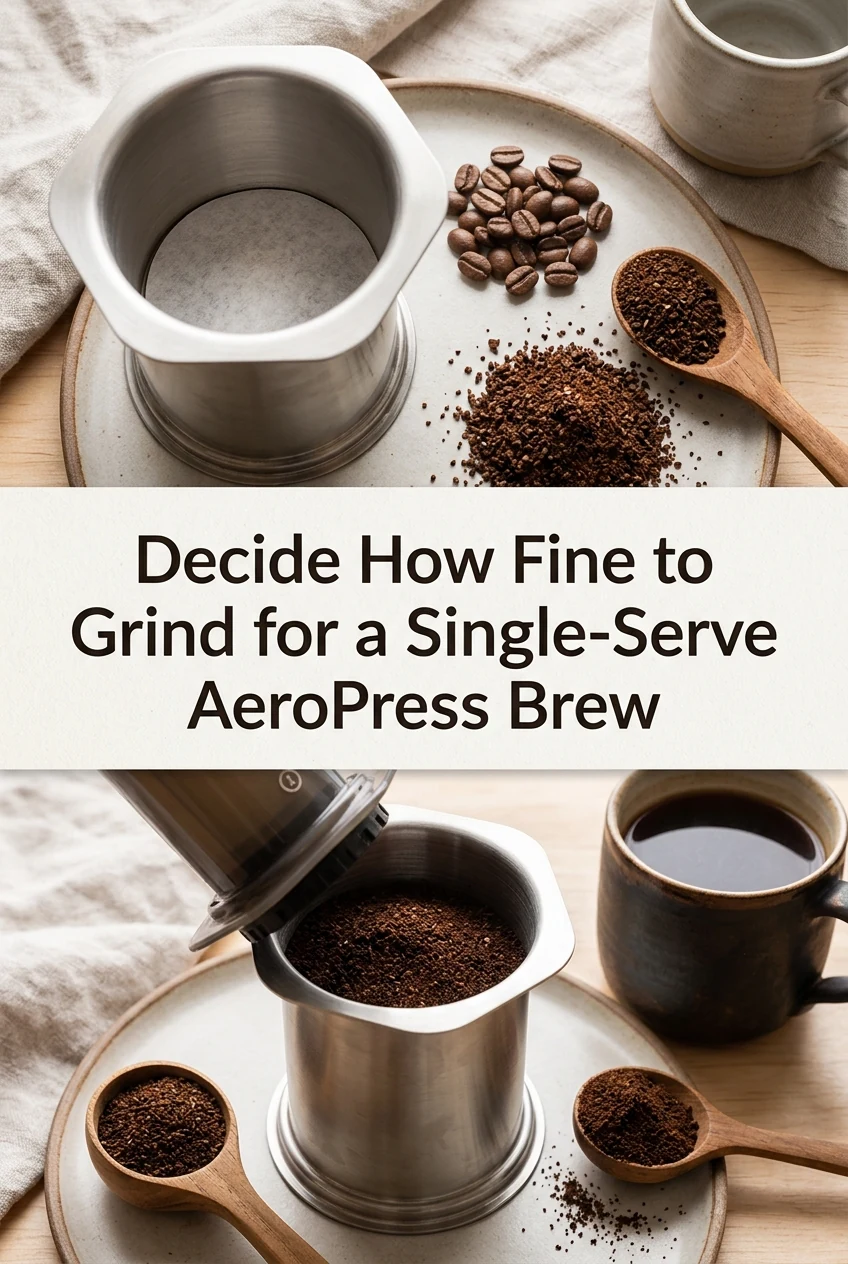
AI-generated editorial concept created for this article. The image is not a technical diagram or a tested result.
Understanding Flow Rate as Your Primary Signal
When you press the AeroPress plunger, the resistance you feel and the time it takes to complete the press are direct indicators of how your grind is interacting with the filter and puck. A press that completes in under fifteen seconds with almost no resistance suggests the grind is too coarse for your intended brew time. A press that requires significant force and takes over forty-five seconds suggests the grind is too fine. Both extremes affect the flavour outcome.
Setting a Starting Point for Your Log
Begin with a medium-fine grind, which on most hand grinders sits a few clicks finer than a drip coffee setting. Use a consistent dose for your log, for example 15 grams of coffee to 200 millilitres of water at your chosen temperature. Brew using the same steep time each session, such as two minutes before pressing. Record the grind setting, press duration, and a brief flavour note. This first entry is your baseline, not a target, and the log builds from here.
Adjusting One Step at a Time
Change only the grind between sessions, keeping dose, water volume, water temperature, and steep time identical. Moving two or three clicks finer or coarser on a hand grinder represents a meaningful but not extreme change. If the previous brew tasted thin or sour and pressed too quickly, move finer by two clicks. If it tasted bitter or harsh and pressed slowly, move coarser by two clicks. Changing one variable at a time is what makes the log entries comparable and useful.
What to Write in the Log
A useful log entry needs only four fields: the date, the grind setting or click count from your grinder's reference point, the press duration in seconds, and a short flavour note such as bright and thin or balanced and slightly bitter. You do not need precise tasting vocabulary. After five or six sessions you will see a pattern showing which direction produces results you prefer. An illustrative example might show that clicks 14 through 16 on a specific grinder consistently produce a 25 to 35 second press with balanced results for a medium roast, though your grinder and beans will produce different numbers.
When to Stop Adjusting
Stop adjusting when two consecutive sessions at the same grind setting produce a press duration and flavour note you are satisfied with. That setting becomes your working reference for that bag of beans. When you open a new bag, even of the same origin, expect to run two or three adjustment sessions again because roast date, moisture content, and processing can all shift the ideal grind slightly. The log from the previous bag gives you a useful starting point rather than starting from scratch.
A little more
to know.
Does water temperature need to stay the same across all log sessions?
Yes. Temperature affects extraction rate independently of grind size. If you change temperature between sessions, you cannot tell whether a flavour shift came from the grind adjustment or the temperature change. Fix temperature first, then adjust grind across sessions.
Does the paper filter versus a metal filter change the grind decision?
Yes, noticeably. Metal filters allow fines to pass through and flow more freely, so many brewers use a slightly coarser grind with them. Paper filters restrict flow more, supporting a finer grind. Start a separate log section if you switch filter types.
Original editorial guidance and recipe formulations, not independently kitchen-tested. Times are estimates and depend on equipment and product directions. Cooked bases need additional cooling and refrigeration before cold serving. Images are AI-generated illustrations; appearance and yield may vary. Check actual ingredient labels, allergens, and any certification you require. We do not certify products. Read our approach.
Save to Pinterest ↗ANOTHER IDEA FOR THE COUNTER