Keep Repeatable Notes for an Upright AeroPress Brew
Use the upright method in the current instructions for your exact AeroPress model. The manufacturer warns that inverted brewing is less stable and can expose the user to burns from hot liquid, so this guide does not cover it. Instead, it offers a simple way to record an approved upright preparation so you can compare your own results over time. No plunger depth, headspace estimate, or handling technique can justify a guarantee that an inverted brewer will not slip or spill.
Read the note ↓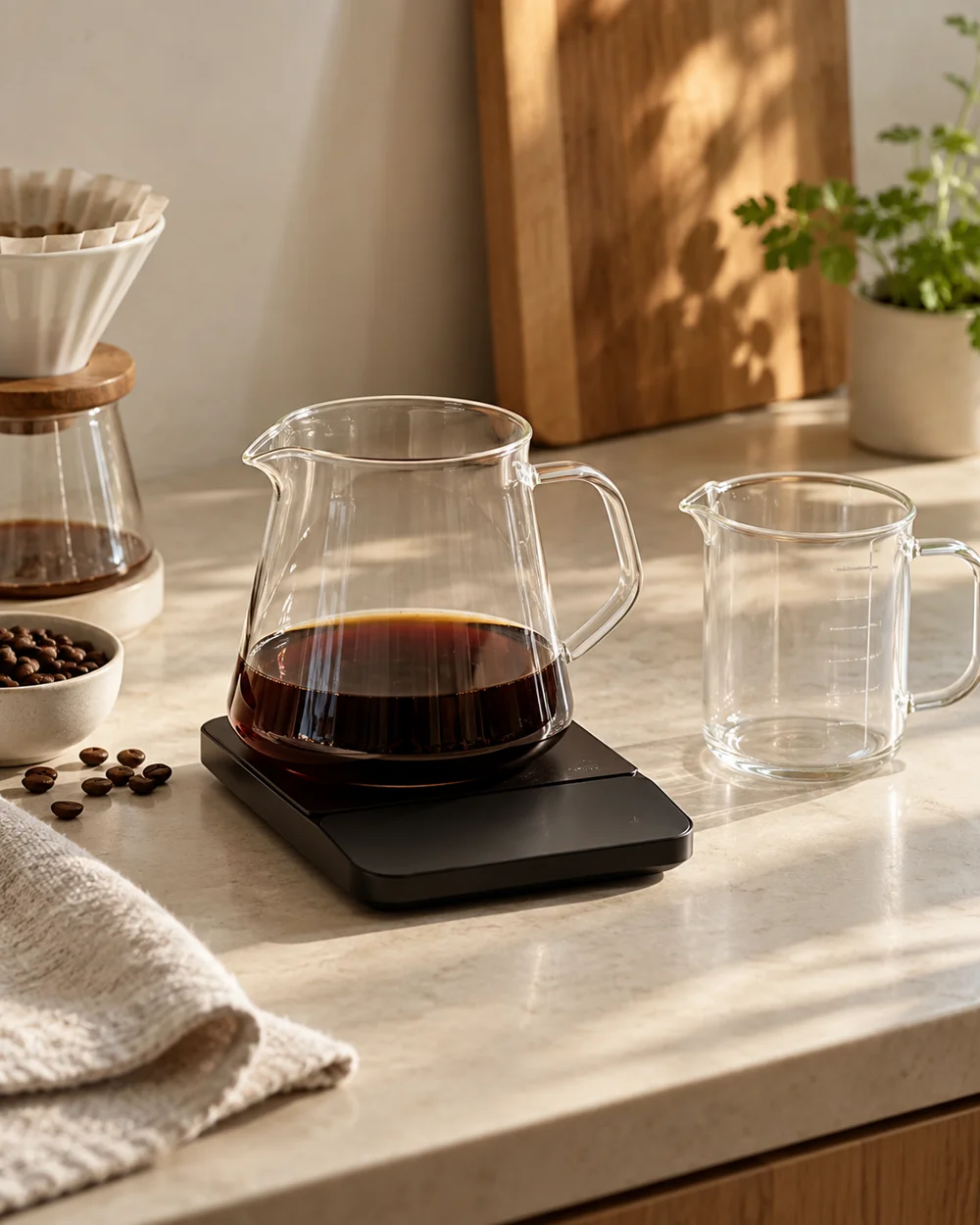
Representative category illustration reused from our editorial library; it does not depict this specific project or a tested result.
Identify the actual equipment
Record the model name and find its current official instructions. Keep that reference with your working note. Different models and accessories should not be treated as interchangeable because a photograph looks similar. If the brewer is damaged, has an uncertain part, or does not assemble as its instructions describe, resolve that question before brewing. A notebook entry does not replace the maker’s directions.
Start from the official upright method
Use the maker’s upright preparation as your reference. Record the actual coffee mass, water quantity, grind description, and timing when these belong to the approved instructions you are following. Separate the recipe source from your own observations. Leave a field empty when its value is unknown instead of inventing a precise measurement. Do not add a handling or pressing instruction that the maker does not supply.
Choose one comparison question
A useful comparison has a narrow question. You might compare two suitable grind settings while keeping the other recorded inputs consistent with the maker’s directions. Label the entries and record what changed. The comparison must not require a hot brewer to be balanced, inverted, or held differently. Keep all handling within the current official instructions rather than treating an experimental recipe as a safety reference.
Describe the result without invented physics
Write an ordinary observation about your own cup rather than claiming to have measured pressure, equipment tolerances, or temperature inside the coffee bed. If preparation does not proceed normally, stop and consult the maker’s troubleshooting information. Do not infer a single hidden cause from an unusual symptom, and do not apply extra force to finish a comparison. An unexpected result is a reason to check the instructions, not to improvise a hot-equipment procedure.
Retain a useful reference
Date the note and keep its recipe source with the brewer identity. A later change of coffee, filter, accessory, or model warrants a new entry; it does not prove that an older result still applies. When sharing a note, describe it as one preparation rather than a guaranteed setting. Link the official directions so another reader can check the equipment details. Resolve any handling question before another brew attempt.
A little more
to know.
Can these notes make inverted brewing safe?
No. AeroPress warns that inverted brewing is less stable and can expose the user to hot-liquid burns. These notes use the upright method and do not supply a flip technique or promise that the handling risk disappears.
Should I copy another person’s exact timing?
Treat it as a reported preparation rather than a universal setting. First check the instructions for your own model. Record the actual recipe and equipment instead of assuming that an identical time guarantees an identical result.
Original editorial guidance and recipe formulations, not independently kitchen-tested. Times are estimates and depend on equipment and product directions. Cooked bases need additional cooling and refrigeration before cold serving. Images are AI-generated illustrations; appearance and yield may vary. Check actual ingredient labels, allergens, and any certification you require. We do not certify products. Read our approach.
Save to Pinterest ↗ANOTHER IDEA FOR THE COUNTER