Control Channeling in Unevenly Packed Moka Pot Baskets
Stovetop moka pots generate low steam pressure to force heated water upward through a bed of ground coffee. When grounds are distributed unevenly or pressed downward with a tamper, water carves narrow fissures through areas of least resistance. This channeling produces violent sputtering, thin crema, and an unpleasantly bitter, over-extracted cup. Correcting this extraction defect requires careful mechanical distribution that achieves uniform bed density from top to bottom, keeping grounds completely flush with the funnel rim without compacting the coffee bed.
Read the note ↓
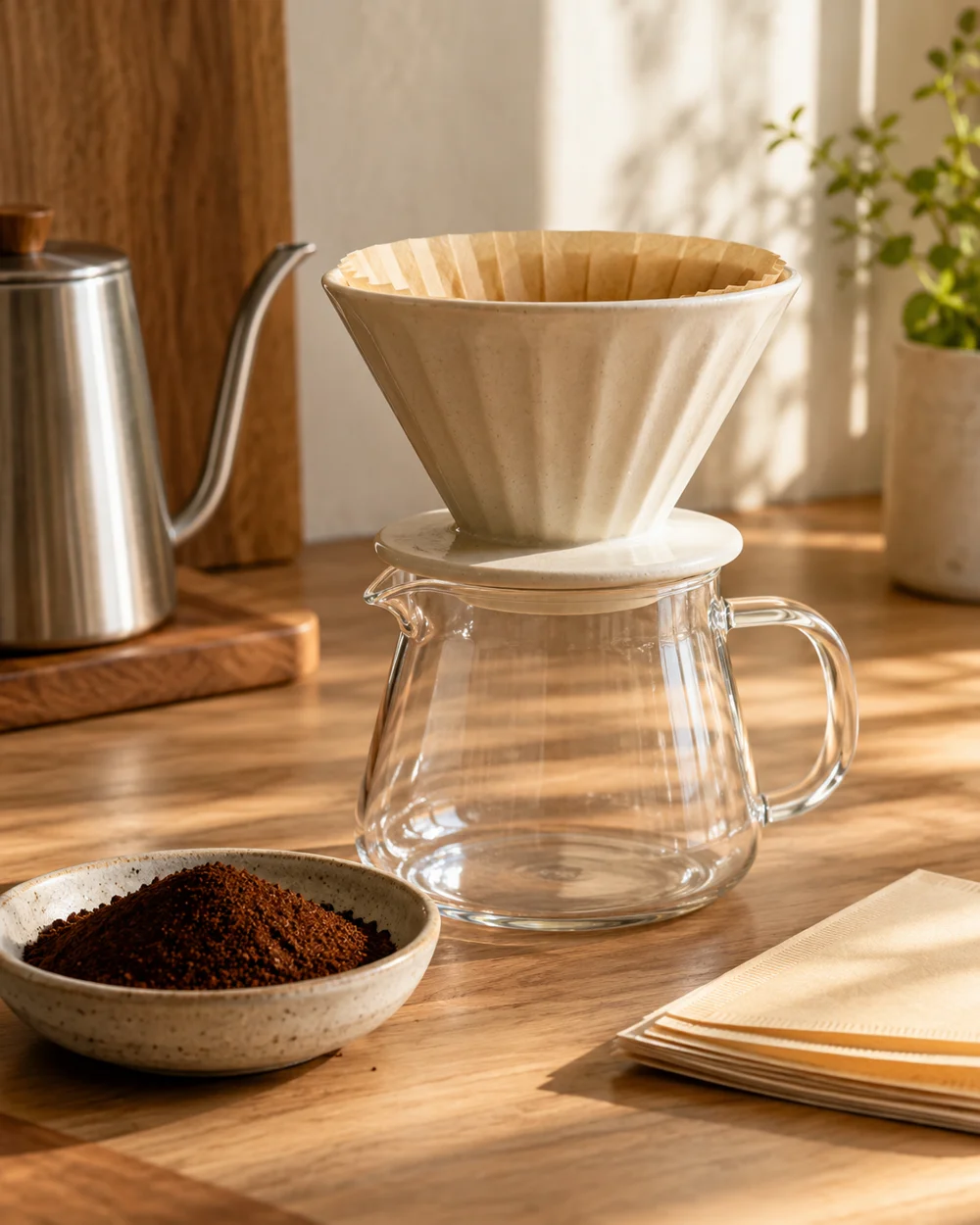
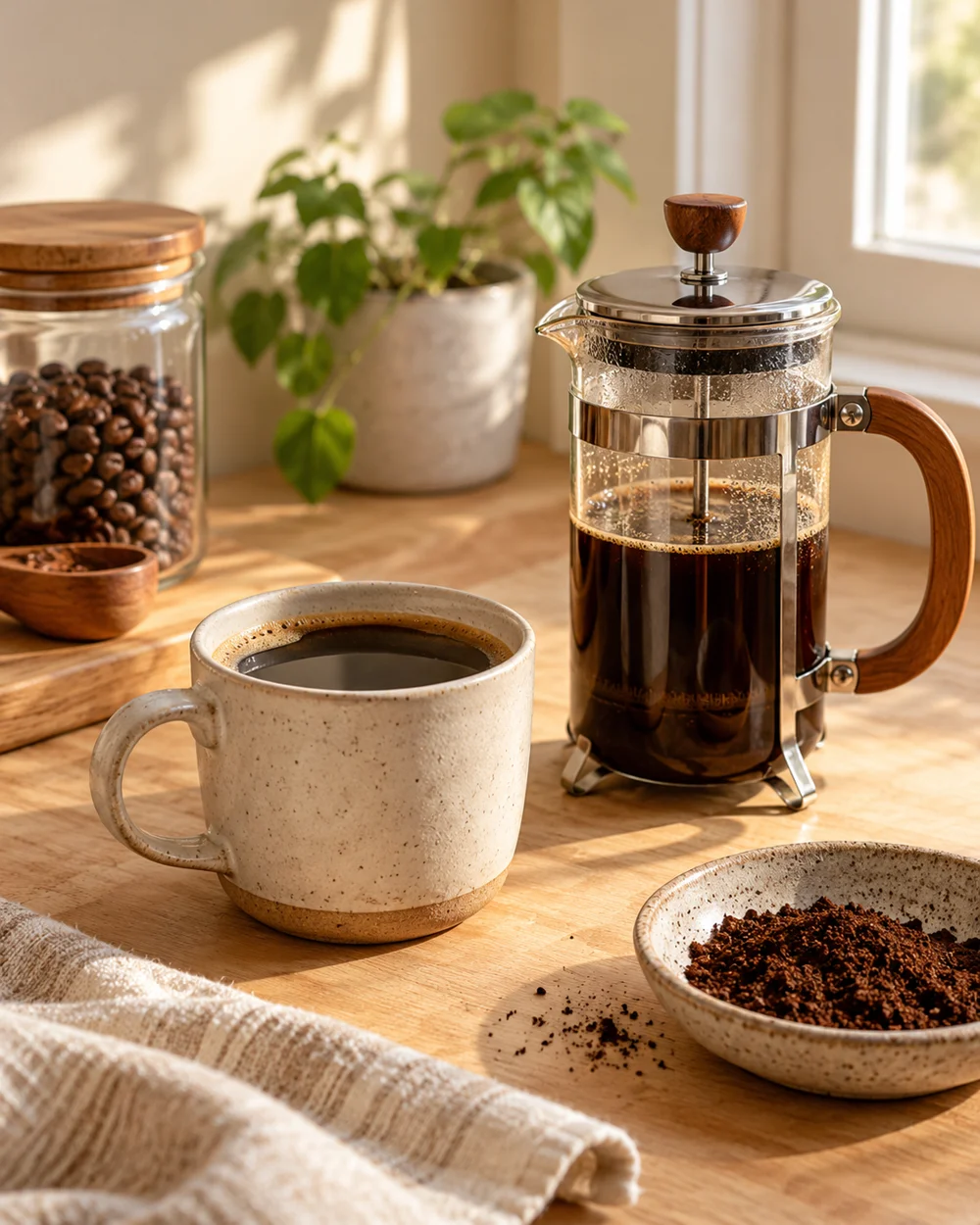
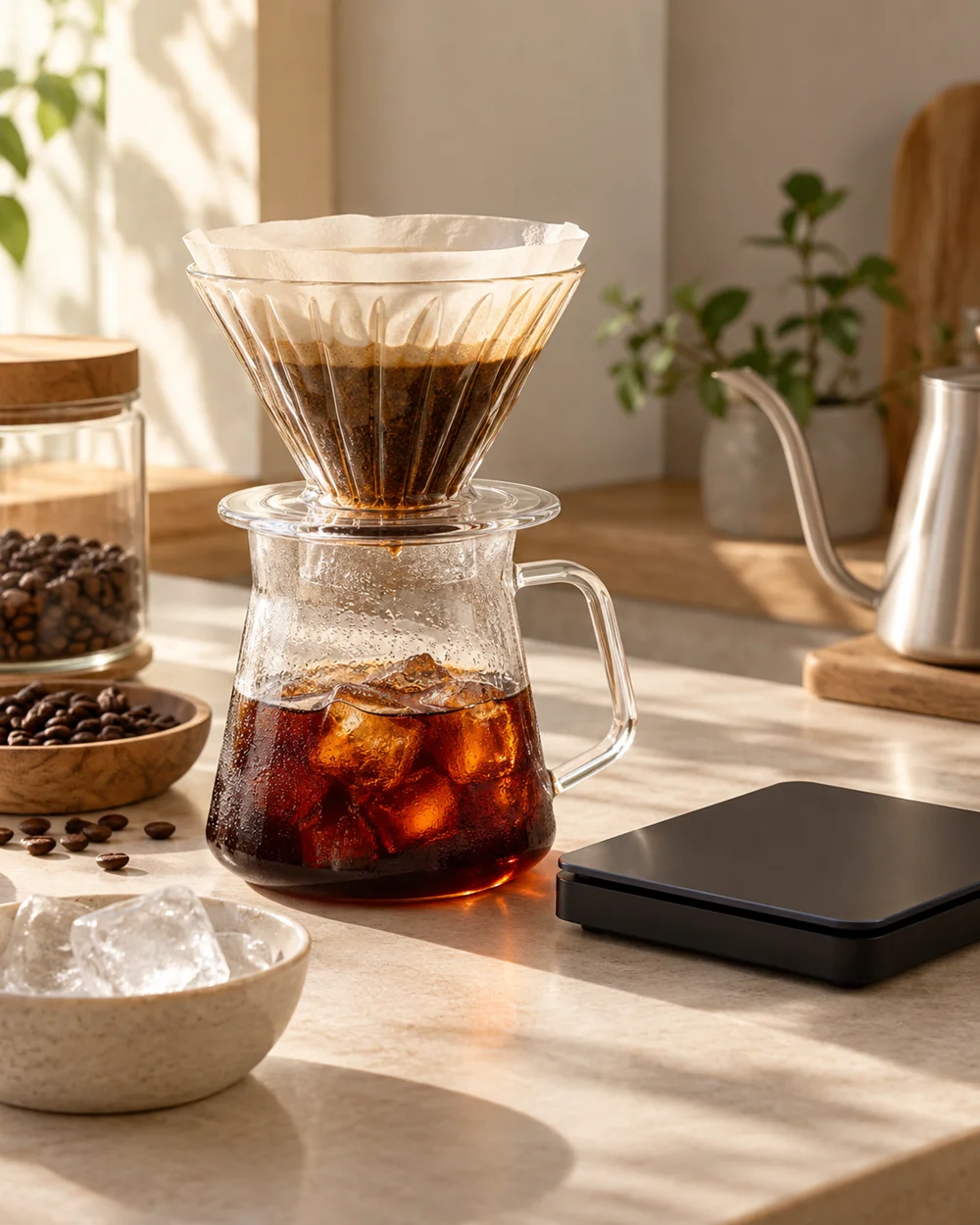
Representative category illustration reused from our editorial library; it does not depict this specific project or a tested result.
Diagnosing Channeling Symptoms in Stovetop Pots
Healthy moka pot extraction features a steady, quiet stream emerging smoothly from the central column. Channeling reveals itself through erratic, spitting bursts, pale bubbles early in the cycle, and harsh, astringent flavors. When water finds a low-density path through the basket, it bypasses compacted pockets, leaving dense zones under-extracted while heavily over-extracting coffee along the eroded channel walls. Observing the uniformity of the ascending stream provides immediate feedback on how evenly grounds were settled prior to assembly.
Selecting Proper Grind Dimensions
Moka pots require a grind size distinctly coarser than commercial espresso but finer than drip filter grinds. Powdered grinds pack too tightly, creating high hydraulic resistance that encourages water to rupture channels around the funnel perimeter. Overly coarse particles allow water to rush through gaps without building adequate extraction pressure. Aim for a gritty, sandy consistency that flows freely. Uniform particle sizing minimizes micro-channels and stabilizes upward flow across the entire surface area of the metal funnel.
The Zero-Tamping Rule for Stovetop Funnels
Unlike pump-driven espresso machines that operate at high pressure, moka pots rely on steam pressure in the boiler generating roughly 1 to 2 bars. Applying downward pressure with a tamper or spoon base compacts the bed too tightly, which can trigger safety valve venting or blow erratic steam fissures through the coffee bed. Coffee grounds should drop loosely into the basket until they form a natural, mounded peak. The goal is even settling, never compression, ensuring water encounters balanced resistance across the funnel.
Distributing and Leveling Flush to Rim
To break up clumping and equalize density, insert a slender needle or pin into the loose grounds, stirring gently in concentric circles throughout the basket depth. Once uniform, tap the funnel collar lightly against the kitchen counter once to settle air pockets. Use a straight edge, such as the back of a flat butter knife, to sweep excess coffee across the top until the bed sits perfectly flush with the funnel rim. Clean all stray grounds off the metal threads.
Regulating Heat for Smooth Ascent
Fill the lower boiler with pre-heated water just below the safety relief valve to minimize brew time on the stove. Lock the top chamber firmly against the rubber gasket to prevent pressure leaks. Place over low to medium-low heat. Gentle energy input allows pressure to build gradually, moistening the bottom of the coffee bed evenly before vertical flow commences. As the liquid reaches the halfway mark of the upper pot, remove from heat to let residual steam conclude extraction smoothly.
A little more
to know.
Why does my moka pot sputter violently within seconds of flow starting?
Violent early sputtering usually indicates excessive heat or a loose coffee bed with deep fissures. Lower your burner temperature and ensure grounds are distributed uniformly without voids across the basket.
Can I leave a small gap below the rim if I want a weaker cup?
Under-filling the funnel creates a loose bed that shifts when water enters, causing severe channeling. To brew less coffee, use a smaller moka pot designed specifically for that lower liquid volume.
Original editorial guidance and recipe formulations, not independently kitchen-tested. Times are estimates and depend on equipment and product directions. Cooked bases need additional cooling and refrigeration before cold serving. Images are AI-generated illustrations; appearance and yield may vary. Check actual ingredient labels, allergens, and any certification you require. We do not certify products. Read our approach.
Save to Pinterest ↗ANOTHER IDEA FOR THE COUNTER