Compare the Sweetness of Date Syrup and Honey Before Substituting One for the Other in a Cold Drink
Date syrup and honey are both natural liquid sweeteners, but they behave differently in cold drinks. Honey is generally perceived as sweeter per gram, while date syrup carries a deeper, more caramel-like flavour that can shift the character of a drink noticeably. Substituting one for the other at the same measured volume without tasting first frequently produces a drink that is either too sweet, too flat, or flavoured in an unexpected direction.
Read the note ↓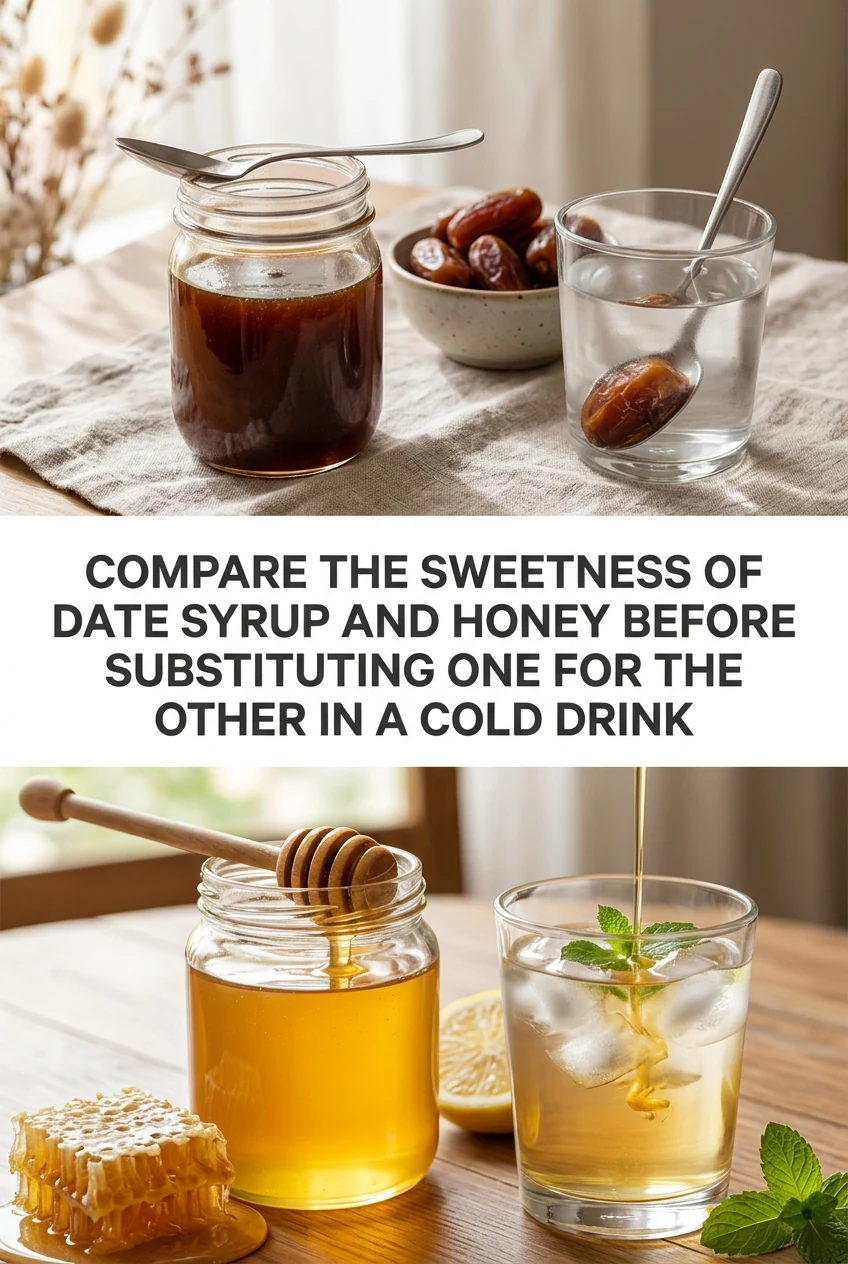
AI-generated editorial concept created for this article. The image is not a technical diagram or a tested result.
Recognize the Dissolved Solids Difference
Honey typically contains around 80 percent dissolved sugars by weight, while date syrup contains a lower concentration because it also carries fibre solids and water from the fruit. This means a teaspoon of honey delivers more sweetness than the same volume of date syrup. In a cold drink where you are working with small quantities, this difference is noticeable. Starting with a direct volume swap and then tasting is more reliable than assuming a one-to-one ratio will work.
Run a Side-by-Side Tasting Before Committing
Prepare two identical small glasses of cold water, around 150 ml each. Add exactly one teaspoon of honey to the first and one teaspoon of date syrup to the second. Stir each for 30 seconds and taste them back to back. This direct comparison tells you how much sweetness difference exists in your specific products, since brands vary. It also reveals the flavour character of each, which matters as much as sweetness level in a finished drink.
Adjust Quantity Based on What You Taste
If the honey water tastes noticeably sweeter than the date syrup water at the same dose, you will need more date syrup to reach the same sweetness in your drink. A practical starting adjustment is to increase the date syrup quantity by one quarter to one half teaspoon per serving and taste again. Work in small increments rather than large additions. Oversweetening a cold drink is harder to correct than undersweetening, where a second small addition fixes the balance quickly.
Account for Dissolution in Cold Liquid
Both honey and date syrup dissolve more slowly in cold liquid than in warm. Honey in particular can settle as a thick layer at the bottom of a cold glass if not stirred thoroughly. Date syrup is thinner and disperses more readily in cold drinks, which is an advantage in iced preparations. If your recipe calls for stirring the sweetener into cold liquid directly, date syrup typically requires less effort to incorporate evenly than honey does at the same temperature.
Record Your Adjusted Ratio for Consistency
Once you find a quantity of date syrup that matches the sweetness and balance you want, write it down alongside the original honey quantity. This gives you a reliable reference for the next session without repeating the full tasting process. Note the brand of each product you used, because the same substitution ratio may not hold if you switch to a different supplier whose concentration differs. Treat your recorded ratio as specific to those products, not as a universal conversion.
A little more
to know.
Does date syrup change the colour of a light-coloured cold drink visibly?
Yes. Date syrup is a deep amber-brown and will tint pale drinks noticeably, which matters if appearance is important. Honey adds a lighter golden tint. Factor colour into your substitution decision alongside sweetness and flavour.
Is there a cold drink type where date syrup works better than honey without adjustment?
Date syrup pairs naturally with drinks that already carry warm or roasted notes, such as cold brew or iced rooibos, where its caramel depth complements rather than clashes. Honey tends to suit lighter, more delicate fruit or floral drinks better.
Original editorial guidance and recipe formulations, not independently kitchen-tested. Times are estimates and depend on equipment and product directions. Cooked bases need additional cooling and refrigeration before cold serving. Images are AI-generated illustrations; appearance and yield may vary. Check actual ingredient labels, allergens, and any certification you require. We do not certify products. Read our approach.
Save to Pinterest ↗ANOTHER IDEA FOR THE COUNTER