Compare Date Syrup and Maple Syrup in a Warm Café Cup
Date syrup and maple syrup are both used as sweeteners in warm café drinks, but they behave differently once they meet hot liquid. Date syrup is thicker and carries a deeper, slightly earthy sweetness, while maple syrup is thinner and dissolves almost immediately. Stirring a small, equal dose of each into separate cups of warm milk lets you observe those differences directly before committing either syrup to a larger recipe.
Read the note ↓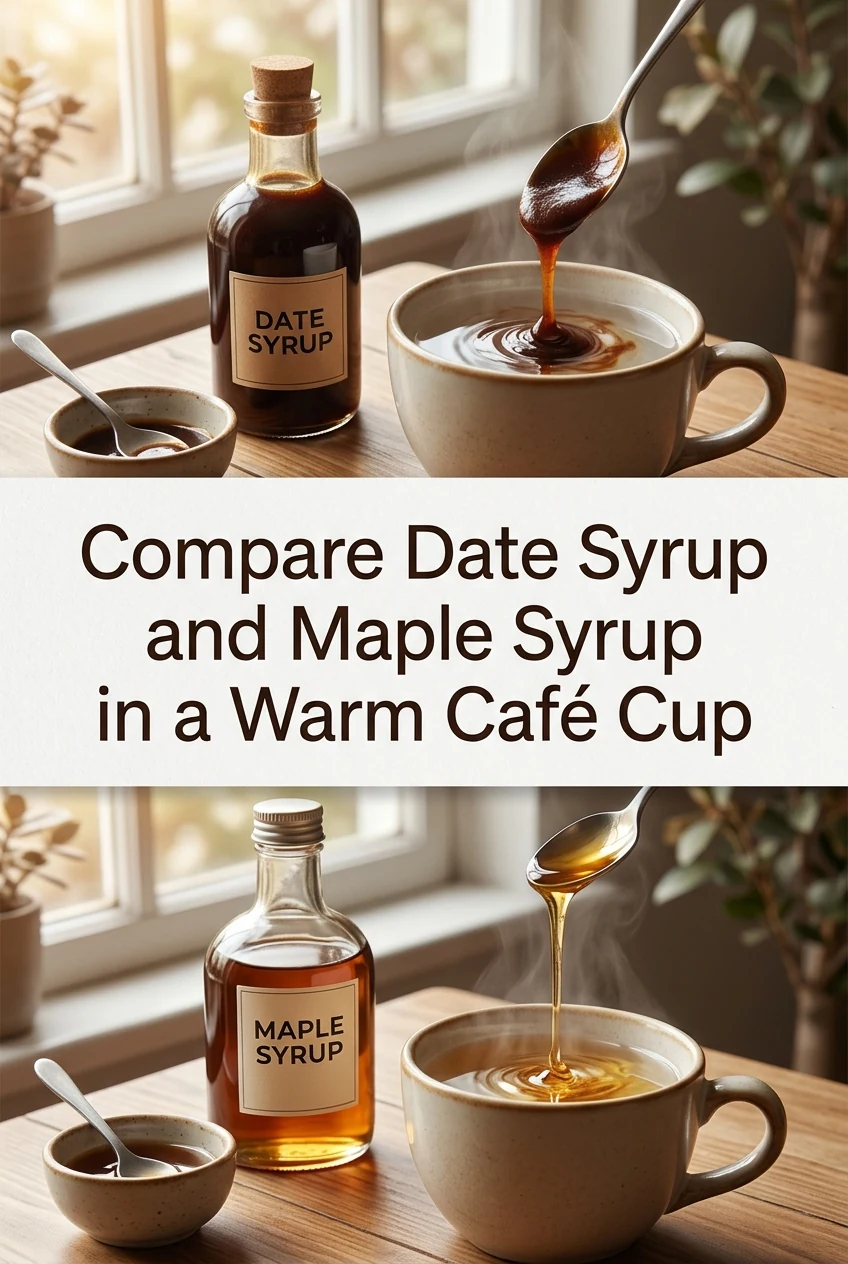
AI-generated editorial concept created for this article. The image is not a technical diagram or a tested result.
Set Up Two Identical Cups With Equal Milk Volumes
Use two cups of the same size and material so heat retention is consistent across both tests. Pour 150 ml of warm pasteurized whole milk into each, heated to roughly 60 to 65 degrees Celsius, which is warm enough to dissolve both syrups without scalding. Using identical volumes and temperatures isolates the syrup variable and makes the comparison meaningful rather than a reflection of differing liquid conditions.
Measure Each Syrup to the Same Volume
Add exactly 10 ml of date syrup to one cup and 10 ml of maple syrup to the other, using a measuring spoon rather than estimating by eye. Ten millilitres is a modest starting dose that reveals flavour character without overwhelming the milk. Because date syrup is denser, 10 ml by volume weighs more than 10 ml of maple syrup, so this is a volume comparison rather than a weight-equivalent one, which is worth noting when scaling up.
Observe How Each Syrup Dissolves Before Stirring
Let both cups sit undisturbed for fifteen seconds after adding the syrup. Date syrup will settle visibly at the bottom and may form a slow-moving ribbon through the milk. Maple syrup disperses more quickly and may be nearly invisible by the time you begin stirring. This resting observation tells you how much stirring effort each syrup will require in a real recipe and whether it risks sinking to the bottom of a finished drink.
Stir Each Cup With the Same Number of Strokes
Using a small spoon, stir each cup with ten circular strokes at a consistent pace. Taste after stirring. Date syrup typically delivers a rounded, caramel-adjacent sweetness with a slightly thicker mouthfeel. Maple syrup tends to taste lighter and more distinctly sweet without the same body. Neither result is universal because syrup brands vary in concentration, but the side-by-side format makes your specific products directly comparable.
Use the Results to Calibrate Your Recipe Dose
If the 10 ml dose of date syrup tastes adequately sweet but the maple syrup dose seems lighter, you may need 12 to 15 ml of maple syrup to reach a comparable sweetness level in your recipe. Record your preferred dose for each syrup separately rather than assuming they are interchangeable at equal volumes. This small comparison session saves adjustment time when making larger batches or drinks for guests.
A little more
to know.
Does date syrup work in cold drinks the same way it does in warm milk?
Date syrup dissolves less readily in cold liquid than in warm. If you plan to use it in an iced drink, dissolving it in a small amount of warm water first and then cooling the mixture before adding it to the cold drink gives more consistent results.
Will the comparison results change if I use a plant-based milk instead of whole milk?
Yes. Plant-based milks vary in fat content and natural sweetness, which affects how each syrup tastes against them. If your recipe uses oat or almond milk, repeat the comparison using that specific milk rather than applying whole-milk results directly.
Original editorial guidance and recipe formulations, not independently kitchen-tested. Times are estimates and depend on equipment and product directions. Cooked bases need additional cooling and refrigeration before cold serving. Images are AI-generated illustrations; appearance and yield may vary. Check actual ingredient labels, allergens, and any certification you require. We do not certify products. Read our approach.
Save to Pinterest ↗ANOTHER IDEA FOR THE COUNTER