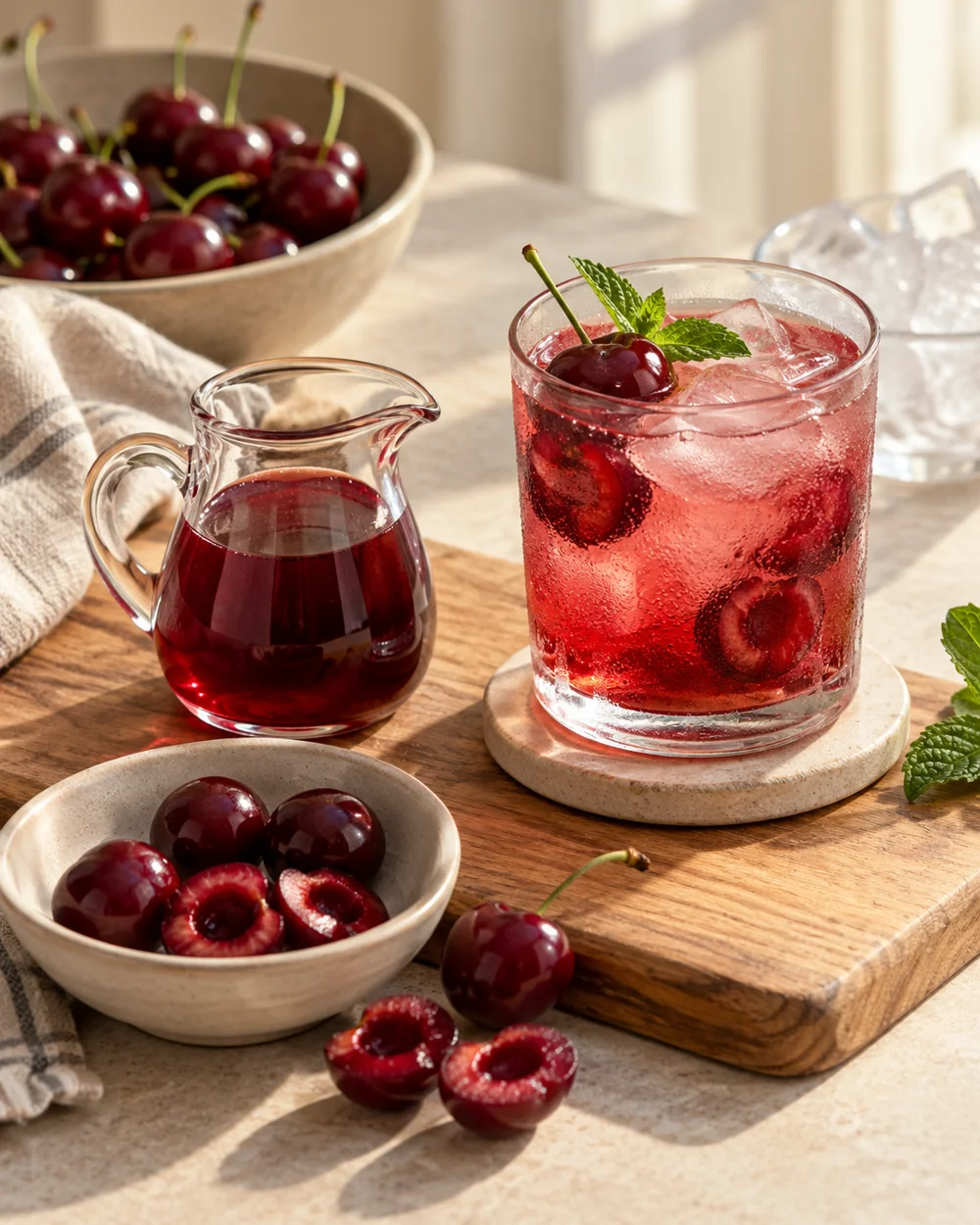
Compare a Small Saucepan and a Heatproof Measuring Jug for Warming a Spiced Syrup Base
Making a small spiced syrup at home raises an immediate equipment question: use a saucepan on the hob or warm the mixture in a heatproof measuring jug? Both work, but each suits a different part of the task. The choice affects how easily you can stir whole spices, read the volume during cooking, and pour the finished syrup into a storage bottle without a second transfer step.
Read the note ↓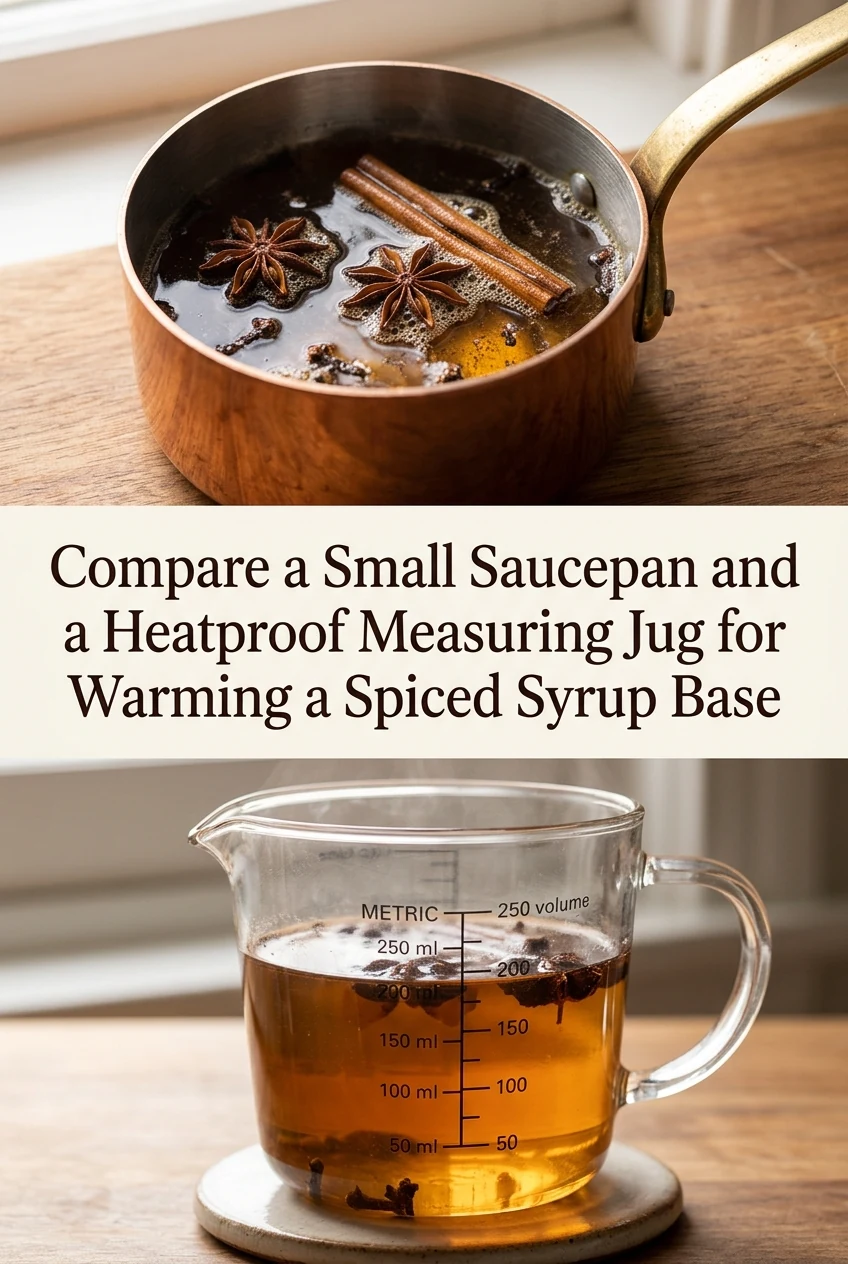
AI-generated editorial concept created for this article. The image is not a technical diagram or a tested result.
What Each Vessel Does Well
A small saucepan, typically 600 to 900 millilitres capacity, gives you a wide flat base for even heat distribution and enough room to stir cinnamon sticks or cardamom pods without them catching on a narrow spout. A heatproof borosilicate measuring jug placed in a saucepan of simmering water heats the syrup gently and lets you read the volume markings without transferring to a separate container. Each advantage addresses a different moment in the process.
Stirring and Spice Control in a Saucepan
Whole spices move freely in a saucepan and are easy to press against the base with a spoon to release more flavour. Direct heat also lets you bring the mixture to a brief simmer quickly, which helps sugar dissolve evenly. The limitation is pouring: most saucepans have a single small lip rather than a calibrated spout, so decanting into a bottle requires a funnel or a steady hand to avoid drips on the outside of the storage container.
Volume Accuracy and Direct Pouring from a Jug
A heatproof measuring jug placed in a water bath allows you to monitor volume against the printed markings as ingredients dissolve. Once heated, you can pour directly from the jug spout into a bottle or jar using a funnel, eliminating an extra decanting vessel. However, you must handle the jug with a heatproof cloth or mitt and wipe its wet base dry so dripping bath water does not enter the bottle. The water-bath method also heats more slowly than direct stovetop warmth and leaves less room to stir whole spices.
A Worked Example for a 200-Millilitre Batch
For an illustrative 200-millilitre batch of spiced syrup, starting with 115 grams of sugar, 140 millilitres of water, two cinnamon sticks, and four cardamom pods accounts for dissolved sugar displacement and water loss during simmering. A small saucepan is easier during the cooking stage because the whole spices have room to move freely. Once the sugar dissolves and the mixture simmers gently for three minutes, strain it through a fine sieve into a heatproof measuring jug to confirm the final volume before bottling. This two-vessel approach uses each tool where it performs best.
Storage and Cooling Before Sealing
Whether you cook in a saucepan or a jug, allow the syrup to cool before sealing the storage bottle. Capping while hot traps steam that condenses on the underside of the lid and drips onto the surface, creating localized moisture where spoilage organisms can develop. Once cooled, seal and refrigerate at 4 degrees Celsius or 40 degrees Fahrenheit or below. Use the syrup within two weeks and discard if you notice any cloudiness or off smell, as homemade syrups contain no commercial preservatives.
A little more
to know.
Does the jug method work on an induction hob?
A glass or ceramic jug will not heat directly on an induction surface. Use the water-bath method instead: place the jug inside a small saucepan of simmering water on the induction hob. Stir frequently and monitor the water level in the outer pan.
How do I prevent the syrup from crystallising in the bottle?
Ensure all sugar is fully dissolved before removing from heat. A small amount of lemon juice, around half a teaspoon per 200 millilitres, can help inhibit crystallisation. Store the sealed bottle upright and avoid repeated temperature changes between fridge and counter.
Original editorial guidance and recipe formulations, not independently kitchen-tested. Times are estimates and depend on equipment and product directions. Cooked bases need additional cooling and refrigeration before cold serving. Images are AI-generated illustrations; appearance and yield may vary. Check actual ingredient labels, allergens, and any certification you require. We do not certify products. Read our approach.
Save to Pinterest ↗ANOTHER IDEA FOR THE COUNTER