Compare a Paper Filter and a Metal Filter for Drip Coffee Clarity
Choosing between a paper filter and a metal mesh filter changes what ends up in your cup beyond just convenience. Paper traps oils and fine particles; metal lets them pass. Neither is universally better, but understanding what each does to clarity, body and sediment helps you match the filter to the cup you actually want to drink on a given morning.
Read the note ↓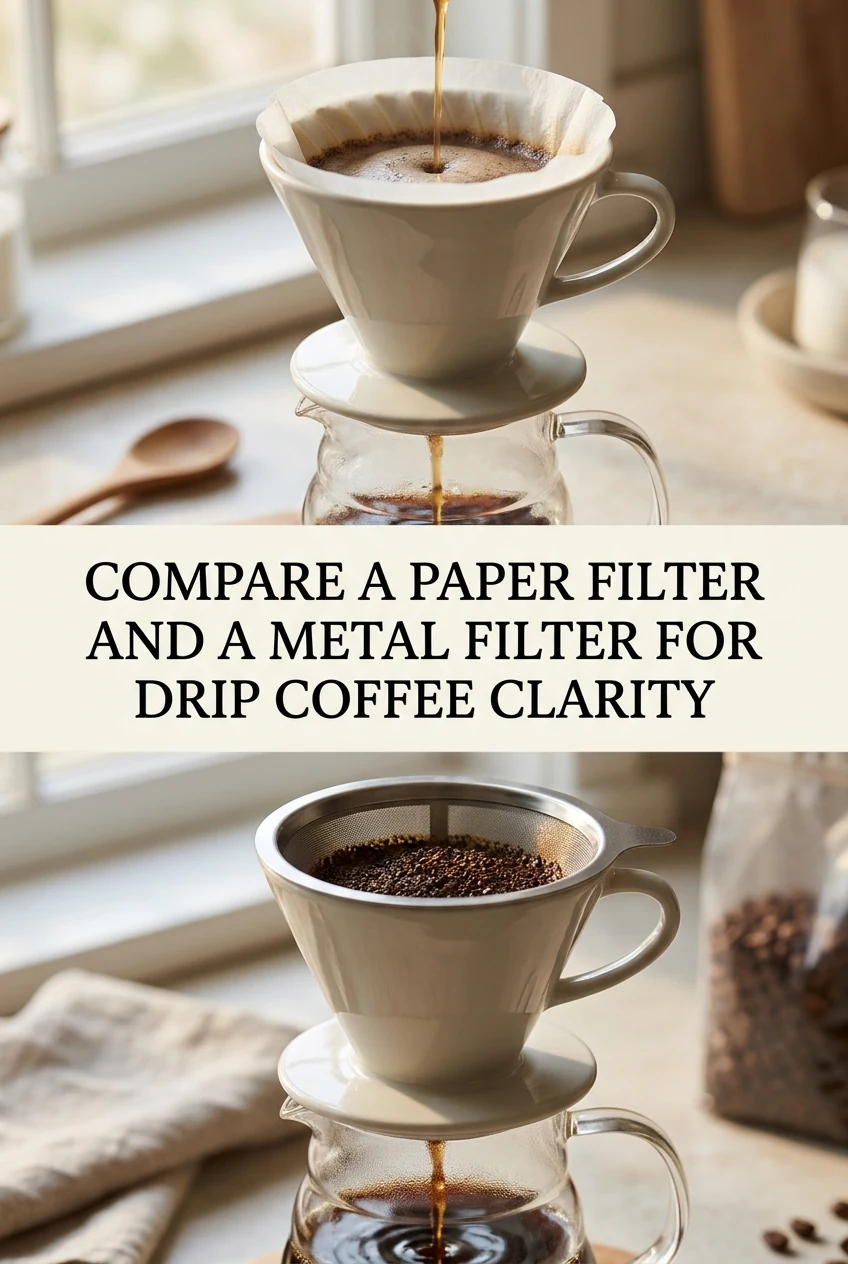
AI-generated editorial concept created for this article. The image is not a technical diagram or a tested result.
What a Paper Filter Removes From the Brew
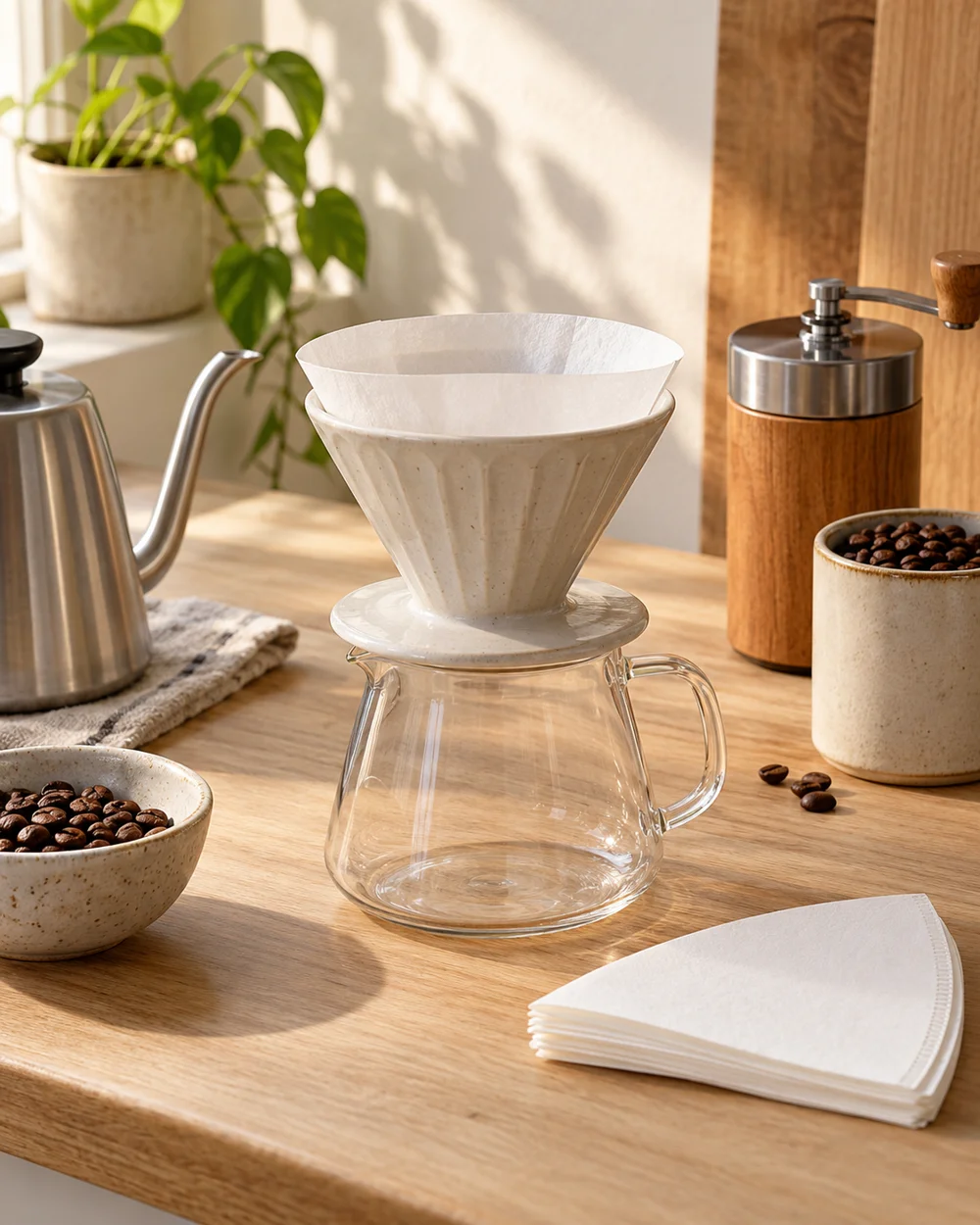
A paper filter acts as a dense physical barrier. Its tight matrix of cellulose fibers catches fine particles and retains coffee oils that carry diterpenes before they reach the carafe. The result is a visually clear, bright cup with a lighter body. If you hold the finished brew up to a window, you can often see through it. This clarity suits coffees with delicate floral or fruit notes where oils might otherwise coat the palate and obscure those flavors.
What a Metal Filter Allows Into the Cup
A metal mesh filter has openings large enough to let coffee oils and very fine grounds pass through freely. The finished cup looks noticeably darker when held to light, and a thin layer of sediment often settles at the bottom within a few minutes. Body feels heavier and the texture is almost silky compared to paper-filtered coffee. This suits darker roasts or coffees with chocolatey, nutty profiles where that richness is part of the intended experience.
A Side-by-Side Comparison Using the Same Coffee
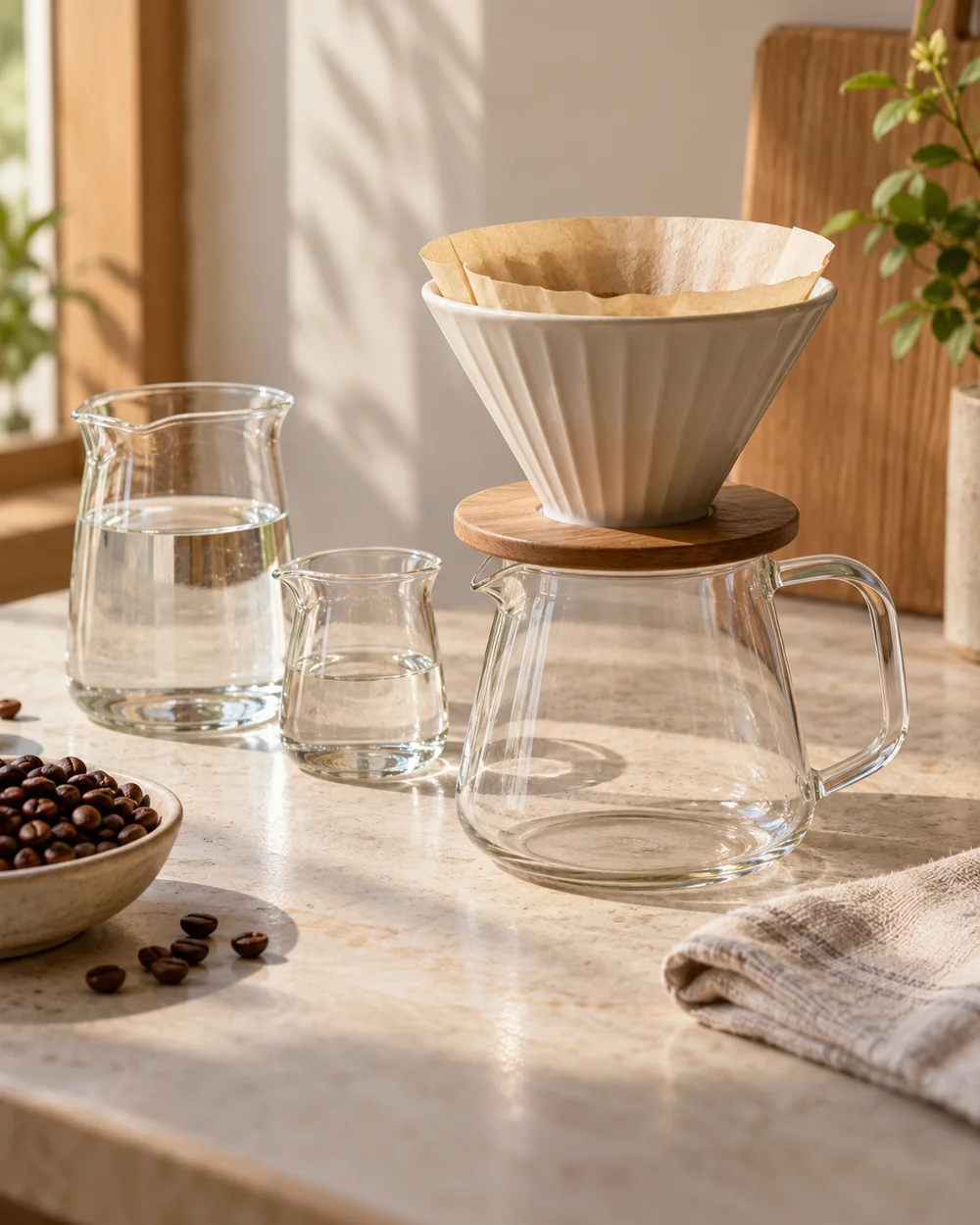
As an illustrative example only, consider brewing 15 grams of the same medium-roast ground coffee into 250 ml of water using each filter type in sequence. After brewing, pour each into a clear glass. The paper-filtered cup will typically appear amber and translucent. The metal-filtered cup will appear darker and slightly opaque. Tilt each glass gently after two minutes; sediment movement is usually visible only in the metal-filtered glass. This comparison reveals filter effect, not grind or roast quality.
How Brew Time and Flow Rate Differ Between the Two
Paper filters slow the flow of water because the dense fibrous sheet adds flow resistance. A standard pour-over with a paper filter might take three to four minutes to drain completely depending on grind size and pour technique. A metal filter drains faster because its open mesh offers substantially less resistance to water flow. Faster drainage means shorter contact time, which can affect extraction. Adjusting your pour speed or grind coarseness compensates, but expect to experiment rather than transfer settings directly.
Deciding Which Filter Fits Your Brewing Goal
If you want a clean, bright cup that shows off lighter roast characteristics, a paper filter is the straightforward choice. If you prefer a fuller-bodied cup and do not mind sediment at the bottom, a metal filter delivers that without additional cost per brew. Some brewers keep both on hand and choose based on the coffee origin or roast level that day. The decision is practical, not one filter being objectively superior.
A little more
to know.
Can I use a paper filter inside a metal filter holder to get both effects?
Yes, placing a paper filter inside a metal basket is a common workaround. The paper handles oil and particle removal while the metal provides structural support. Expect slower drainage than metal alone and check that the paper sits flat without folding.
Does the sediment from a metal filter make the coffee unsafe to drink?
No, the fine grounds that pass through a metal filter are the same coffee you brewed. They are not harmful. Many drinkers simply stop pouring before reaching the settled layer at the bottom of the cup to avoid a gritty last sip.
Original editorial guidance and recipe formulations, not independently kitchen-tested. Times are estimates and depend on equipment and product directions. Cooked bases need additional cooling and refrigeration before cold serving. Images are AI-generated illustrations; appearance and yield may vary. Check actual ingredient labels, allergens, and any certification you require. We do not certify products. Read our approach.
Save to Pinterest ↗ANOTHER IDEA FOR THE COUNTER