Compare a Handheld Milk Frother and a Small French Press Plunge for Cold Foam
Cold foam has become a common home café addition, but the two most accessible tools for making it produce noticeably different results. A handheld battery-powered frother and a small French press used as a manual aerator both work without heat, yet the foam texture, volume increase and practical workflow differ enough to affect which drink each suits. This guide compares the two methods on specific practical grounds to help you choose based on your glass size and drink style.
Read the note ↓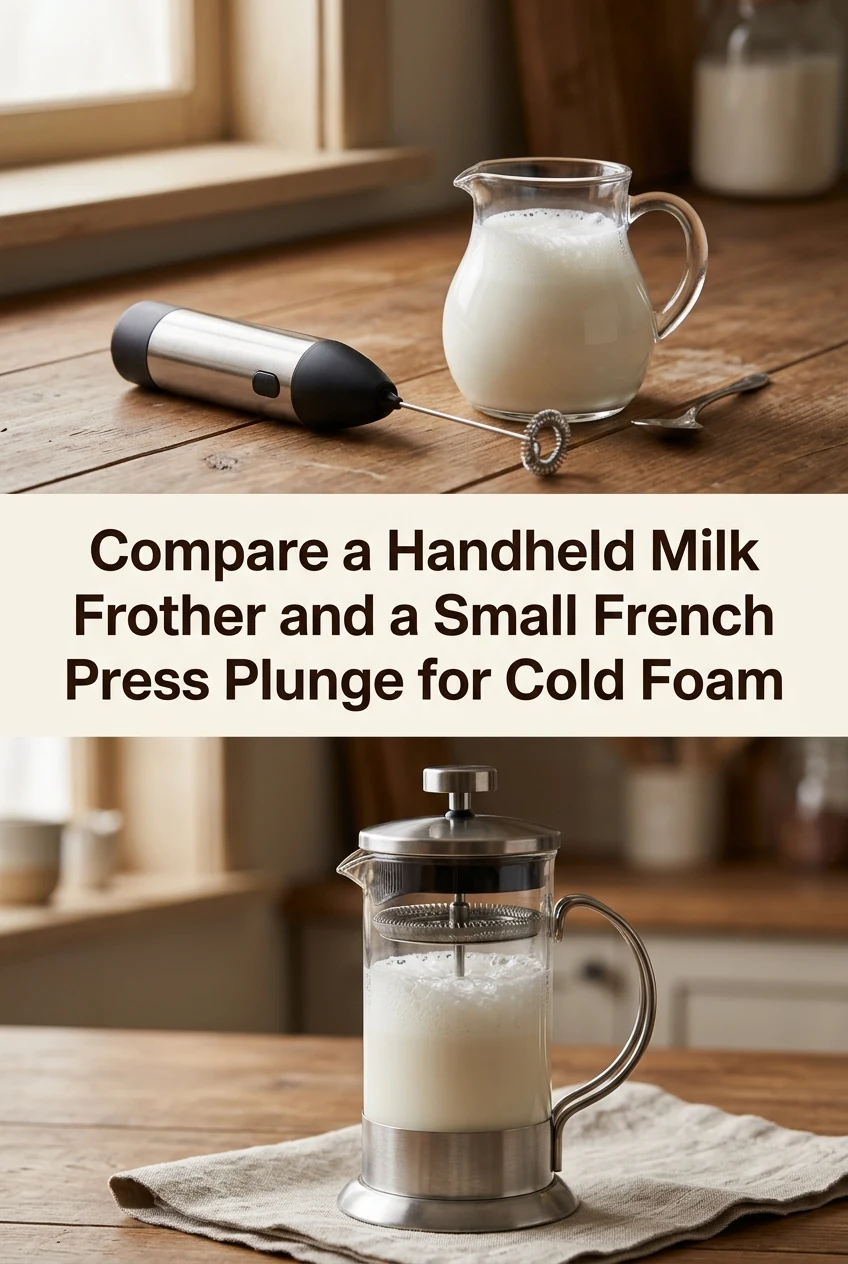
AI-generated editorial concept created for this article. The image is not a technical diagram or a tested result.
Understand What Each Tool Does to the Milk
A handheld frother spins a small wire whisk at high speed, incorporating air in fine bubbles through rapid agitation. A French press plunge method works by pulling the plunger up and down through cold milk, which folds air in through a mesh filter. The frother produces smaller, more uniform bubbles that sit as a denser layer. The French press tends to produce a lighter, slightly coarser foam with more visible volume. Neither method steams the milk, so both produce cold foam that sits on top of a cold drink rather than blending into it.
Measure Starting Volumes to Understand Yield
As an illustrative example: starting with 60 mL of cold pasteurised whole milk in a tall narrow glass, a handheld frother running for 20 to 25 seconds typically produces a foam layer of 3 to 4 cm that holds its shape for several minutes. The same 60 mL plunged in a 350 mL French press for 15 to 20 rapid strokes produces a larger but less stable foam that begins to separate sooner. Actual results vary by milk fat content, temperature and technique. Colder milk, around 4 degrees Celsius, generally aerates more easily with both tools.
Choose the Frother for Smaller Glasses and Denser Foam
The handheld frother works well when you want a compact, defined foam layer on a drink served in a glass holding 200 to 300 mL. The foam is dense enough to hold a light dusting of cocoa or cinnamon on its surface without sinking immediately. The frother also works directly in the serving glass if the glass is tall enough to avoid splashing, which reduces washing. The main limitation is that the whisk head needs to be submerged to avoid spraying, so it requires a minimum milk depth of about 3 to 4 cm.
Choose the French Press for Larger Volume and Lighter Texture
The French press method produces more total foam from the same starting volume because the plunging action incorporates more air more quickly. This suits a larger cold drink, such as a 400 mL iced tea or cold brew served in a tall glass, where you want a generous foam layer rather than a precise one. The foam is lighter and more airy, which some people prefer over the denser frother result. The trade-off is that it separates faster, so it is best spooned onto the drink immediately before serving rather than prepared ahead.
Clean Both Tools Promptly to Avoid Milk Residue
Milk residue dries quickly on both the frother whisk and the French press mesh plunger. Rinse the frother whisk under running water immediately after use, running it briefly in a glass of clean water to clear the mesh. Disassemble the French press plunger and rinse all parts separately. Do not leave milk sitting in either tool between service sessions. Refrigerate any unused frothed milk promptly if you made more than needed, and use it within the same service session where possible, as foam structure does not survive long-term refrigeration.
A little more
to know.
Does milk fat content change which tool works better?
For cold foam, lower-fat or skimmed milk generally produces a firmer, longer-lasting foam because milk proteins stabilize the bubble walls without fat globules disrupting the structure. Whole milk provides a richer taste and creamier mouthfeel, but its cold foam is looser and separates back into liquid more quickly with both tools. Oat milk behaviour varies significantly by brand and formulation, so test your specific product before committing to a service method.
Can I froth non-dairy milk with a French press using the same technique?
Yes, but results differ from dairy milk. Barista-formulated oat or soy milks are designed to foam more reliably. Standard versions may produce thin foam that separates within a minute. Use the same cold temperature starting point and adjust plunge count based on observed foam volume.
Original editorial guidance and recipe formulations, not independently kitchen-tested. Times are estimates and depend on equipment and product directions. Cooked bases need additional cooling and refrigeration before cold serving. Images are AI-generated illustrations; appearance and yield may vary. Check actual ingredient labels, allergens, and any certification you require. We do not certify products. Read our approach.
Save to Pinterest ↗ANOTHER IDEA FOR THE COUNTER