Clear Trapped Milk Solids From Handheld Aerator Shafts
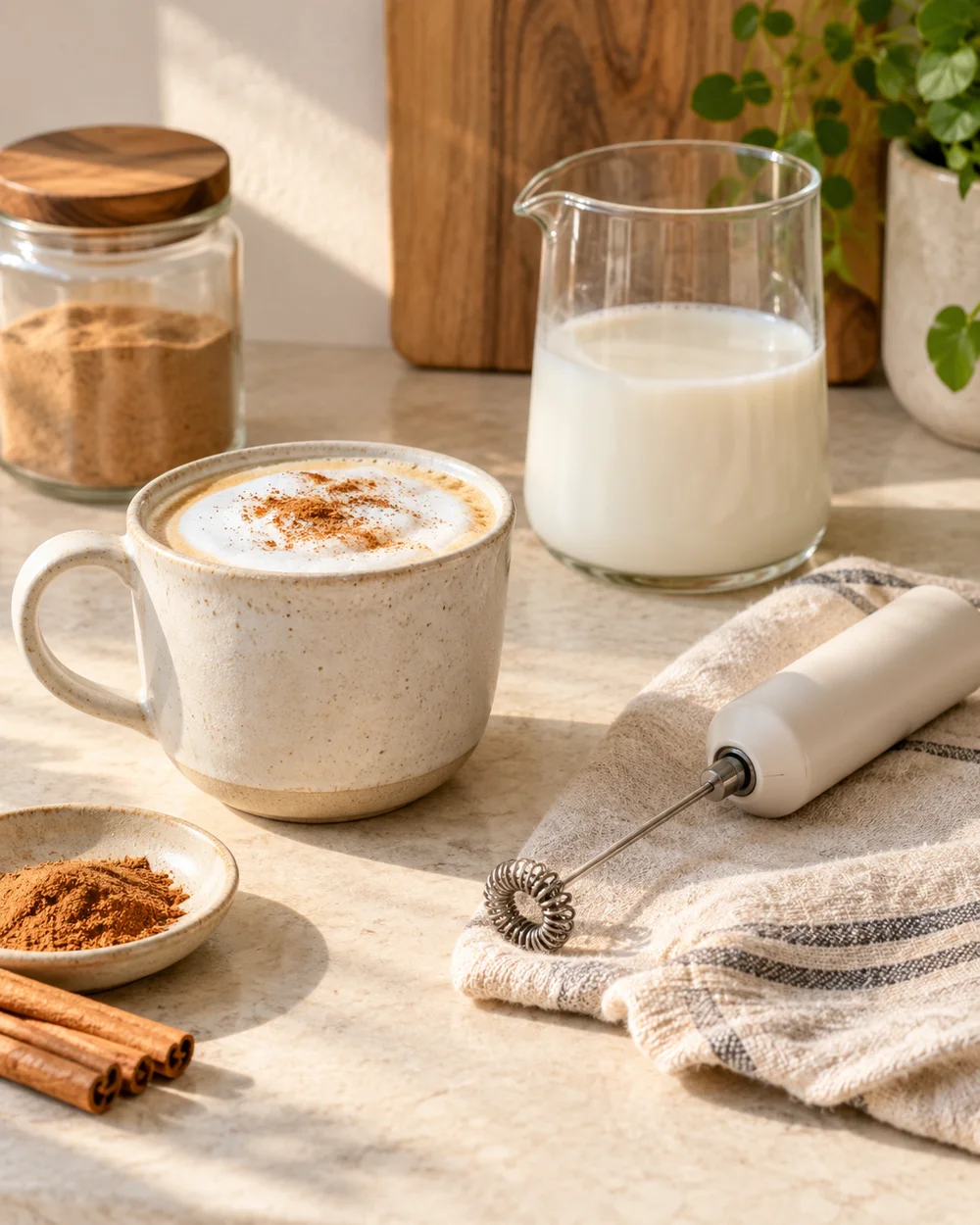
Battery-operated handheld frothers rely on a coiled wire ring spinning rapidly to introduce air into warm milk. That coiled geometry traps liquid between closely spaced turns. When dairy residues sit on the steel coil, drying milk solids form a stiff crust that impedes balanced rotation and introduces off-flavors to future cups. Cleaning the aerator directly after use takes under thirty seconds and prevents milk films from hardening inside the spring assembly, saving the small motor from friction strain while maintaining sanitary daily beverage preparation at home.
Read the note ↓
Representative category illustration reused from our editorial library; it does not depict this specific project or a tested result.
The Mechanism of Coil Accumulation
The whisk end of an aerator consists of a central disc surrounded by a tight spiral spring. As milk is whipped, moving liquid gets forced into the narrow groove behind the coil and between the tight wire turns. Surface rinsing under a running faucet often washes only the outer perimeter, leaving dairy trapped inside the spring assembly. Within an hour at room temperature, those internal residues begin drying into a stubborn film that resists plain cold rinses later on.
Immediate Post-Froth Spin Method
The fastest cleaning window occurs while the shaft is still wet from milk. Prepare a small vessel with 120 milliliters of warm tap water mixed with two drops of ordinary liquid dish soap. Submerge the whisk head completely without submerging the plastic motor handle. Activate the power button for five to eight seconds. The spinning water flushes the soapy solution through the internal spaces of the coil, dislodging milk residue before it can set.
Secondary Clear Rinse Procedure
Soap film leaves behind bitter surfactants if not rinsed thoroughly. Immediately transfer the spinning head into a second glass containing 120 milliliters of clean, warm water. Run the aerator for another five seconds. Lift the head slightly above the water surface while holding the vessel upright, then pulse the switch for two seconds to spin off excess moisture via centrifugal action. This step removes residual soap and leaves the stainless steel wire largely dry.
Addressing Dried Protein Buildup
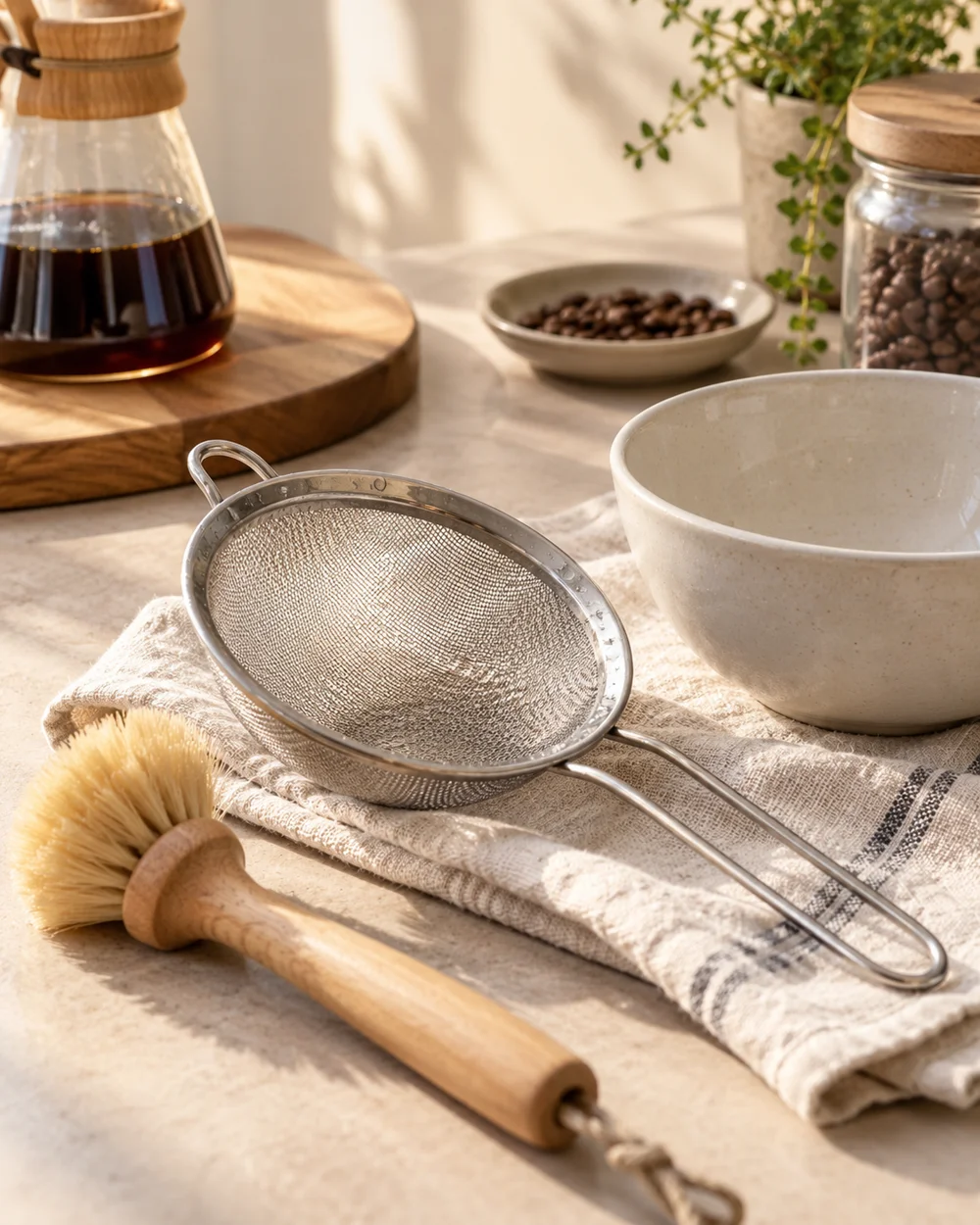
If dried milk has already formed an opaque skin, mechanical agitation is necessary. Avoid metal scrapers that can bend the wire ring out of true alignment. Instead, soak the steel head in warm water for five minutes, then gently brush the coil with a dedicated soft-bristled utility brush. Work the bristles parallel to the coils to push debris outward from the inner disc. Verify that the spring remains circular, as eccentric warping causes vibration and motor wear.
Storage and Housing Care
Wipe the rigid shaft clean using a damp microfiber cloth, moving downward from the motor housing toward the whisk. Never submerge the battery compartment or motor body in water, as moisture destroys the switch contacts and small internal motor brushes. Store the tool upright on a stand or flat in a dedicated tray where the wire head cannot bend against other drawer utensils. Inspect the coil weekly under good light to ensure clean gaps between turns.
A little more
to know.
Can the frothing wand be cleaned in an automatic dishwasher?
Most handheld aerators have non-removable shafts attached directly to battery compartments that cannot tolerate dishwasher heat or water immersion. Even if detachable, the thin coiled spring can snag on racks or collect detergent residue inside its grooves.
Why does the aerator vibrate excessively after being cleaned?
Excessive vibration usually indicates that the coiled spring was bent off-center during manual scrubbing. Gently press the spring back into uniform concentricity around the inner disc with your fingertips while the unit is switched off to restore balanced rotation.
Original editorial guidance and recipe formulations, not independently kitchen-tested. Times are estimates and depend on equipment and product directions. Cooked bases need additional cooling and refrigeration before cold serving. Images are AI-generated illustrations; appearance and yield may vary. Check actual ingredient labels, allergens, and any certification you require. We do not certify products. Read our approach.
Save to Pinterest ↗ANOTHER IDEA FOR THE COUNTER