Clean French Press Mesh Screens Free of Trapped Oils
A French press produces full-bodied coffee, but its stainless steel filter stack readily traps roasted coffee lipids and micro-fines within the woven wire mesh. Over successive brews, these bound oils oxidize, turning rancid and imparting a stale, bitter cast to fresh extractions regardless of coffee quality. Rinsing the assembled plunger under a tap only cleans the exterior faces while leaving trapped grounds wedged inside. Restoring pristine brewing conditions requires unscrewing the threaded assembly to isolate the mesh disc for targeted degreasing in warm, unscented dishwashing solution.
Read the note ↓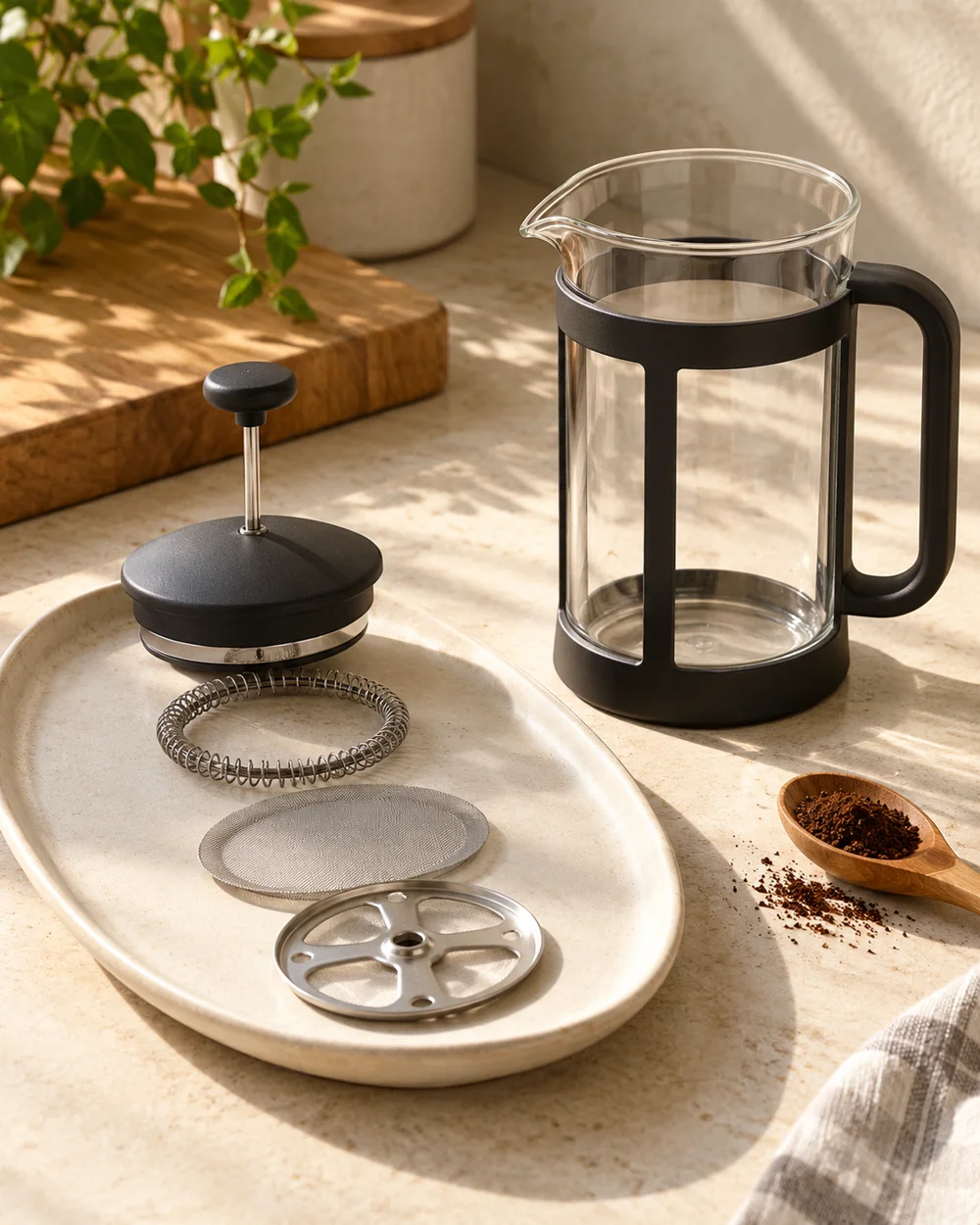
Representative category illustration reused from our editorial library; it does not depict this specific project or a tested result.
Disassembling the Plunger Stack
Begin by gripping the plunger rod firmly near the lower base with one hand while holding the bottom retaining cross plate with the other. Unscrew the bottom plate counterclockwise from the central rod until the components separate. Lay out the distinct parts in sequence: the threaded upper rod, the top spiral spring disc, the fine wire mesh screen, and the threaded bottom support plate. Separating these pieces reveals the dark ring of trapped oils and fine grounds compacted tightly along the inner contact seams.
Preparing the Unscented Wash Solution
Fill a medium ceramic bowl with 500 ml of hot tap water around 50C and stir in 5 ml of plain, unscented liquid dish soap. Avoid scented citrus or botanical detergents, as lingering fragrances bind readily to stainless steel and taint subsequent coffee batches. Submerge the disassembled metal pieces completely in the soapy bath. The surfactant breaks the hydrophobic bond holding coffee lipids against the woven stainless steel wires without damaging the delicate metal weave or corroding the spring coil.
Manual Scrubbing of the Mesh Screen
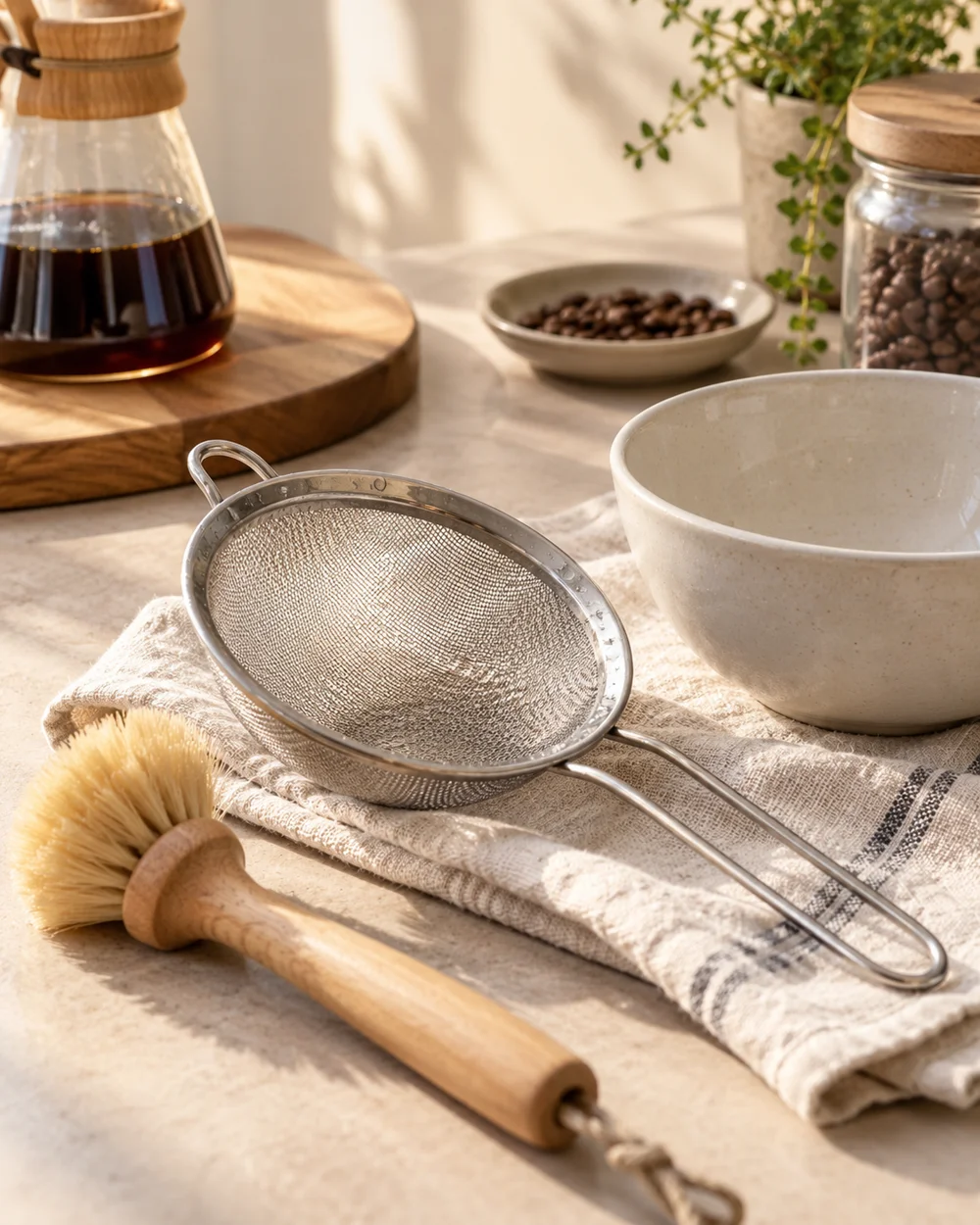
Allow the parts to soak for five to ten minutes to soften compacted coffee solids. Remove the flexible mesh screen and inspect it against overhead light to locate clogged apertures. Using a soft-bristled kitchen brush or an old toothbrush, gently scrub both sides of the screen using radial strokes from the center hole outward to the rim. This direction protects the fragile outer wire edge from curling, fraying, or developing bends that compromise the seal against the glass beaker.
Rinsing and Verifying Cleanliness
Rinse each component thoroughly under running warm water for thirty seconds to eliminate all surfactant residues. Wipe the components dry with a lint-free kitchen towel. Run a clean white paper towel across both sides of the wire screen; any yellowish or brownish tint indicates residual coffee oil requiring a second brief scrub. Inspect the outer circumference of the mesh to verify that the spring wire remains round, intact, and free of protruding metal snags or loose wire strands.
Reassembly and Alignment Checks
Reconstruct the assembly according to maker specifications. Slide the top spiral disc onto the rod, lay the fine mesh screen directly against the underside of the spiral disc so its edges curl upward around the spring perimeter, and align the bottom cross plate beneath. Thread the central rod clockwise into the bottom plate until snug. Hand-tighten gently without over-torquing to prevent stripping the threads. The plunger should slide smoothly into the beaker without catching or leaving gaps.
A little more
to know.
Will vinegar remove rancid coffee oils from the mesh?
Vinegar dissolves mineral scale from hard water but is ineffective at dissolving hydrophobic coffee oils. Mild dish detergent or an alkaline coffee equipment wash is necessary to lift bound oils.
Can I clean the disassembled metal filter parts in a dishwasher?
Yes, placing the disassembled metal pieces in a dishwasher silverware basket is safe, but forceful water jets can bend the mesh rim. Hand washing with a soft brush preserves the delicate screen edges longer.
Original editorial guidance and recipe formulations, not independently kitchen-tested. Times are estimates and depend on equipment and product directions. Cooked bases need additional cooling and refrigeration before cold serving. Images are AI-generated illustrations; appearance and yield may vary. Check actual ingredient labels, allergens, and any certification you require. We do not certify products. Read our approach.
Save to Pinterest ↗ANOTHER IDEA FOR THE COUNTER