Choose Between Filtered and Tap Water for Manual Coffee Brewing
The water you use in a pour-over or French press affects the taste of the finished cup in ways that are noticeable even when the coffee and technique stay identical. Rather than assuming filtered water is always better or that tap water is always adequate, you can run a simple same-day side-by-side comparison using the same coffee and the same brewing approach. This guide explains how to set up that comparison and what to look for in the result.
Read the note ↓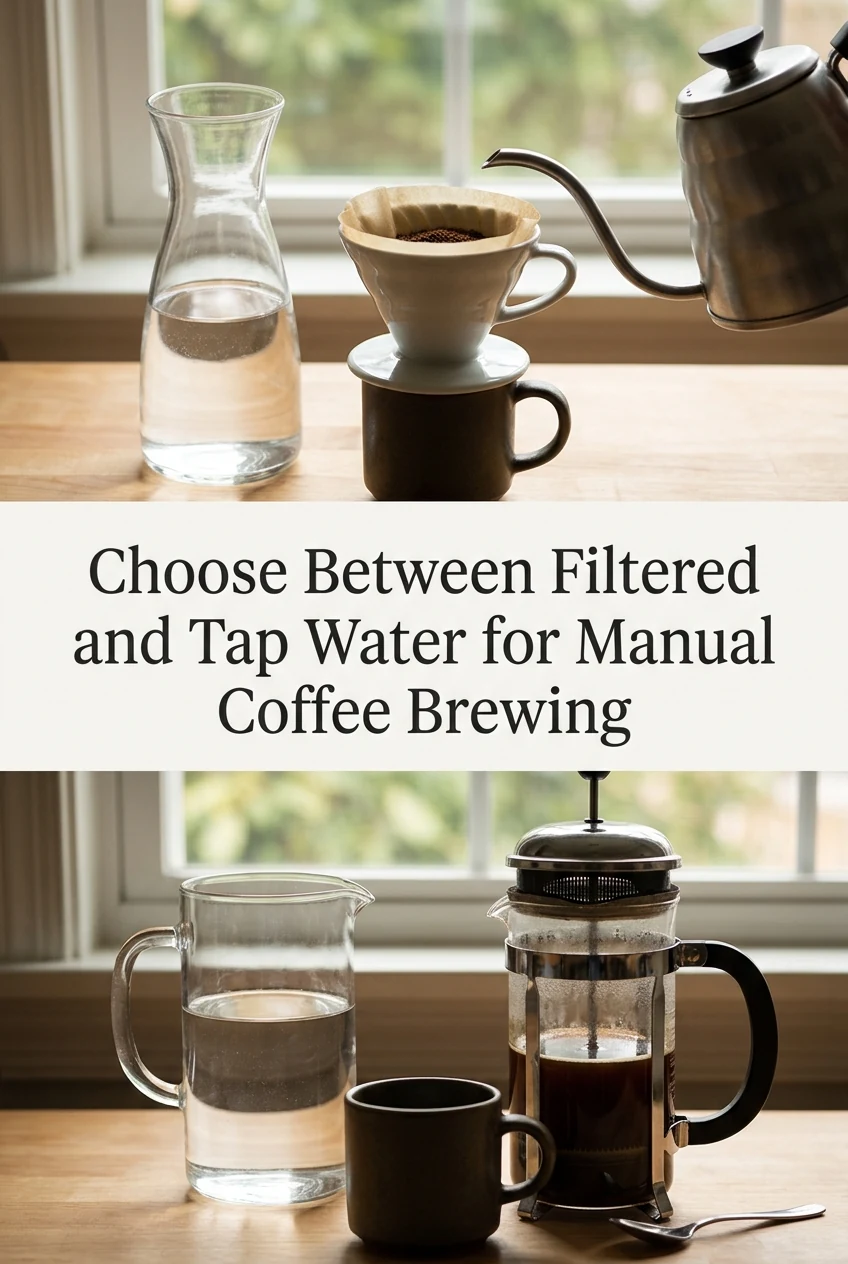
AI-generated editorial concept created for this article. The image is not a technical diagram or a tested result.
Set Up the Comparison on the Same Day With the Same Coffee
Brew both cups on the same day using coffee from the same bag, ground to the same setting, with the same brewer and the same water temperature. The only variable should be the water source. Brew the tap water cup first, then the filtered water cup immediately after, or use two identical brewers simultaneously if you have them. Tasting cups brewed days apart introduces too many other variables to draw a useful conclusion about water alone.
Use the Same Water Temperature for Both Brews
Heat both water sources to the same temperature before brewing. A kitchen thermometer gives you a specific reading to match. If your tap water and filtered water start at different temperatures from the tap or filter, bring both to the same target before you begin. Temperature differences between the two brews would affect extraction and make it impossible to isolate the effect of the water source itself. This step is essential for the comparison to be meaningful.
Taste Each Cup Plain Before Adding Anything
Pour each finished brew into a plain white or clear cup so colour is visible. Taste each one without milk, sugar, or any addition. Notice whether one cup tastes sharper, flatter, more bitter, or more rounded than the other. Also taste a small amount of each water source plain before brewing so you have a baseline. If your tap water tastes strongly of chlorine or minerals before brewing, that character often carries into the cup, though the degree varies by location and season.
Understand What Filtered Water Does and Does Not Change
A standard carbon-block pitcher filter reduces chlorine and some sediment but does not remove all dissolved minerals. Mineral content in water affects how coffee compounds extract during brewing. Very soft water, which is low in minerals, can produce a flat or sour cup, while very hard water can produce a harsh or chalky one. Filtered water from a pitcher sits somewhere between tap and distilled, but the exact mineral profile depends on your source water and filter type.
Make a Decision Based on Your Specific Result
After tasting both cups, decide which you prefer and note any practical factors. If the difference is minimal, tap water is the simpler choice. If the filtered cup is noticeably cleaner or more balanced to your palate, factor in the cost and effort of maintaining a filter. If both cups taste flat or harsh, the issue may be elsewhere, such as grind consistency, water temperature, or coffee freshness, and switching water source alone will not resolve it.
A little more
to know.
Should I use distilled water if both tap and filtered water taste off?
Distilled water has virtually no mineral content, which can result in flat-tasting coffee and may also affect some brewers over time. It is generally not recommended as a long-term solution for manual brewing without remineralization.
Does the water source matter more for pour-over than for French press?
Both methods are affected by water quality, but pour-over involves a finer grind and faster contact time, which can make mineral-related flavors more pronounced. French press uses longer immersion, so differences may be slightly less sharp but are still detectable.
Original editorial guidance and recipe formulations, not independently kitchen-tested. Times are estimates and depend on equipment and product directions. Cooked bases need additional cooling and refrigeration before cold serving. Images are AI-generated illustrations; appearance and yield may vary. Check actual ingredient labels, allergens, and any certification you require. We do not certify products. Read our approach.
Save to Pinterest ↗ANOTHER IDEA FOR THE COUNTER