Choose Between a Wide Ramekin and a Narrow Glass for Setting a Small Milk Pudding
A small milk pudding sets through heat loss from its surface and sides, so the shape of the vessel directly affects how long the process takes and how the finished texture feels. A wide shallow ramekin exposes more surface area to the cold refrigerator air than a narrow glass holding the same volume. This difference in setting time is practical information when you are planning a cafe service or preparing puddings ahead of a specific serving window.
Read the note ↓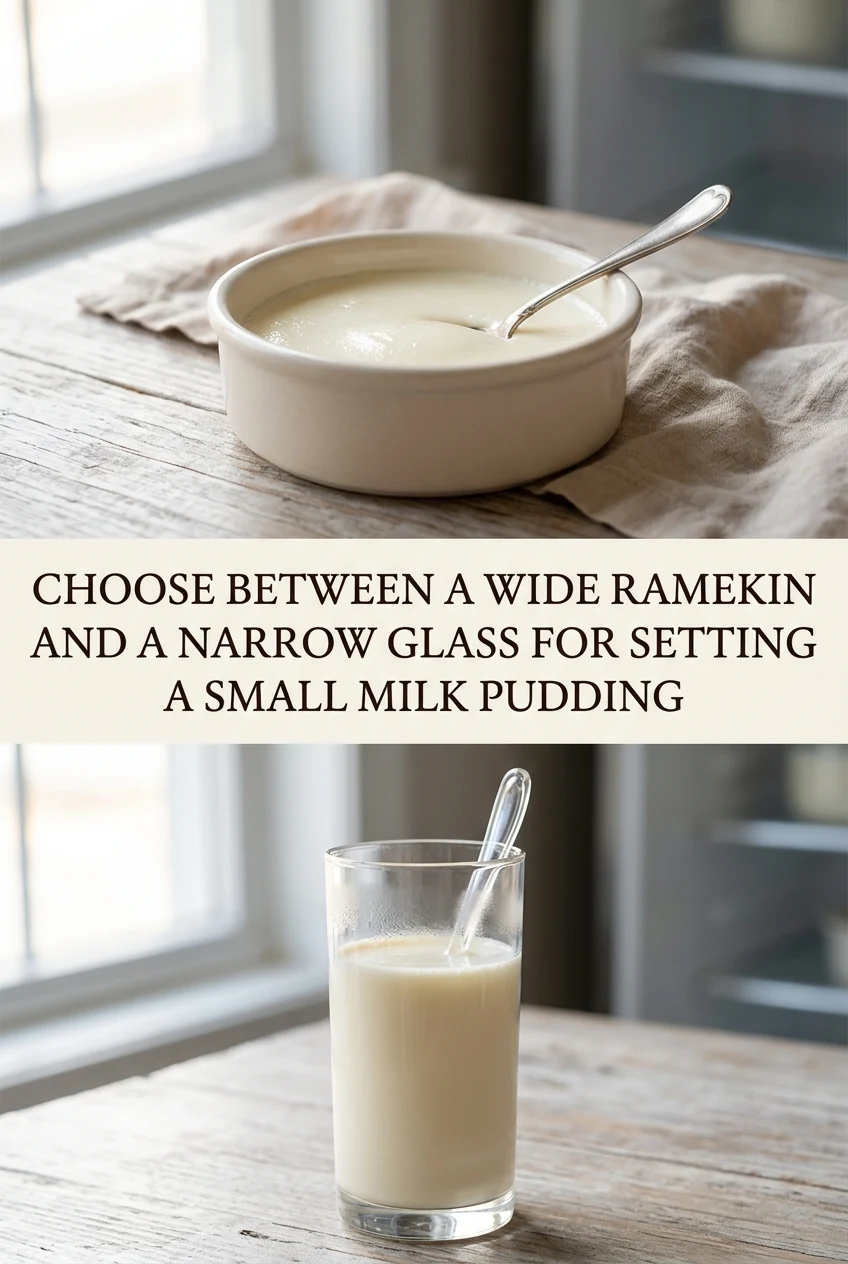
AI-generated editorial concept created for this article. The image is not a technical diagram or a tested result.
How Surface Area Affects Setting Time
Heat escapes from a pudding through every exposed surface: the top, the sides, and to a lesser degree the base. A wide ramekin with a diameter of around 9 centimetres and a depth of 4 centimetres presents a large top surface relative to its volume. A narrow glass with a diameter of 6 centimetres and a depth of 8 centimetres holds a similar volume but exposes less surface at the top and relies more on the sides for heat transfer. As an illustrative example, the ramekin format typically sets noticeably faster under the same refrigerator conditions.
Portion Size and the Visual Effect of Each Vessel
The same 150-millilitre portion looks generous in a wide ramekin and appears taller and more restrained in a narrow glass. Neither presentation is incorrect, but they communicate different things to the person eating. A wide ramekin suggests a dessert to be eaten with a spoon from above, while a narrow glass implies a layered or poured preparation. If you plan to add a topping such as a fruit compote or a dusting of cocoa powder, the wide ramekin gives more surface to work with and makes the topping more visible.
Unmoulding Considerations
If you intend to unmould the pudding onto a plate, the wide ramekin is the more practical choice. Its shallow depth means the pudding travels a shorter distance when inverted, reducing the chance of it breaking apart. A narrow glass requires the pudding to hold its shape over a longer column, which demands a firmer set. If you are serving the pudding directly in the vessel without unmoulding, the narrow glass is equally suitable and easier to handle during transport on a tray.
Refrigerator Placement and Even Setting
Place pudding vessels on a flat refrigerator shelf rather than in the door, where temperature fluctuates with each opening. Wide ramekins with a low centre of gravity are stable on a shelf and unlikely to tip. Narrow glasses benefit from being grouped together or placed in a small tray to prevent tipping. Refrigerate puddings promptly after pouring, within two hours of preparation, or within one hour if your kitchen is above 32 degrees Celsius. Cover each vessel loosely with cling film to prevent the surface from absorbing other refrigerator odours.
Matching the Vessel to Your Serving Plan
Choose the wide ramekin when setting time is limited, when you plan to unmould, or when you want a visible topping surface. Choose the narrow glass when presentation height matters, when the pudding will be served directly in the vessel, or when refrigerator shelf space is limited and tall narrow vessels fit more efficiently side by side. Both vessels work for a standard milk pudding set with halal-certified gelatin or a starch thickener; the vessel choice does not change the base recipe, only the setting behaviour and serving format.
A little more
to know.
Does the material of the vessel, ceramic versus glass, affect setting time?
Ceramic retains heat longer than glass, so a ceramic ramekin may add a few minutes to setting time compared to a glass vessel of the same shape. For most home preparations the difference is minor but worth noting if timing is tight.
Can I speed up setting by placing puddings in the freezer briefly?
Placing a milk pudding in the freezer risks freezing the outer layer before the centre sets, creating an uneven texture. Refrigerator setting at 4 degrees Celsius is the appropriate method; plan your preparation time accordingly.
Original editorial guidance and recipe formulations, not independently kitchen-tested. Times are estimates and depend on equipment and product directions. Cooked bases need additional cooling and refrigeration before cold serving. Images are AI-generated illustrations; appearance and yield may vary. Check actual ingredient labels, allergens, and any certification you require. We do not certify products. Read our approach.
Save to Pinterest ↗ANOTHER IDEA FOR THE COUNTER