Choose Between a Silicone Spatula and a Wooden Spoon for Folding Fruit Into Cake Batter
Folding chopped fruit into a delicate cake batter is a precision task where your tool choice directly affects the result. A wooden spoon is rigid and applies concentrated pressure on soft fruit pieces, which can crush them and bleed juice into the batter before baking. A flexible silicone spatula distributes pressure across a wider surface and lets you guide the batter around the fruit rather than pushing through it. Understanding why this difference matters helps you make a deliberate choice before you begin.
Read the note ↓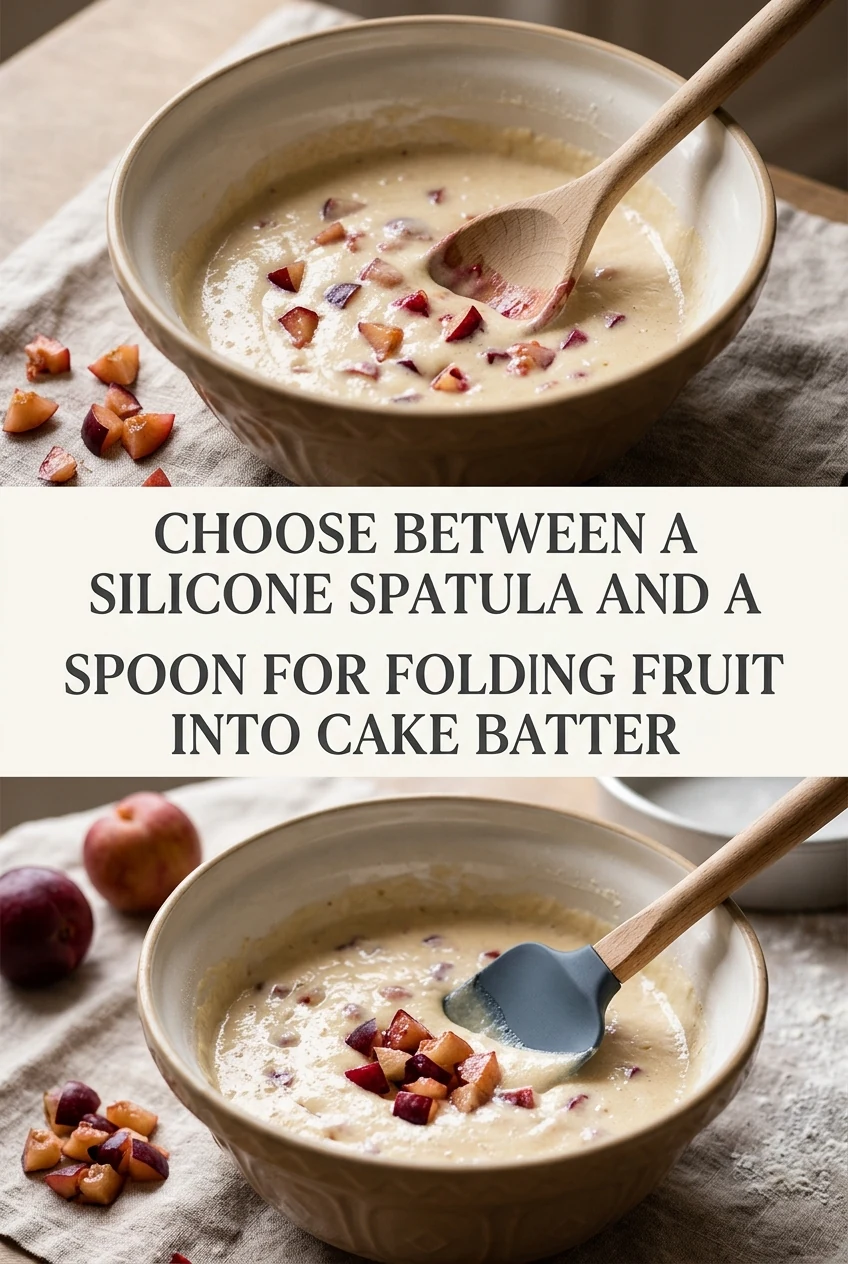
AI-generated editorial concept created for this article. The image is not a technical diagram or a tested result.
Why Tool Flexibility Changes the Outcome
A wooden spoon has no give. When it contacts a soft piece of poached apricot or fresh strawberry, the full force of your hand transfers directly to that fruit. A silicone spatula bends slightly under resistance, spreading the load. For a firm fruit like diced dried cranberry, the distinction is smaller. For soft fresh or lightly macerated fruit, the spatula's flex is the practical reason it produces cleaner, more intact pieces in the finished crumb.
How to Read Your Batter Before Choosing
A thick, dense batter such as a banana loaf mix can tolerate a wooden spoon because the batter itself cushions the fruit during folding. A lighter, aerated batter, for example one that has already had whipped egg whites or creamed butter folded in, is more fragile and benefits from the spatula. Check your batter's consistency before adding fruit. If it holds a ribbon for more than three seconds when dropped from the spoon, treat it as delicate and reach for the silicone spatula.
Worked Example With a Small Batch
Consider a small 450 g loaf batter with 80 g of chopped fresh peach folded in at the end. Using a wide silicone spatula, cut down through the center of the batter, sweep along the bowl base, and turn the batter over the fruit in slow arcs. Aim for eight to ten deliberate strokes rather than stirring. This is an illustrative approach, not a guaranteed result, but it demonstrates how limiting stroke count reduces the chance of overworking the batter and crushing the fruit.
When a Wooden Spoon Is Still Acceptable
For firm, dry additions such as frozen blueberries straight from the freezer, dried cherries, or small diced apple tossed in flour, a wooden spoon is workable. The fruit resists compression, and the spoon's rigidity can actually help distribute pieces evenly through a stiff batter. Toss the fruit pieces lightly in one tablespoon of the recipe's flour before adding them. This coating reduces sinking and gives the spoon something to work with rather than sliding past the fruit.
Cleaning and Readiness Between Uses
A silicone spatula with a seamless one-piece construction is easier to clean thoroughly than a wooden spoon, which can absorb fruit juice and carry residual flavors into future batches. After folding, rinse the spatula immediately in cool water before washing. Wooden spoons should be washed promptly and dried upright. Neither tool should be left soaking. Having your spatula clean and dry before you begin batter preparation removes a last-minute scramble when the fruit is already prepped.
A little more
to know.
Can I use an offset spatula instead of a silicone one for folding?
An offset spatula is metal and rigid, so it behaves more like a wooden spoon under pressure. It is better suited to spreading than folding. A flexible silicone spatula remains the more practical choice for protecting soft fruit pieces during this step.
Does the size of the spatula head matter for a small batch?
Yes. A spatula head wider than your mixing bowl forces awkward angles and reduces control. For a standard 1.5 to 2 litre mixing bowl, a spatula head roughly 7 to 8 centimetres wide gives enough surface area without scraping the rim on every stroke.
Original editorial guidance and recipe formulations, not independently kitchen-tested. Times are estimates and depend on equipment and product directions. Cooked bases need additional cooling and refrigeration before cold serving. Images are AI-generated illustrations; appearance and yield may vary. Check actual ingredient labels, allergens, and any certification you require. We do not certify products. Read our approach.
Save to Pinterest ↗ANOTHER IDEA FOR THE COUNTER