Choose Between a Reusable Cloth Bag and a Fine Mesh Strainer for a Nut Milk Base
Both a reusable cloth bag and a fine mesh strainer can strain a blended nut and water mixture, but they produce noticeably different results and suit different workflows. The decision is not simply about equipment preference; it affects the texture of the finished milk and how well it behaves in drinks like cold lattes or flavored milk bases. Understanding what each tool removes, and how long each takes to clean, helps you match the tool to the drink you are actually making.
Read the note ↓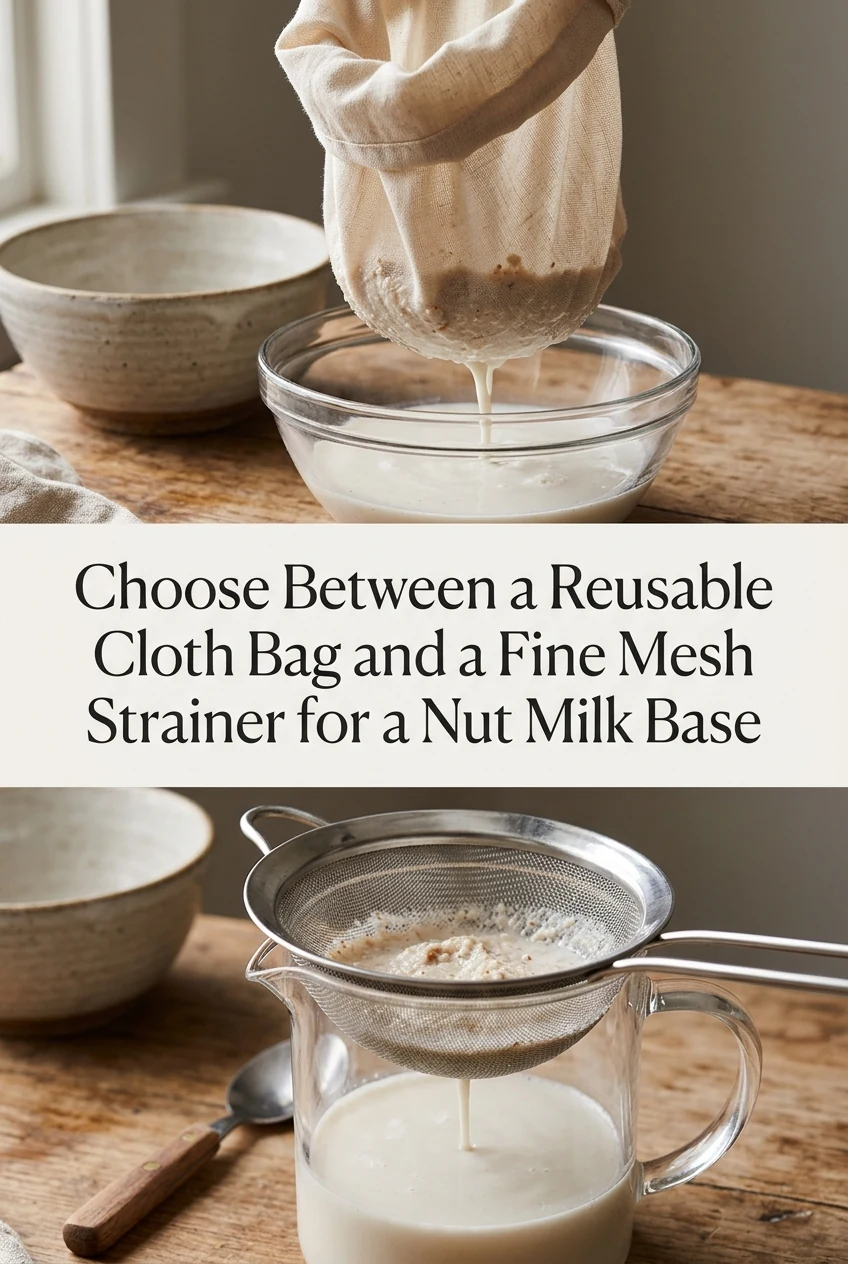
AI-generated editorial concept created for this article. The image is not a technical diagram or a tested result.
What Each Tool Actually Removes From Blended Nut Milk
A fine mesh strainer catches larger nut particles but allows fine sediment and some starch to pass through, leaving a milk that is smooth enough for most uses but may settle visibly in a glass after a few minutes. A cloth bag, when squeezed firmly, removes finer particles and produces a cleaner, more uniform liquid with less sediment. The difference is most noticeable in drinks served in clear glasses where cloudiness or settling would be visible.
When a Fine Mesh Strainer Is the Practical Choice
If you are making a small amount of nut milk to use immediately in a blended or shaken drink where texture is less critical, a fine mesh strainer over a bowl is faster and requires less cleanup. Rinse it under running water immediately after use and it is ready again within a minute. For a quick almond base going into a blended cold drink, the slight sediment that passes through the mesh is unlikely to affect the final result noticeably.
When a Cloth Bag Produces a Better Result
For drinks served straight over ice in a clear glass, such as a cold milk drink with rosewater syrup, a cloth bag gives a cleaner appearance and a smoother mouthfeel. Pour the blended mixture into the bag suspended over a bowl, then squeeze from the top down to push liquid through. Work in sections rather than squeezing the whole bag at once, which can force particles through the weave. The pulp left behind can be spread on a tray and dried for other uses.
Cleaning and Hygiene Considerations for Each Tool
A fine mesh strainer rinses quickly but can trap fine nut particles in the mesh if left to dry before washing. Rinse immediately after use and check the mesh with light behind it to confirm no particles remain. A cloth bag requires more thorough washing because fat from the nuts can accumulate in the fabric over time. Wash it with dish soap, rinse thoroughly, and allow it to air dry completely before storing. A damp stored cloth bag is a hygiene risk.
Matching the Tool to the Drink Requirement
The choice between tools depends on the intended drink and presentation. For blended, shaken, or heavily textured drinks where micro-sediment remains suspended or hidden, a fine mesh strainer is faster and requires less effort. For layered beverages or unblended iced drinks served in glassware where appearance matters, straining through a cloth bag produces a cleaner base that resists visible sediment settling. Fibrous nuts such as almonds benefit most from cloth filtration, whereas softer nuts with less fibrous pulp may require less filtration depending on blender power.
A little more
to know.
Does soaking the nuts before blending change which straining tool works better?
Soaked nuts blend more completely, which means more fine particles are released into the liquid. This makes the cloth bag more advantageous for soaked nut milk, as the mesh strainer passes more of those finer particles through.
Can I use a piece of clean muslin or cheesecloth instead of a purpose-made nut milk bag?
Yes, provided it is food-grade, clean, and has not been treated with any chemical finishes. Layer it at least twice over the bowl for finer filtration, and wash it thoroughly after each use following the same hygiene steps as a cloth bag.
Original editorial guidance and recipe formulations, not independently kitchen-tested. Times are estimates and depend on equipment and product directions. Cooked bases need additional cooling and refrigeration before cold serving. Images are AI-generated illustrations; appearance and yield may vary. Check actual ingredient labels, allergens, and any certification you require. We do not certify products. Read our approach.
Save to Pinterest ↗ANOTHER IDEA FOR THE COUNTER