Choose Between a Glass and a Ceramic Mug for a Warm Espresso Drink
Glass and ceramic mugs behave differently once hot liquid enters them. Single-walled glass allows heat to escape quickly because its thin walls conduct thermal energy outward to the surrounding air. Ceramic, particularly thick-walled stoneware, has substantial thermal mass that absorbs heat from a drink unless preheated, but once warm, its thicker walls slow ambient heat loss. Understanding this difference lets you match the vessel to your actual serving situation rather than choosing by appearance alone.
Read the note ↓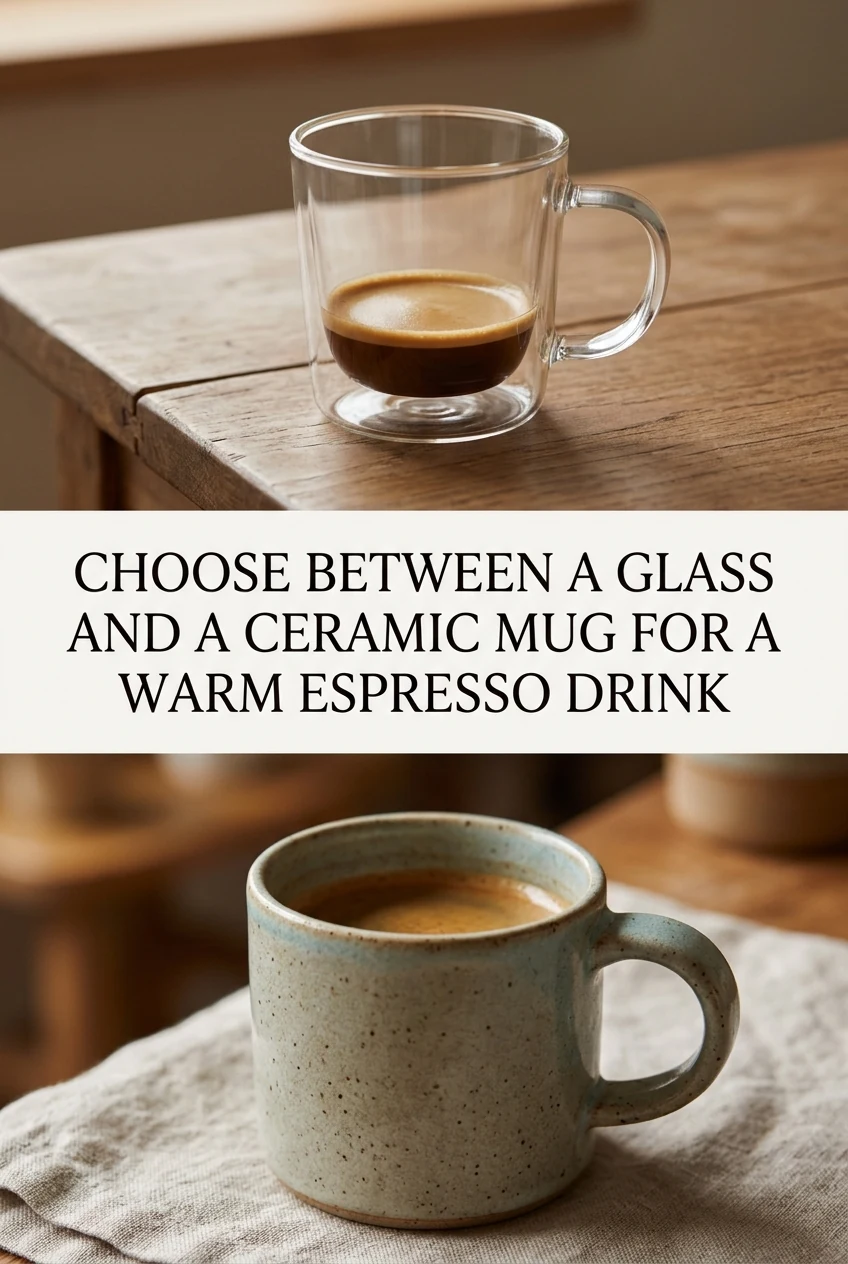
AI-generated editorial concept created for this article. The image is not a technical diagram or a tested result.
How Wall Thickness Changes Cooling Rate
A standard double-walled glass espresso cup has two thin layers with an air gap that slows heat loss noticeably. A single-walled glass of the same volume loses heat faster through uninsulated surfaces. A thick ceramic mug possesses substantial thermal mass; if left cold, it rapidly cools a small espresso drink by absorbing heat into the clay. However, when thoroughly preheated, those thick ceramic walls insulate against ambient air currents and slow the drink's rate of cooling over time, making preheating far more influential for ceramic than for glass.
Why Preheating the Vessel Matters
Pouring a hot espresso drink into a cold vessel causes an immediate temperature drop as the material absorbs energy. Preheating eliminates that initial loss. Fill the mug or glass with hot water from your kettle or tap, wait 30 seconds, then empty it just before brewing. For a ceramic mug, this step makes a measurable difference. For a thin single-walled glass, preheating helps but the benefit fades faster because the walls hold less stored heat.
Matching Vessel to Serving Context
If you are serving a cappuccino or flat white at a table where the guest will drink it within three to four minutes, a preheated single-walled glass works well and lets the guest see the layers. If the drink will sit while you prepare food or the guest is distracted, a thick preheated ceramic mug is the practical choice. Double-walled glass sits between the two and suits situations where presentation and moderate heat retention both matter.
A Simple Side-by-Side Comparison You Can Run at Home
Brew two identical portions of the same espresso-based drink back to back. Pour one into a preheated ceramic mug and one into a preheated single-walled glass of similar volume, for example 180 millilitres each. Taste both at the two-minute mark and again at the five-minute mark. Note which feels more comfortable to drink at each point. This is an illustrative exercise, not a controlled measurement, but it gives you a direct personal reference for your own equipment.
Practical Limits of Each Vessel
Glass shows staining less but chips at the rim more easily than ceramic if knocked. Very thick ceramic mugs can be heavy and may not fit under all home espresso machine group heads without tilting the cup. Check clearance before committing to a tall mug. Neither material guarantees a specific temperature at a specific time because room temperature, liquid volume, and milk foam thickness all affect the result. Use the vessel comparison as a guide, not a precision tool.
A little more
to know.
Does the colour of a ceramic mug affect how warm the drink stays?
Colour affects radiant heat loss only minimally at typical mug temperatures. Wall thickness and whether the mug was preheated have far greater influence on how long the drink stays warm than exterior colour does.
Can I use a glass mug in a microwave to preheat it if my kettle is not nearby?
Check the manufacturer label first. Many glass espresso cups are microwave-safe, but some have metal rims or bases that are not. Fill with water and heat briefly only if the label confirms it is safe to do so.
Original editorial guidance and recipe formulations, not independently kitchen-tested. Times are estimates and depend on equipment and product directions. Cooked bases need additional cooling and refrigeration before cold serving. Images are AI-generated illustrations; appearance and yield may vary. Check actual ingredient labels, allergens, and any certification you require. We do not certify products. Read our approach.
Save to Pinterest ↗ANOTHER IDEA FOR THE COUNTER