Choose Between a Fine Mesh Strainer and a Nut Milk Bag for Fruit Bases
Straining a cooked or blended fruit base is a step where the wrong tool adds unnecessary work. A fine mesh strainer and a nut milk bag both remove solids, but they perform differently depending on the fruit and the clarity you need in the finished liquid. Choosing before you start rather than switching mid-task saves time and avoids the mess of transferring a warm, pulpy liquid between tools. Understanding what each tool does well makes the decision straightforward.
Read the note ↓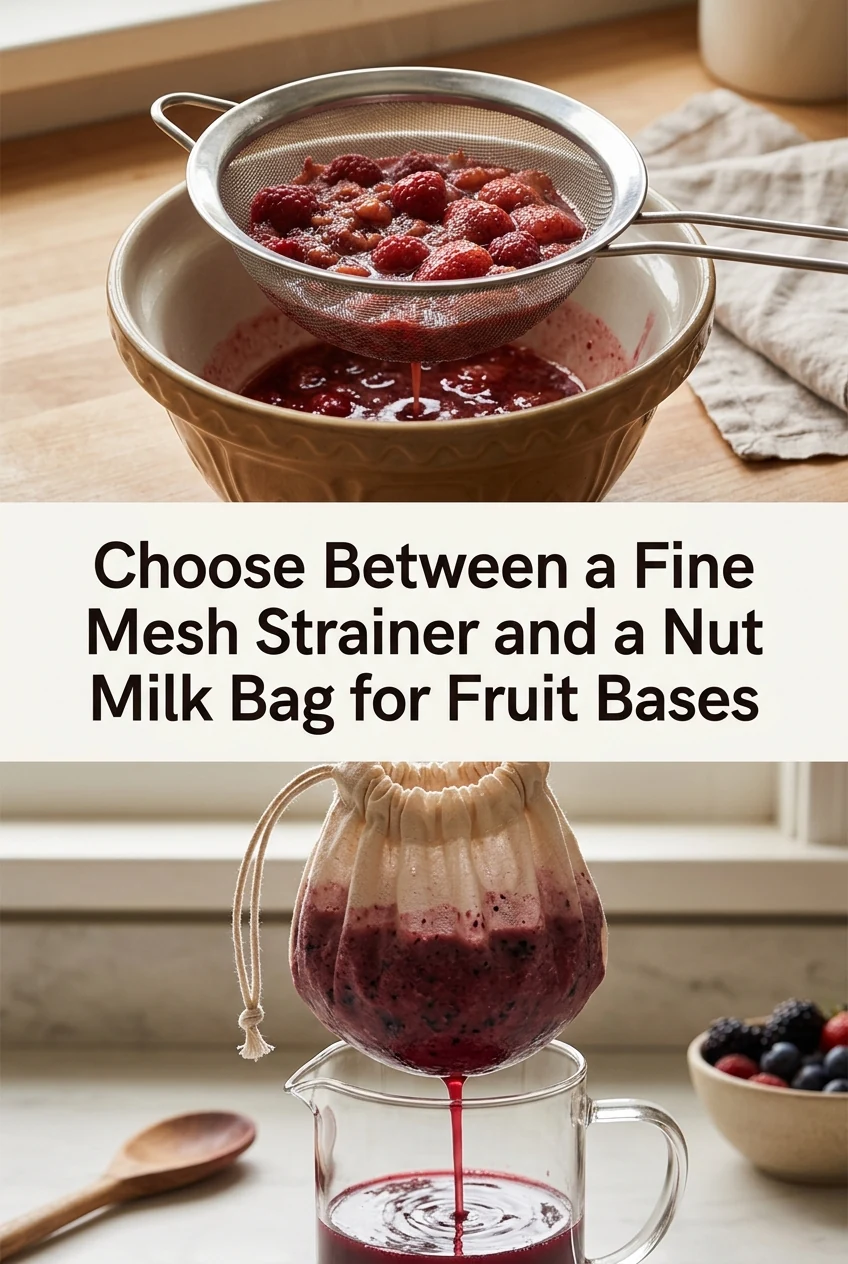
AI-generated editorial concept created for this article. The image is not a technical diagram or a tested result.
What a Fine Mesh Strainer Does Well
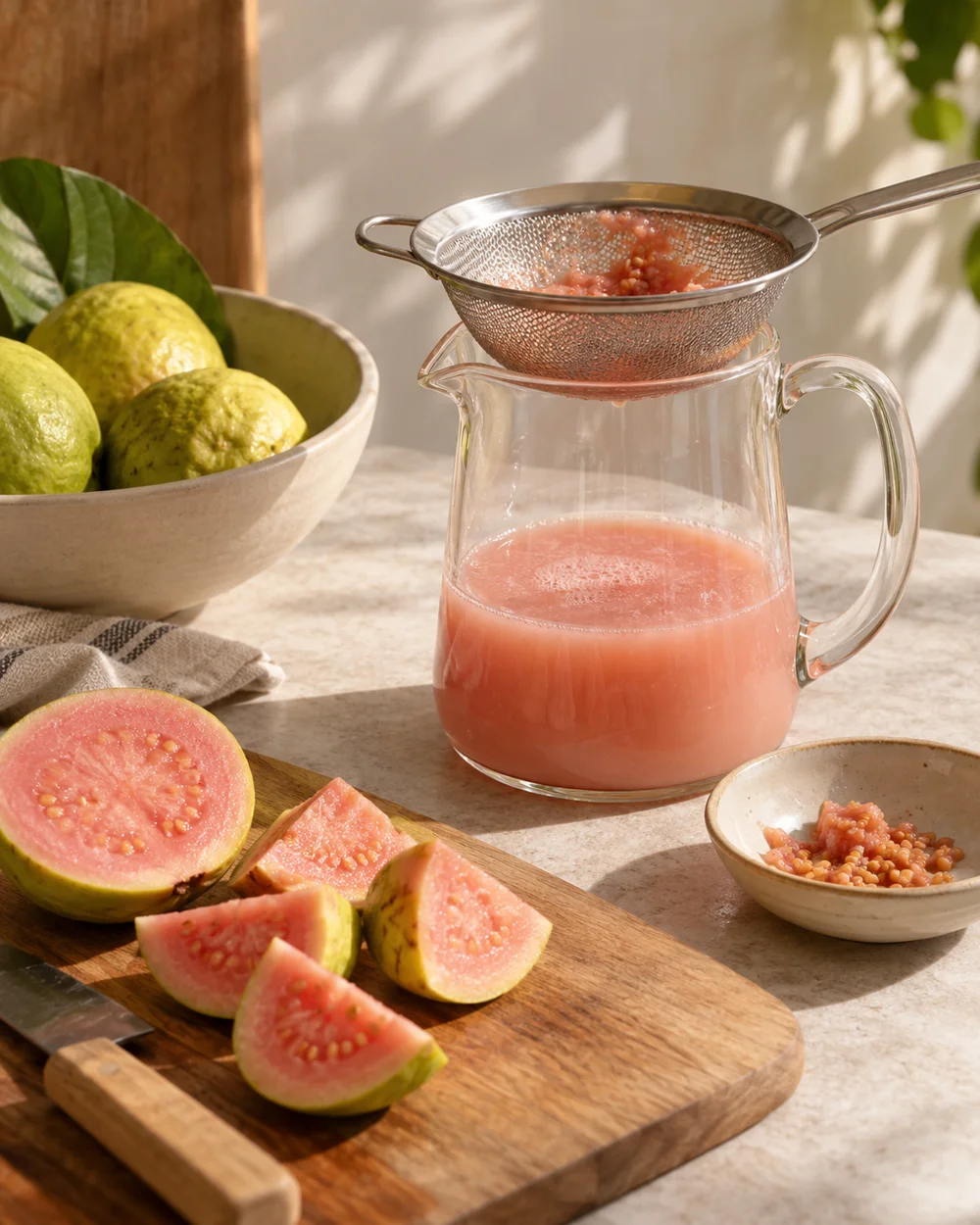
A fine mesh strainer works quickly with gravity and a spoon. It removes seeds, skin fragments, and large fibre pieces efficiently from fruits like strawberries, raspberries, and cooked stone fruits. The result retains some fine pulp, which gives the base a slightly thicker body. For syrups destined for blended drinks or layered café beverages where a little texture is acceptable, this residual pulp is not a problem and can actually improve mouthfeel.
What a Nut Milk Bag Does Well
A nut milk bag is made from fine nylon or muslin and produces a noticeably clearer liquid because it filters out fine particles that pass through mesh. It suits thinner fruits such as watermelon, cucumber, or lightly cooked pear, where the juice is already relatively low in fibre and the goal is a clean, translucent base. The bag requires squeezing by hand, which takes more effort than gravity straining but gives you control over how much liquid you extract.
Match the Tool to the Fruit
As an illustrative example: a cooked raspberry base strained through fine mesh in about two minutes will yield a deep-coloured liquid with some fine seed fragments and light pulp. The same base squeezed through a nut milk bag takes four to five minutes but produces a cleaner liquid with fewer particles. Neither result is wrong; the question is whether your finished drink needs clarity. A sparkling fruit soda benefits from a cleaner base; a blended smoothie-style drink does not.
Avoid Repeated Straining by Choosing Correctly First
Running a base through a mesh strainer and then deciding it needs more clarity and re-straining through a bag wastes time and cools the liquid if it was warm. Before you start, decide on the intended use. If the base will be served in a clear glass over ice where appearance matters, go directly to the nut milk bag. If it will be mixed into an opaque drink or used as a baking ingredient, the mesh strainer is faster and sufficient.
Clean Both Tools Promptly After Use
Fruit pulp dries quickly and becomes difficult to remove from fine mesh or fabric. Rinse both tools under cold running water immediately after use, then wash with warm soapy water. Nut milk bags can be turned inside out for rinsing to clear trapped pulp from the fabric. Follow the care instructions that came with your specific bag, as materials vary. Do not leave either tool soaking in fruit liquid for extended periods, as staining and odour can develop.
A little more
to know.
Can I use cheesecloth instead of a nut milk bag for the same result?
Cheesecloth works similarly but typically requires multiple layers to match the filtration of a dedicated nut milk bag. Single-layer cheesecloth leaves more fine particles in the liquid. Folding it four to six layers thick brings the result closer to a bag.
Does straining method affect how long the fruit base keeps in the refrigerator?
Straining method does not significantly change shelf life. Storage life depends on the fruit, sugar content, and refrigeration temperature. Keep strained bases in a sealed container at 4 degrees Celsius or below and use within the timeframe your recipe specifies.
Original editorial guidance and recipe formulations, not independently kitchen-tested. Times are estimates and depend on equipment and product directions. Cooked bases need additional cooling and refrigeration before cold serving. Images are AI-generated illustrations; appearance and yield may vary. Check actual ingredient labels, allergens, and any certification you require. We do not certify products. Read our approach.
Save to Pinterest ↗ANOTHER IDEA FOR THE COUNTER