Choose Between a Drawstring Cloth Bag and a Fine Mesh Strainer for Cold Brew
The filter you choose for cold brew straining changes the clarity of the finished concentrate, the effort required during cleanup, and how well the method fits your jar or container. Neither a cloth bag nor a fine mesh strainer is universally better; each suits different setups and tolerance for sediment. Before committing to one for your first steep, comparing both tools against your actual container opening and cleanup routine saves frustration at the straining stage.
Read the note ↓
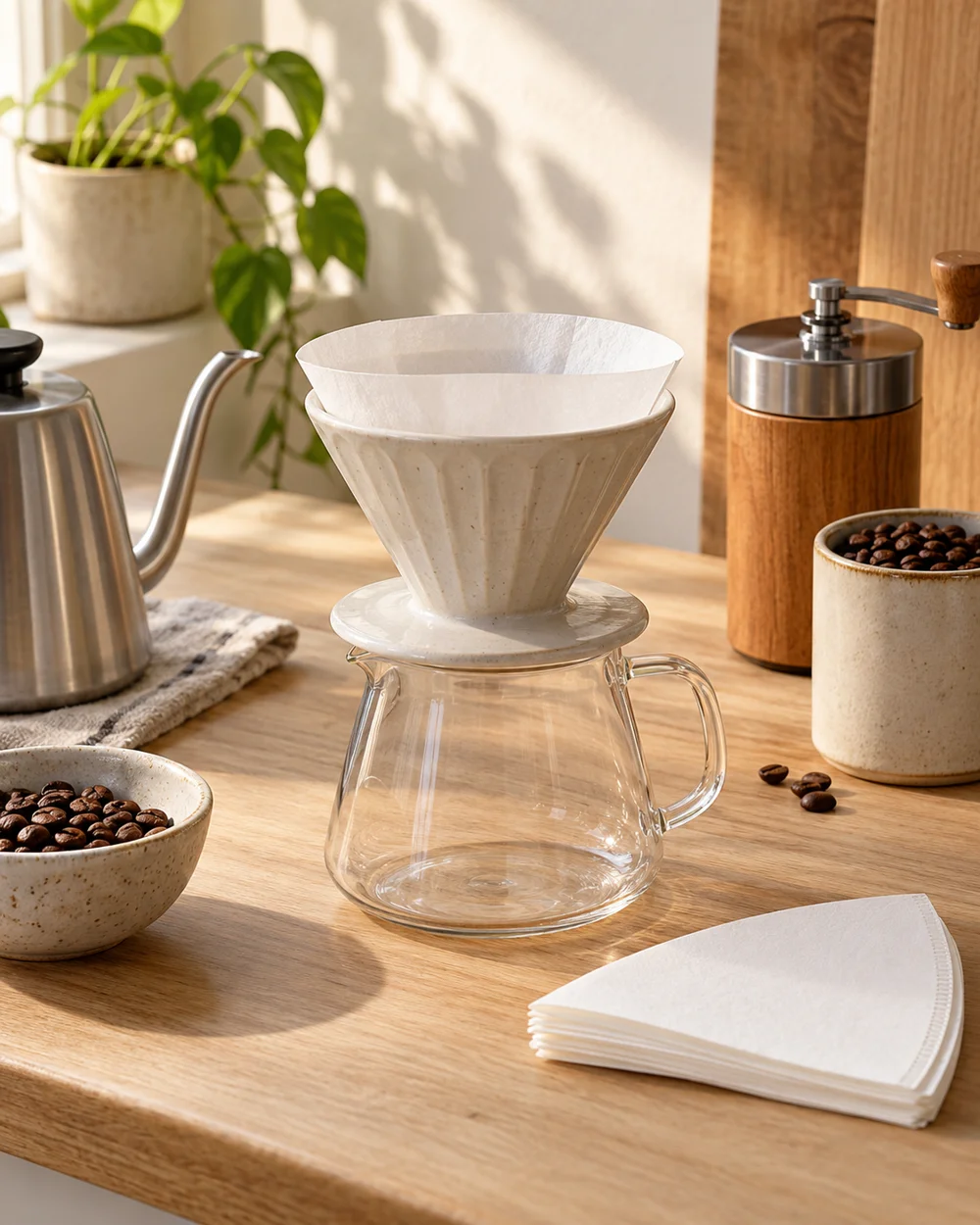
AI-generated editorial concept created for this article. The image is not a technical diagram or a tested result.
Measuring Your Container Opening First
Before comparing tools, measure the inner diameter of your jar or jug opening. A wide-mouth mason jar typically has an inner opening of approximately 76 millimetres, while its outer lid diameter is 86 millimetres. A standard-mouth jar is narrower, with an inner opening around 58 to 60 millimetres. A drawstring cloth bag must fit through the opening before steeping and still pull out easily once the grounds absorb water and swell. A fine mesh strainer sits on top of a receiving vessel during straining, so it only needs to be wider than the receiving vessel's mouth, not the steeping jar.
How Each Tool Handles Sediment
A fine-weave cloth bag, when clean and undamaged, filters more finely than most household mesh strainers and produces a noticeably less cloudy concentrate. A fine mesh strainer passes more fine coffee particles into the finished liquid, resulting in a slightly heavier mouthfeel and visible sediment after the concentrate sits. If you prefer clearer cold brew, the cloth bag has the advantage. If you do not mind sediment and prefer less equipment to wash, the mesh strainer is simpler to use.
Assessing Cleanup Effort Honestly
A cloth bag traps spent grounds inside itself, which must be emptied, rinsed thoroughly under running water, and then washed with unscented dish soap before drying completely. Grounds left in damp cloth develop off-odours quickly. A fine mesh strainer is easier to tap clean over a bin and rinse under the tap, though fine grounds can clog the mesh and require a brush. Consider which cleanup step you will actually complete promptly rather than which sounds easier in theory.
Steeping Logistics for Each Method
With a cloth bag, you load the grounds into the bag, lower it into the jar, fill with cold water, and seal the jar. The bag keeps grounds contained throughout the steep, so straining is simply lifting the bag out. With loose grounds and a mesh strainer, grounds steep freely in the water, producing more surface contact, and straining requires pouring the full jar through the strainer into a second vessel. You need two containers of adequate size for the mesh strainer method.
Making the Decision Based on Your Actual Setup
If your jar has a wide-mouth opening, you own a cloth bag that fits it, and you will wash the bag the same day, the cloth bag is the more practical choice for cleaner results. If you have only one large jar, no suitable bag, or prefer to minimise specialised equipment, a fine mesh strainer over a bowl or second jug works reliably. Refrigerate the strained concentrate promptly at 4 degrees Celsius or below and use it within the timeframe your coffee roaster or packaging recommends.
A little more
to know.
Can I use a paper coffee filter instead of a cloth bag or mesh strainer?
A paper filter can work placed inside a mesh strainer for support, but cold brew concentrate is thick and slow to pass through paper. Expect a significantly longer drain time and potential tearing if the paper is not fully supported.
Does steeping grounds loose versus in a bag change the brew strength?
It can, because loose grounds have more direct water contact throughout the steep. If you switch methods, taste the result before assuming the same coffee-to-water ratio will produce identical strength. Adjust the ratio based on your actual taste preference.
Original editorial guidance and recipe formulations, not independently kitchen-tested. Times are estimates and depend on equipment and product directions. Cooked bases need additional cooling and refrigeration before cold serving. Images are AI-generated illustrations; appearance and yield may vary. Check actual ingredient labels, allergens, and any certification you require. We do not certify products. Read our approach.
Save to Pinterest ↗ANOTHER IDEA FOR THE COUNTER