Choose Between a Cloth and a Paper Filter When Brewing Cold Brew Concentrate
Cold brew concentrate is separated from steeped grounds at the end of brewing, and the filter material you choose shapes the body and clarity of the finished liquid. A cloth filter allows more suspended solids and oils through, producing a heavier, slightly opaque concentrate. A paper filter traps those oils and fine particles, yielding a cleaner, lighter-bodied result. Neither is objectively better; the choice depends on how you plan to serve the concentrate and how much sediment you are willing to manage.
Read the note ↓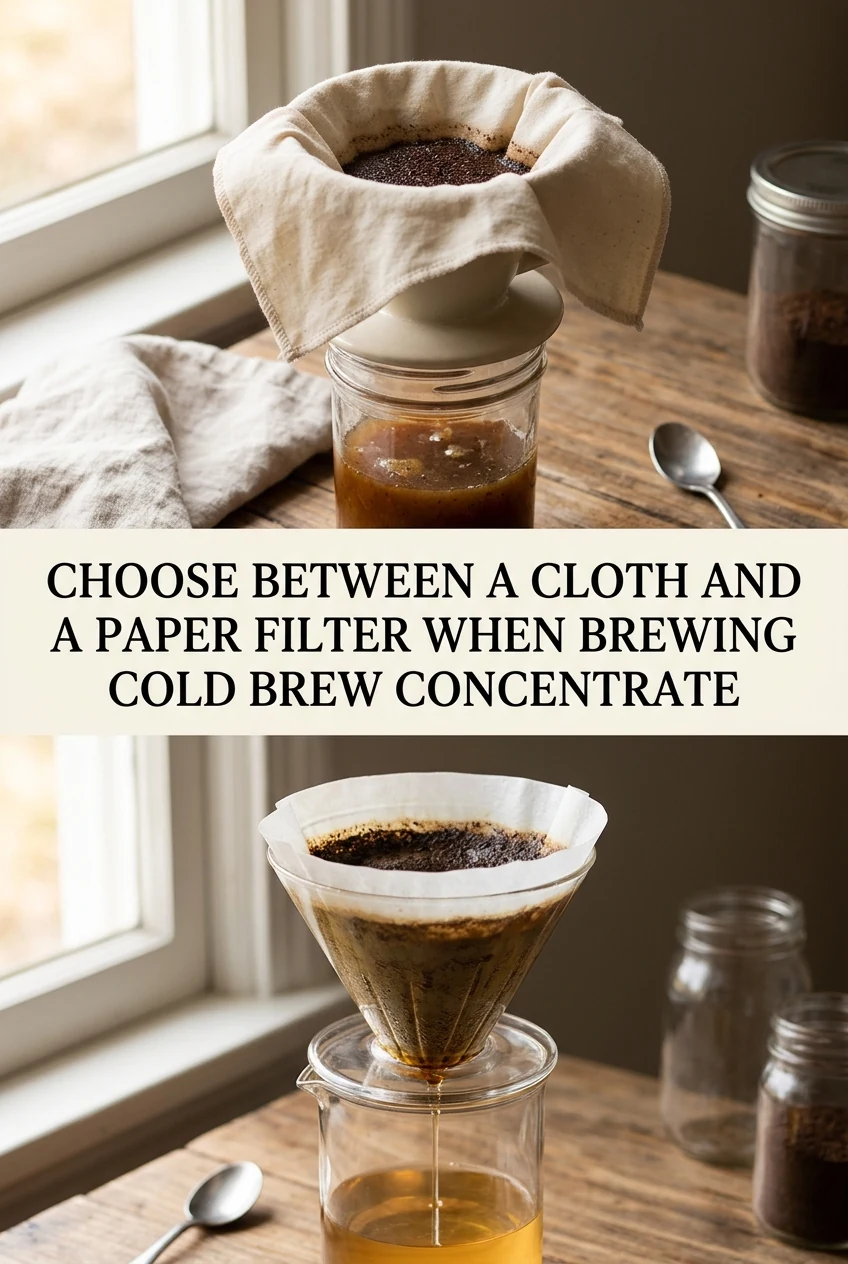
AI-generated editorial concept created for this article. The image is not a technical diagram or a tested result.
How Each Filter Affects the Body of the Concentrate
Coffee oils pass through a cloth filter because the woven fabric allows suspended oil droplets and microscopic particles to flow through with the liquid. Those oils contribute a rounded, heavier mouthfeel. A paper filter, by contrast, absorbs oils within its cellulose fibers before they reach the carafe, producing a concentrate that tastes brighter and less coating on the palate. If you plan to serve the concentrate over ice with milk, the heavier body from cloth often holds up well. If you prefer a cleaner finish when drinking it diluted with water alone, paper is worth considering.
Rinsing a Paper Filter Before Use
An unrinsed paper filter can transfer a faint papery taste to the concentrate, which becomes more noticeable in a lightly roasted coffee. Before placing the paper filter in your brewer, run cold water through it for about 20 seconds directly over the sink, then discard that rinse water. This step saturates the paper fibers and flushes loose pulp. The filter is then ready to receive the coffee and water mixture. Skipping the rinse is a common source of off-flavor that is easy to eliminate.
Rinsing and Storing a Cloth Filter Between Uses
After filtering, rinse the cloth filter under cold running water immediately, rubbing gently to dislodge coffee grounds caught in the weave. Do not use soap, as residue can carry into the next brew. Shake out excess water, then store the damp filter in a sealed container in the refrigerator at 4 degrees Celsius or below. Use it again within a few days. A cloth filter that has dried out between uses may develop off-flavors from oxidized coffee oils trapped in the fibers.
Sediment Management After Filtering
Even after filtering through cloth, a cold brew concentrate may show fine sediment settling at the bottom of the storage jar after several hours in the refrigerator. This is normal and does not indicate spoilage. Pouring gently from the jar without disturbing the settled layer keeps the sediment out of the glass. Paper-filtered concentrate typically shows little to no visible sediment. If sediment in the final cup is a concern for your serving context, paper filtering or a second pass through paper after cloth filtering addresses it.
Practical Decision Guide for a Home Setting
If you own a cloth filter already and prefer fewer consumables, cloth is a practical default. Budget for replacement every few months as the weave loosens with repeated use. If you want a consistently clean result without maintaining a reusable filter, paper is simpler to manage. For a 500 ml batch of concentrate brewed in a jar with a separate filter holder, either filter type works; the brewing container itself does not determine which filter is appropriate. Match the filter to your serving preference, not to the container.
A little more
to know.
Can I use a cloth filter and then pass the concentrate through paper for extra clarity?
Yes, a double-filter approach is practical. Run the concentrate through cloth first to remove most grounds, then pour it slowly through a rinsed paper filter into a second container. Expect the process to take longer and accept some additional volume loss absorbed by the paper.
Does the filter choice affect how long the concentrate keeps in the refrigerator?
Filter type does not determine safe storage duration. Cold brew concentrate should be refrigerated promptly and used within a timeframe consistent with your refrigerator temperature staying at 4 degrees Celsius or below. Consult current food safety guidance for perishable beverages rather than relying on a fixed number of days.
Original editorial guidance and recipe formulations, not independently kitchen-tested. Times are estimates and depend on equipment and product directions. Cooked bases need additional cooling and refrigeration before cold serving. Images are AI-generated illustrations; appearance and yield may vary. Check actual ingredient labels, allergens, and any certification you require. We do not certify products. Read our approach.
Save to Pinterest ↗ANOTHER IDEA FOR THE COUNTER