Build a Sparkling Iced Rooibos Drink by Brewing a Strong Concentrate First
Brewing rooibos at its standard strength and then adding sparkling water produces a drink that is both diluted and flat, because the sparkling water displaces flavour without adding any of its own. The solution is to brew a concentrate using more tea and less water than usual, chill it fully before combining, and add sparkling water only at the moment of serving. This sequence preserves both the rooibos character and the carbonation in the finished glass.
Read the note ↓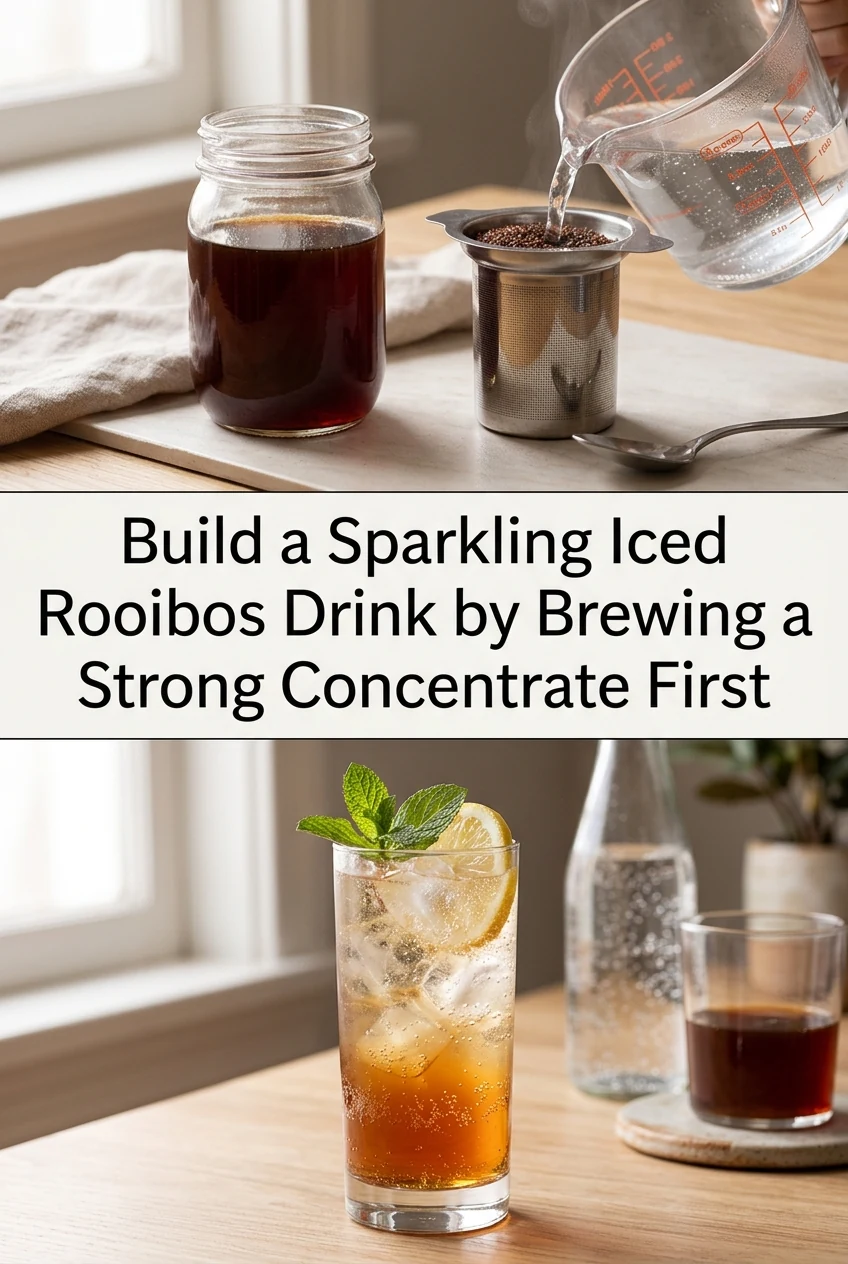
AI-generated editorial concept created for this article. The image is not a technical diagram or a tested result.
Decide on a Concentrate Ratio Before Brewing
A workable starting point for a rooibos concentrate is two to three times the usual leaf or bag quantity in the same volume of water you would normally use for a single serving. For example, if your standard preparation uses one bag per 240 ml, use two to three bags per 240 ml for the concentrate. This is an illustrative starting point, not a fixed rule; rooibos strength varies by brand and cut, so your preferred intensity may require a small adjustment after tasting.
Brew at the Right Temperature and Time
Rooibos is generally brewed with water that has just boiled or is close to boiling, and it tolerates longer steeping than many teas without becoming unpleasantly bitter. Steep your concentrate for five to seven minutes, then remove the bags or strain the leaves promptly. Over-steeping a concentrate can produce an astringent base that does not improve when diluted. Follow the guidance on your specific product packaging as a starting reference for temperature and time.
Chill the Concentrate Completely Before Use
Pour the strained concentrate into a clean container and allow it to cool to room temperature, then refrigerate it until fully cold, ideally for at least two hours. Do not add sparkling water to a warm concentrate; the temperature difference accelerates carbonation loss immediately. A cold concentrate poured over ice and combined with pre-chilled sparkling water gives you the best chance of a fizzy, flavourful result that holds through the time it takes to serve and drink.
Combine Concentrate and Sparkling Water at Serving
A practical serving ratio to test first is one part concentrate to two parts sparkling water in a 300 ml glass, which gives approximately 100 ml concentrate and 200 ml sparkling water before ice. Taste and adjust the ratio in the next glass if the rooibos flavour is too strong or too faint. Add ice to the glass first, pour the cold concentrate over the ice, then add sparkling water last and stir once gently. Avoid vigorous stirring, which releases carbonation quickly.
Store Leftover Concentrate Safely
Rooibos concentrate is a brewed beverage and perishable. Store any unused concentrate in a sealed container in the refrigerator and use it within two days for best flavour and safety. Do not leave it at room temperature for extended periods. If you are preparing for a group session, brew the concentrate the evening before and refrigerate overnight, which also saves time on the day. Label the container with the date so you can track how long it has been stored.
A little more
to know.
Can I sweeten the concentrate before chilling rather than sweetening each glass individually?
Yes, and it is often more consistent. Dissolve your sweetener into the hot concentrate immediately after brewing, before chilling, so it incorporates fully. Taste after chilling and adjust per glass only if needed, since cold perception of sweetness differs from warm.
Why does my sparkling rooibos taste flat even when I use pre-chilled sparkling water?
The most common cause is stirring too vigorously after combining, or pouring sparkling water from a height rather than down the glass wall. Also check that your sparkling water bottle was not opened and recapped multiple times before use, as each opening reduces carbonation.
Original editorial guidance and recipe formulations, not independently kitchen-tested. Times are estimates and depend on equipment and product directions. Cooked bases need additional cooling and refrigeration before cold serving. Images are AI-generated illustrations; appearance and yield may vary. Check actual ingredient labels, allergens, and any certification you require. We do not certify products. Read our approach.
Save to Pinterest ↗ANOTHER IDEA FOR THE COUNTER