Build a Sparkling Iced Black Tea by Brewing a Strong Concentrate and Adding Soda Last
A fizzy iced black tea loses its sparkle when warm tea meets carbonated water too early. The fix is a two-stage process: brew a strong concentrate, cool it completely, then add cold sparkling water at serving time. This sequence protects carbonation because cold liquid releases dissolved gas more slowly than warm liquid does. The result is a glass that stays lively from first sip to last rather than going flat within minutes of assembly.
Read the note ↓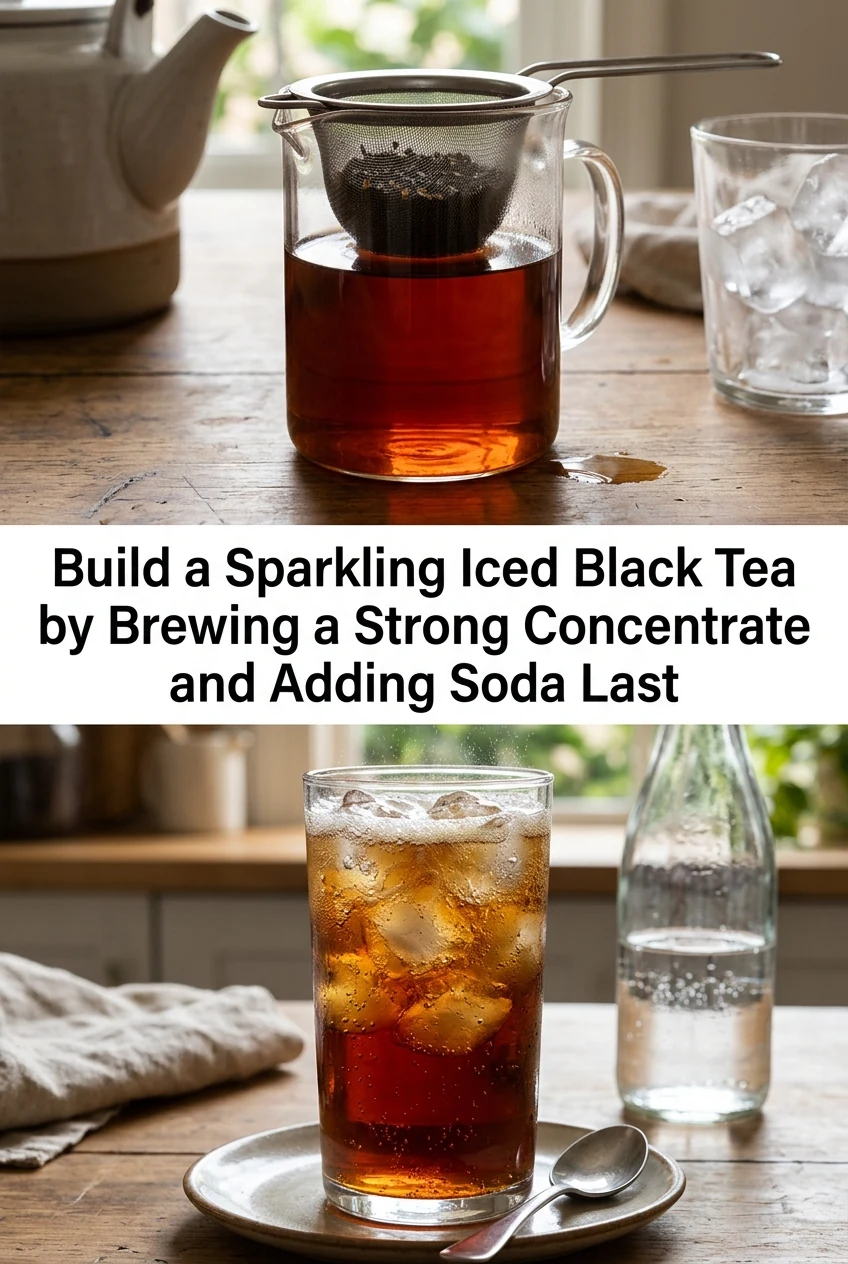
AI-generated editorial concept created for this article. The image is not a technical diagram or a tested result.
Brew a Concentrate Strong Enough to Survive Dilution
Use two tea bags or two heaped teaspoons of loose black tea per 240 ml of just-boiled water. Steep for four to five minutes, then remove the bags or strain immediately. This produces a concentrate roughly twice normal strength, which is necessary because sparkling water will dilute it by half in the glass. Over-steeping beyond five minutes risks noticeable bitterness, so set a timer rather than estimating.
Cool the Concentrate Before It Touches Any Ice or Soda
Pour the hot concentrate into a heatproof container, cover it, and let it cool toward room temperature before placing it in the refrigerator to chill thoroughly. Adding warm liquid directly to ice melts the cubes rapidly, diluting the concentrate before sparkling water is even added. Chilling the concentrate until it is completely cold ensures that the ice stays intact and that the carbonated water retains its fizz when the two liquids meet.
Choose Your Glass and Ice Quantity Deliberately
A 400 ml tall glass works well for a single serving. Fill it with ice cubes to about the halfway point, which is roughly 180 to 200 ml of ice by volume. Crushed ice melts faster and dilutes more quickly, so whole cubes are preferable here. The ice volume matters because it determines how much room remains for concentrate and soda in the correct ratio without overflow.
Add Concentrate First, Then Pour Soda Down the Side
Pour 120 ml of cold concentrate over the ice. Then tilt the glass slightly and pour 120 ml of cold plain sparkling water slowly down the inner wall rather than straight down the center. This reduces the agitation that forces carbonation out of solution. Avoid stirring after adding soda. A gentle single pass with a long spoon to lift the concentrate from the bottom is sufficient if mixing is needed.
Sweeten Before the Soda Step, Not After
If sweetening is desired, stir simple syrup into the cold concentrate before it goes into the glass. Simple syrup, made by dissolving equal parts sugar and water over low heat and then cooling, blends evenly into cold liquid. Granulated sugar added after soda requires stirring that destroys bubbles. As an illustrative example, 10 ml of syrup per 120 ml of concentrate produces a lightly sweet result, though personal preference varies.
A little more
to know.
Can I make the concentrate a day ahead and store it?
Yes. Store the cooled concentrate in an airtight container in the refrigerator until you are ready to prepare the drink. Combine it with the sparkling water only at serving time, because carbonated tea loses its effervescence quickly if mixed ahead of schedule.
Why does my sparkling tea taste weak even with concentrate?
The most common cause is too much ice melting before soda is added, which dilutes the concentrate beyond the intended ratio. Ensure the concentrate is fully cold before pouring, and use whole ice cubes rather than crushed ice.
Original editorial guidance and recipe formulations, not independently kitchen-tested. Times are estimates and depend on equipment and product directions. Cooked bases need additional cooling and refrigeration before cold serving. Images are AI-generated illustrations; appearance and yield may vary. Check actual ingredient labels, allergens, and any certification you require. We do not certify products. Read our approach.
Save to Pinterest ↗ANOTHER IDEA FOR THE COUNTER