Brew a Small Pot of Peppermint Tea for Iced Service Without Bitterness
Peppermint tea is straightforward to brew but easy to over-extract. Steep it too long or in water that is too hot and the menthol compounds that give peppermint its clean quality become sharp and medicinal rather than refreshing. Brewing a small pot specifically for iced service adds another variable: the tea must be strong enough to remain flavourful after dilution from ice, without starting out bitter. Matching water temperature and steep time to the leaf, then cooling quickly, solves both problems.
Read the note ↓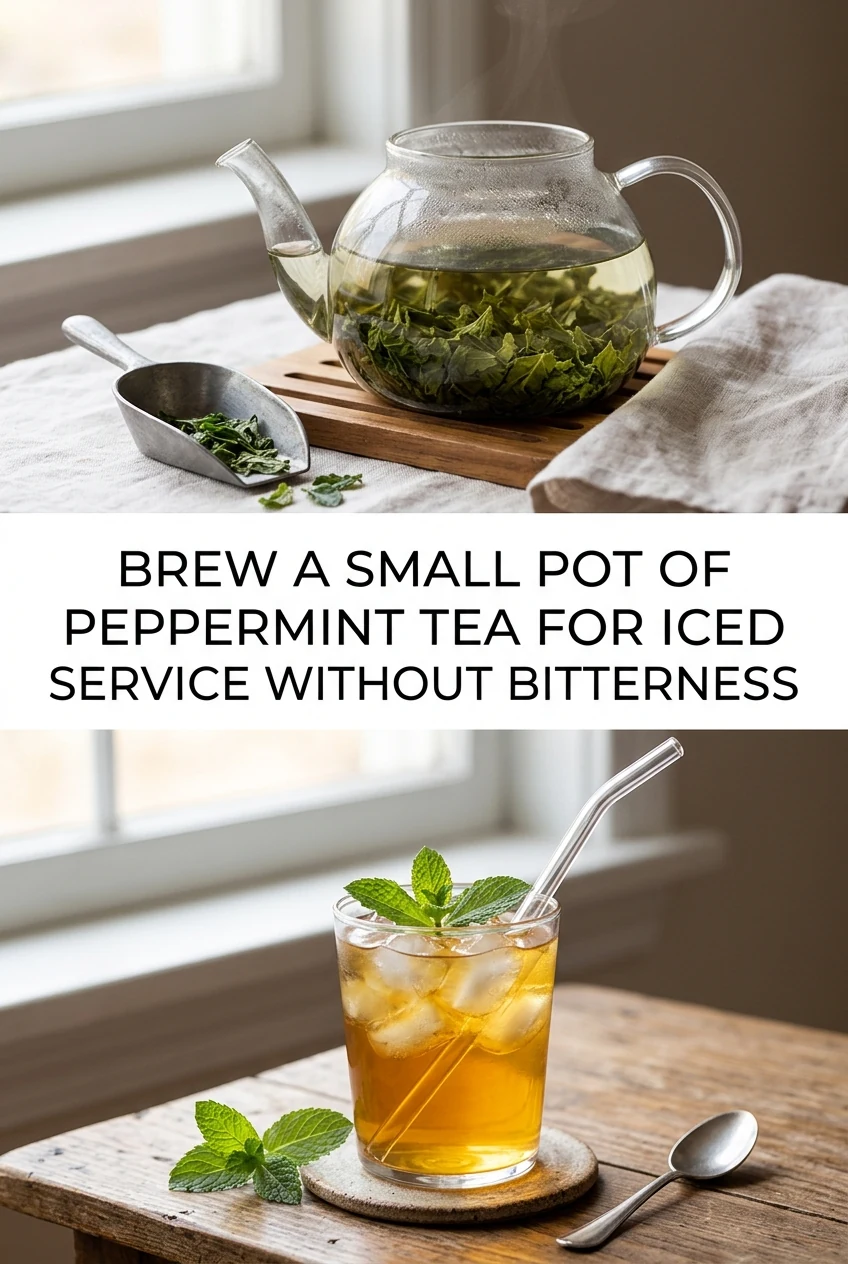
AI-generated editorial concept created for this article. The image is not a technical diagram or a tested result.
Reading the Tin Before You Start
Peppermint tea products vary in leaf cut, blend density, and recommended brewing parameters. The guidance printed on the tin or box is specific to that product's formulation and is the most reliable starting point. Common recommendations for peppermint herbal tea fall in the range of 90 to 95 degrees Celsius water held for three to five minutes, but do not treat those numbers as universal. If your tin specifies different parameters, follow those. Brewing at a lower temperature than recommended is generally safer than exceeding it.
Brewing Stronger for Iced Dilution
Ice dilutes the finished drink as it melts, so the brewed tea needs to start slightly more concentrated than you would serve hot. One practical approach is to use the same steep time but increase the leaf quantity modestly, for example using one and a half teaspoons of loose leaf or one and a half bags where you would normally use one, for a 400 millilitre pot. Avoid extending the steep time to add strength; longer steeping adds bitterness faster than it adds flavour depth in peppermint.
Cooling the Tea Quickly
After steeping, remove the leaves or bags immediately to stop extraction. Pour the hot tea over a jug or heatproof container filled with ice rather than letting it cool at room temperature. This rapid temperature drop preserves the bright, clean menthol note and prevents the dull, flat quality that develops when tea cools slowly. Use enough ice to bring the liquid temperature down quickly; the ice will melt partially in the process, which is expected and accounts for some of the dilution you planned for.
Worked Example: 400 ml Pot for Two Glasses
Heat 400 millilitres of water to the temperature stated on your peppermint tea tin. Add one and a half teaspoons of loose peppermint leaf to a small teapot with an infuser. Steep for the time on the tin, then remove the infuser. Fill a heatproof jug with roughly 150 grams of ice. Pour the hot tea over the ice immediately. Stir briefly and divide between two glasses already containing fresh ice. This is an illustrative working method; your tin's guidance takes precedence over these quantities.
Serving and Holding the Brewed Tea
Serve iced peppermint tea promptly after preparation for the best flavour. If you need to hold it briefly before serving, keep the cooled tea refrigerated at 4 degrees Celsius or below and serve within the same day. Do not leave brewed tea at room temperature for more than two hours; refrigerate within one hour if the ambient temperature is above 32 degrees Celsius. Brewed herbal tea is a perishable liquid and should not be treated as shelf-stable once prepared.
A little more
to know.
Can I sweeten the tea before cooling it over ice?
Yes, and it is easier to dissolve sugar or syrup into hot tea than into cold. Add sweetener after removing the leaves and stir until fully dissolved before pouring over ice. This avoids undissolved sugar settling at the bottom of the glass.
Why does my iced peppermint tea sometimes turn cloudy?
Cloudiness in cooled tea is often caused by tannins and other compounds precipitating as the temperature drops rapidly. It is a visual change rather than a safety issue. Brewing at a slightly lower temperature or using filtered water can reduce the effect.
Original editorial guidance and recipe formulations, not independently kitchen-tested. Times are estimates and depend on equipment and product directions. Cooked bases need additional cooling and refrigeration before cold serving. Images are AI-generated illustrations; appearance and yield may vary. Check actual ingredient labels, allergens, and any certification you require. We do not certify products. Read our approach.
Save to Pinterest ↗ANOTHER IDEA FOR THE COUNTER