Brew a Small Pot of Jasmine Green Tea for Iced Service Without Bitterness
Jasmine green tea brewed at boiling temperature or left to steep beyond the recommended window releases tannins and catechins that taste sharp and astringent, a quality that becomes more pronounced once the tea is chilled. Brewing at a lower temperature for a controlled time, then cooling the tea before adding ice, produces a clean cup with a light floral character that holds up well in a cold glass. The process requires attention to temperature and timing rather than special equipment.
Read the note ↓
AI-generated editorial concept created for this article. The image is not a technical diagram or a tested result.
Check the Tin for Temperature and Time Guidance
Most jasmine green tea packaging specifies a water temperature between 70 and 85 degrees Celsius and a steep time of one to three minutes. These ranges exist because different processing methods affect how quickly the leaf releases flavor and bitterness. Use the guidance printed on your specific tin or packet as the starting reference rather than a general rule, because jasmine green teas vary considerably in leaf grade and scenting intensity. If no guidance is printed, begin at 75 degrees Celsius for two minutes.
Measure Water and Leaf for a Small Pot
For a 500 ml pot intended to fill two iced glasses, use approximately 6 to 8 grams of loose jasmine green tea or two standard tea bags. This is an illustrative starting range, not a universal ratio; your tin may suggest a different quantity. Heat fresh cold water in a kettle. If your kettle has a temperature setting, use it. If not, bring water to a boil and allow it to rest uncovered for three to four minutes, which typically brings it down to the 75 to 80 degree range, though this varies by kettle and environment.
Steep and Remove the Leaf on Time
Pour the measured water over the leaf in the pot and begin timing immediately. Remove the infuser, strainer basket, or bags at the end of the recommended window without pressing or squeezing, which forces bitter compounds into the liquor. Pressing a tea bag is a common habit that noticeably increases astringency in the finished cup. Once the leaf is removed, the brewing is complete and the tea will not continue extracting, which is the key advantage of removing it promptly rather than leaving it in.
Cool the Tea Before Adding Ice
Pour the brewed tea into a heat-safe pitcher or jug and allow it to cool to room temperature before refrigerating or adding ice. Adding ice directly to hot tea dilutes it significantly as the ice melts rapidly, altering the balance you achieved during brewing. If you are preparing for prompt service, cooling the pitcher in a larger bowl of cold water speeds the process. Refrigerate the cooled tea at 4 degrees Celsius or below and serve within the same day for best flavor.
Build the Iced Glass for Serving
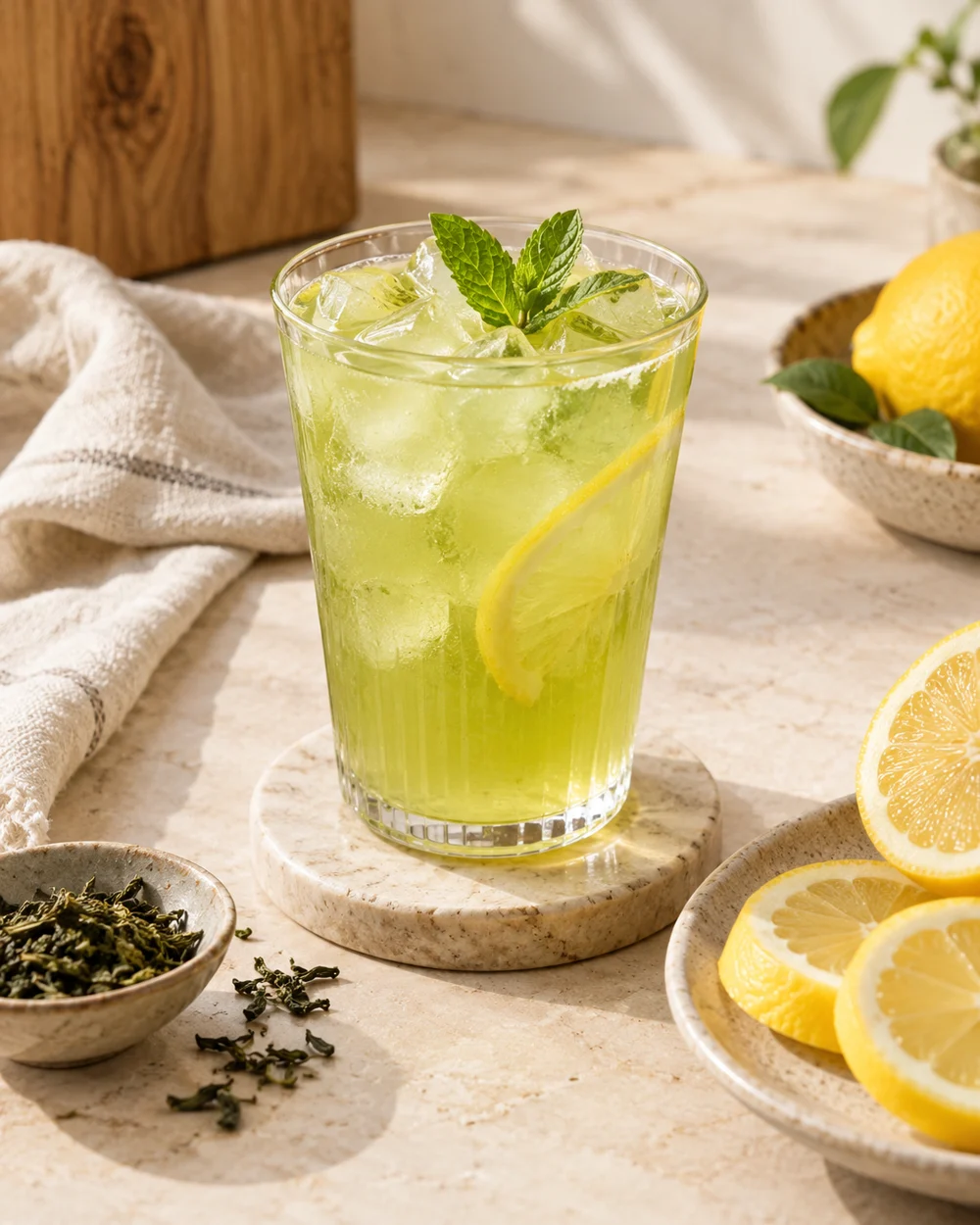
Fill a glass with ice, then pour the cooled tea over it. For a 400 to 450 ml serving glass, roughly 200 to 220 ml of brewed tea over ice leaves room for the ice volume without overflow. If the tea tastes slightly flat after chilling, a small squeeze of fresh lemon juice brightens the flavor without masking the jasmine character. Avoid adding lemon during brewing or cooling, as the acid interacts differently with hot tea and can affect color and clarity in ways that are difficult to predict.
A little more
to know.
Can I brew jasmine green tea directly over ice using the cold brew method?
Yes. Combine the measured leaf with cold water in a covered pitcher and refrigerate for six to eight hours. Cold brewing extracts more slowly and produces a naturally low-bitterness result, though the floral jasmine note may be slightly less pronounced than in a hot-brewed cup.
Why does my iced jasmine tea turn cloudy after refrigerating?
Cloudiness in chilled green tea is usually caused by tannins and certain compounds precipitating at cold temperatures. It is a visual change rather than a safety issue. Brewing at a lower temperature and shorter steep time reduces the likelihood, and the tea clears slightly as it warms in the glass.
Original editorial guidance and recipe formulations, not independently kitchen-tested. Times are estimates and depend on equipment and product directions. Cooked bases need additional cooling and refrigeration before cold serving. Images are AI-generated illustrations; appearance and yield may vary. Check actual ingredient labels, allergens, and any certification you require. We do not certify products. Read our approach.
Save to Pinterest ↗ANOTHER IDEA FOR THE COUNTER