Brew a Small Pot of Chamomile for Both Hot and Iced Service From One Steep
Running two separate steeps to serve one hot cup and one iced glass of chamomile wastes both tea and time. A single small pot brewed to a slightly stronger concentration than usual gives you enough liquid to fill a warm mug and an ice-filled glass from one session. The ice dilutes the cold portion back to a pleasant strength, while the hot portion goes straight from the pot. Getting the quantities right before you boil the water is the key step most home brewers skip.
Read the note ↓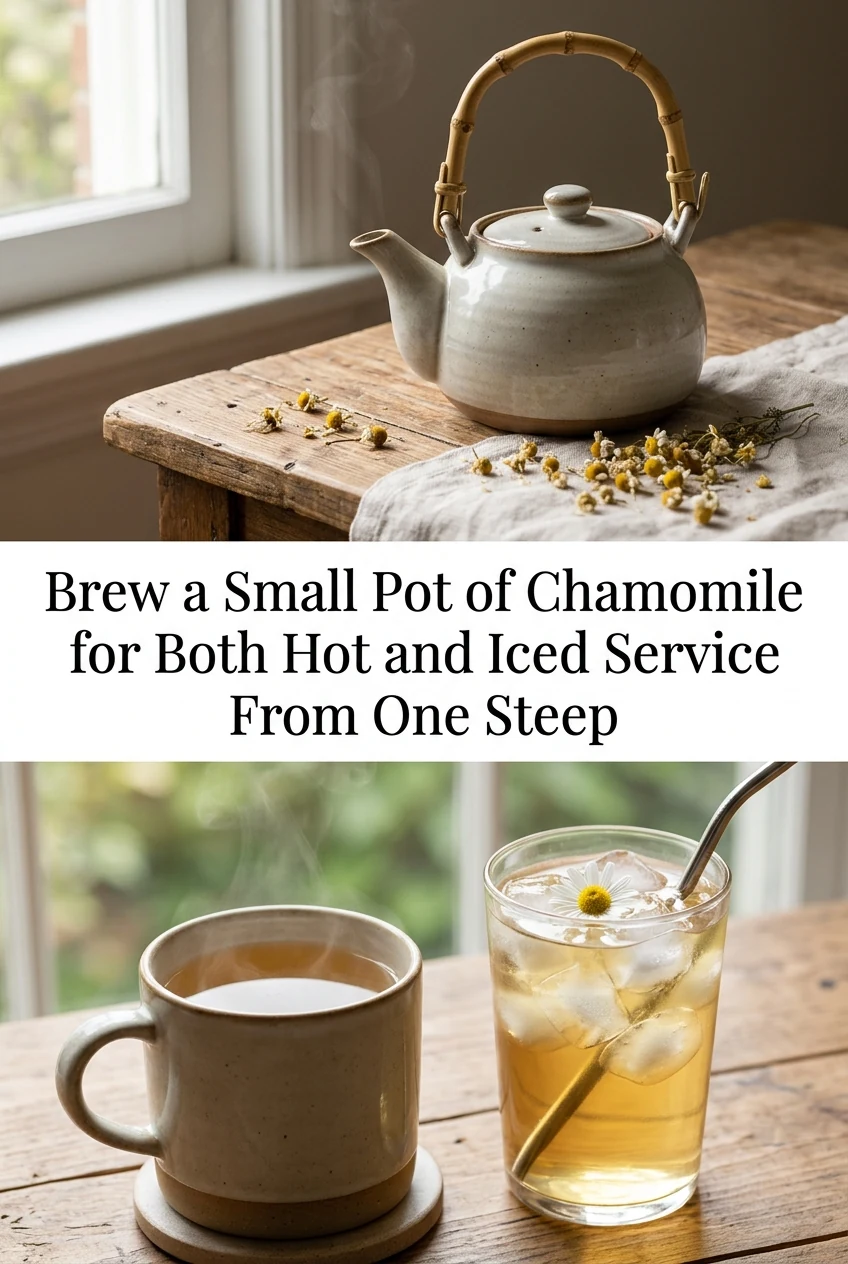
AI-generated editorial concept created for this article. The image is not a technical diagram or a tested result.
Calculate How Much Water the Pot Actually Holds
Pour cold water into your teapot using a measuring jug and note the usable capacity, stopping before the spout level where liquid would spill during pouring. A typical 600 ml ceramic teapot holds about 500 ml of pourable liquid after accounting for the spout height and the space the leaves or bags occupy. Knowing this number lets you plan the yield accurately. For one hot mug of 220 ml and one iced glass needing 150 ml of concentrate, you need at least 370 ml of brewed tea.
Brew Slightly Stronger Than You Would for a Single Hot Cup
For a 500 ml pot, use three chamomile tea bags or approximately 6 grams of loose dried chamomile flowers instead of the two bags you might use for a lighter brew. Steep in water just off the boil for 5 minutes, then remove the bags or strain the leaves promptly to prevent bitterness. The resulting brew is noticeably stronger than a standard single-cup steep, which is intentional. The iced portion will be diluted by ice, and the hot portion can be adjusted with a small splash of hot water if it tastes too intense.
Divide the Yield Immediately After Straining
Pour the hot portion into a warmed mug first, filling to about 220 ml. Then pour the remaining liquid into a heatproof jug or directly over a glass already filled with ice. Do not let the full pot sit while you decide, as the tea continues to extract flavor from any remaining plant material and the temperature drops unevenly. Dividing within two minutes of straining keeps both portions at their intended strength and temperature.
Build the Iced Glass Correctly to Avoid Watering Down Too Fast
Fill a 350 ml glass with ice cubes to about three-quarters full before pouring the hot chamomile concentrate over them. The ice melts partially on contact, diluting the concentrate to a drinkable strength. If you prefer a lighter iced drink, add a few extra ice cubes. If you want it stronger, reduce the ice slightly. Pouring the hot liquid over ice rather than chilling it in the refrigerator means the iced drink is ready to serve immediately alongside the hot mug.
Store Any Leftover Brewed Tea Safely
If the pot yields more than the two portions you need, pour the remainder into a clean covered container and refrigerate it within two hours of brewing, or within one hour if your kitchen is above 32 degrees Celsius. Use refrigerated chamomile tea within one day for best flavor. Do not leave brewed tea at room temperature and assume it is safe to drink later. Reheating refrigerated chamomile tea in a small saucepan over low heat is straightforward and does not require a second steep.
A little more
to know.
Will the hot chamomile portion taste too strong if I use three bags for a 500 ml pot?
It may taste slightly more robust than a typical single-bag cup. Adding 20 to 30 ml of hot water to the mug after pouring brings it back to a lighter strength without running a second steep or wasting the concentrated brew.
Can I use loose chamomile flowers instead of bags, and does the straining change the workflow?
Yes. Use a fine mesh strainer held over each vessel as you pour. Strain the hot mug portion first, then the iced glass. Loose flowers can leave fine sediment, so pour slowly and stop before the last few millilitres if clarity matters to you.
Original editorial guidance and recipe formulations, not independently kitchen-tested. Times are estimates and depend on equipment and product directions. Cooked bases need additional cooling and refrigeration before cold serving. Images are AI-generated illustrations; appearance and yield may vary. Check actual ingredient labels, allergens, and any certification you require. We do not certify products. Read our approach.
Save to Pinterest ↗ANOTHER IDEA FOR THE COUNTER