Balance Citrus Acidity in Sparkling Iced Tea
Combining steeped tea with sparkling water and fresh citrus often creates excessive foam, harsh bitterness, or a thin, astringent texture if mixed without proper temperature staging. Warm liquids release dissolved carbon dioxide rapidly, causing carbonated seltzer to erupt violently over glass rims while failing to retain crisp effervescence. By controlling the chilling stage of concentrated tea, filtering citrus solids, and managing the pour sequence, you create a bright, balanced, and refreshingly bubbly chilled tea that holds its carbonation and clean citrus balance right to the bottom.
Read the note ↓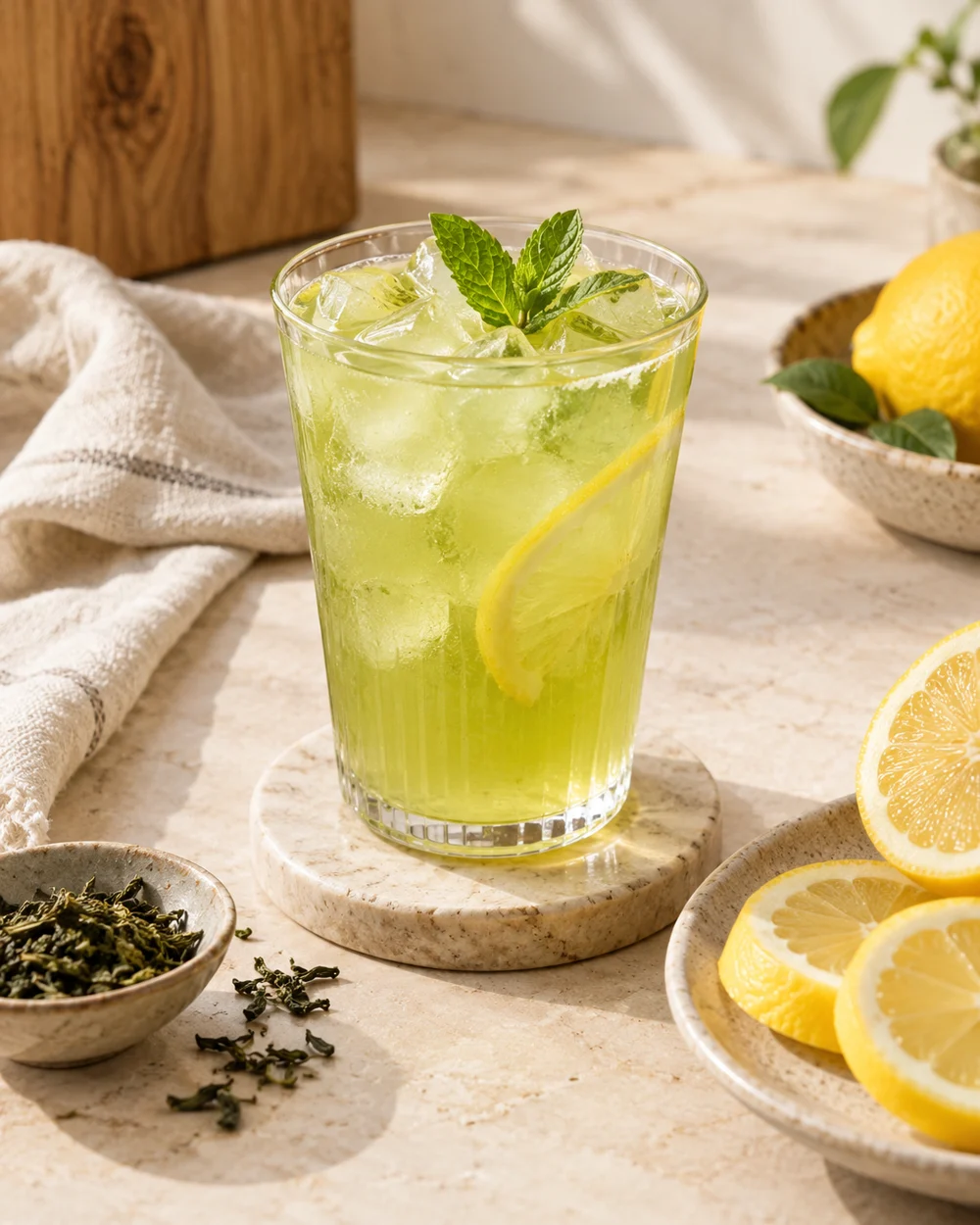
Representative category illustration reused from our editorial library; it does not depict this specific project or a tested result.
Concentrate and Strain the Tea
Brew eight grams of whole-leaf black or green tea in 200 milliliters of hot water, steeping according to your tea type to create a robust base. Strain out all leaves thoroughly through a fine-mesh sieve. Removing particulate matter is essential because suspended leaf debris acts as nucleation sites, triggering rapid release of gas bubbles that instantly flattens sparkling water once carbonated liquid touches the base infusion.
Chill the Concentrate Promptly
Place the hot strained tea into an airtight glass jar and cool it in an ice water bath before transferring it to the refrigerator. Keep the concentrate held at or below 4C (40F) within two hours to preserve fresh aromatic notes. Pouring carbonated water into warm tea causes violent foaming and ruins carbonation, so thorough pre-chilling remains non-negotiable for sparkling service.
Filter the Citrus Juice
Squeeze fresh lemon or lime juice through a fine tea strainer to eliminate pulp and seeds. Citrus pulp introduces floating nucleation points that cause seltzer to foam uncontrollably upon contact. Measure exactly fifteen milliliters of strained citrus juice per serving. Bounded measurement maintains crisp acidity without overwhelming delicate tea tannins or inducing an unpleasantly sour finish on the palate.
Layer the Liquid Base
In a tall chilled glass, combine sixty milliliters of chilled tea concentrate with your measured fifteen milliliters of strained citrus juice. If sweetening the drink, blend in fifteen milliliters of chilled simple syrup at this stage. Stir this base mixture gently with a long bar spoon until uniform before introducing any sparkling water or ice into the service vessel.
Introduce Ice and Sparkling Water
Add three large, solid ice cubes to the glass, taking care not to splash the base. Tilt the glass slightly and slowly pour in 120 milliliters of cold plain seltzer down the interior wall. Give the mixture one gentle upward fold using your spoon. This deliberate sequence preserves sparkling bubbles while fully integrating citrus acidity into the iced tea structure.
A little more
to know.
Can I store the citrus and tea mixture together overnight?
Citrus juice oxidizes quickly once juiced, developing a flat or metallic taste over time. For the clearest flavor profile, store chilled tea concentrate alone, adding freshly squeezed and strained citrus juice only during final glass assembly.
Why does sparkling water foam violently if poured over warm tea?
Carbon dioxide dissolves far more readily in cold liquids than warm ones. When cold carbonated water hits warm tea, the sudden temperature jump drastically lowers gas solubility, forcing carbon dioxide out as uncontrolled, messy foam.
Original editorial guidance and recipe formulations, not independently kitchen-tested. Times are estimates and depend on equipment and product directions. Cooked bases need additional cooling and refrigeration before cold serving. Images are AI-generated illustrations; appearance and yield may vary. Check actual ingredient labels, allergens, and any certification you require. We do not certify products. Read our approach.
Save to Pinterest ↗ANOTHER IDEA FOR THE COUNTER